Why Nighttime Is the Most Dangerous Time for Medication Errors
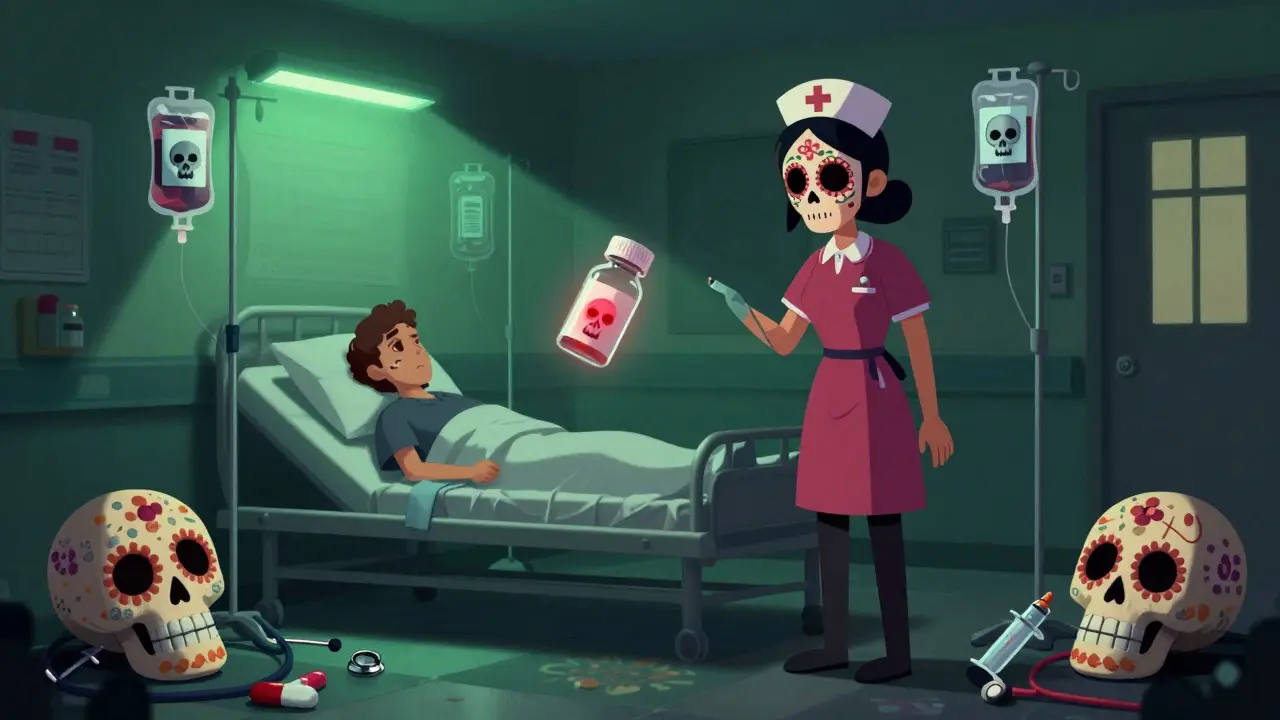
It’s 3 a.m. You’ve been on your shift for 14 hours. Your eyes are heavy. The IV pump beeps. You grab the wrong vial. The patient gets the wrong dose. This isn’t a horror story-it’s a real event that happens more often than you think. Night shifts are high-risk zones for medication mistakes, and fatigue is the silent culprit behind most of them.
Studies show that medication administration errors rise by 12.1% during night or rotating shifts compared to daytime. Nurses, who make up the largest group of medication administrators, face a 38% higher error rate at night. It’s not because they’re careless. It’s because their brains are exhausted.
When you haven’t slept enough, your brain doesn’t work like it should. Concentration drops. Memory falters. Reaction time slows. A 2018 study from the American College of Obstetricians and Gynecologists found that people who slept less than five hours saw a 25-30% decline in language skills, numeric reasoning, and short-term memory. That’s the same mental state you’re in when you’re trying to read a label, calculate a dose, or double-check a patient’s name at 3 a.m.
The Medications That Make Fatigue Worse
Some of the drugs you or your colleagues might be taking to stay awake-or to sleep-are actually making the problem worse.
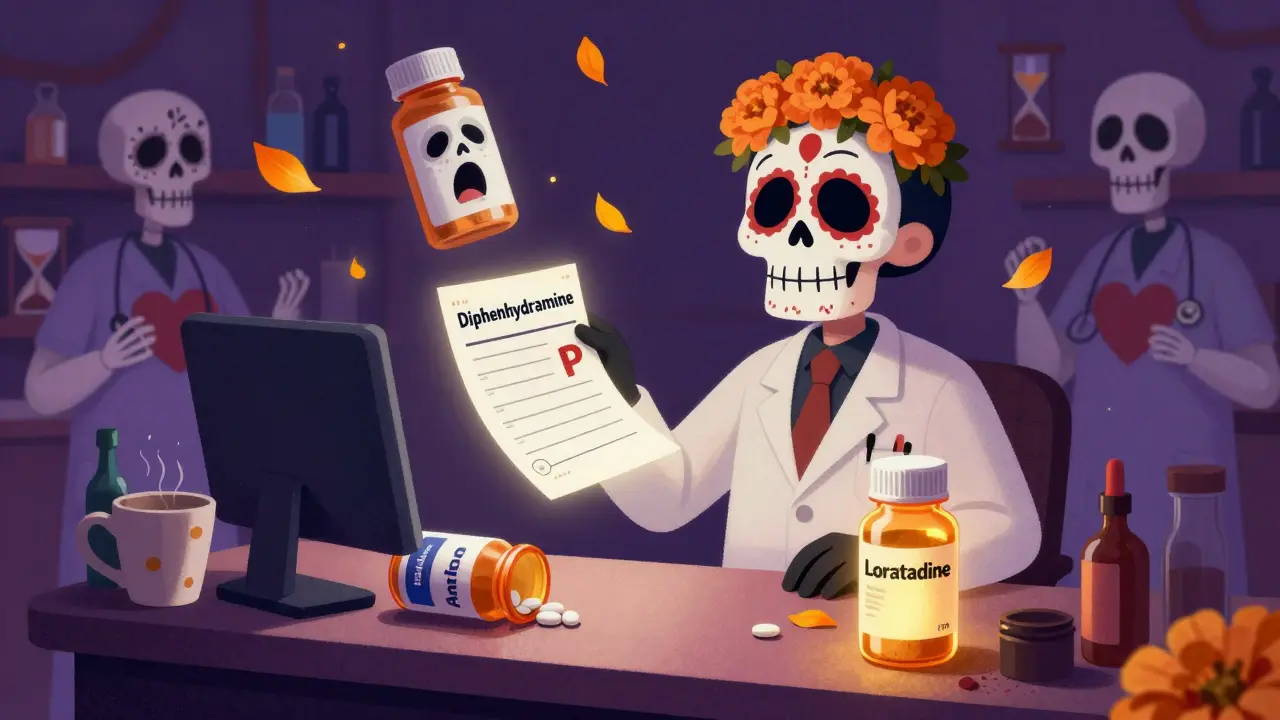
Antihistamines like diphenhydramine (found in Benadryl and many sleep aids) cause drowsiness in 50-60% of users. If you’re taking it for allergies or insomnia, you’re not just sleepy-you’re impaired. Same goes for zolpidem (Ambien), which leaves 15-20% of users groggy the next day. Benzodiazepines like diazepam cause lingering sedation in 30% of people. Narcotic pain meds like oxycodone and antidepressants like trazodone add to the fog.
The National Institute for Occupational Safety and Health (NIOSH) says healthcare workers who feel excessively sleepy on the job should ask: Could my own meds be part of the problem? Switching from diphenhydramine to loratadine (Claritin), a non-sedating alternative, can cut that risk dramatically. It’s not just about what you give patients-it’s about what you’re taking yourself.
How Sleep Loss Hits Your Brain-And Your Patients
One night without sleep? That’s like being legally drunk. Research from the American Society of Anesthesiologists shows that after a full night of missed sleep, anesthesiology residents showed a 23% drop in vigilance and an 18% drop in memory. Their reaction times matched those of people with narcolepsy.
And it’s not just surgical teams. Nurses making rounds, pharmacists verifying orders, and even physicians writing prescriptions all face the same risks. Surgeons who slept less than six hours had patients with 2.7 times more complications. When their shifts went over 12 hours, complication rates jumped nearly 50%.
It’s not just about accuracy-it’s about communication. The same ACOG study found that fatigue caused a 33% decline in effective communication. That means you might not hear a patient’s concern. You might miss a warning from a colleague. You might misread a chart. All of these are silent killers.
Why Naps Don’t Fix Everything
You’ve heard it before: “Just take a nap.” But naps aren’t magic. A 20-minute power nap might give you a 12-15% boost in alertness. A 90-minute nap? Only an 8% improvement. And here’s the catch: after waking from deep sleep, you’re not instantly sharp. Sleep inertia kicks in-your brain is still stuck in slow mode. Studies show a 22% drop in cognitive performance for up to 30 minutes after waking from a long nap.
Even worse: napping before a shift helps, but only if you get enough. A 2022 Johns Hopkins study found that strategic naps before night shifts reduced errors by 12-15% in ICUs and emergency departments. But those gains vanish if you’re still running on four hours of sleep total. The truth? No nap replaces a full night’s rest. And if you’re working multiple nights in a row, your brain never fully recovers.
System Fixes That Actually Work
Blaming individuals won’t stop these errors. The real solution? Fixing the system.
Alarm systems and clinical reminders reduce medication errors by 18%. That’s not a small number. It means that if your hospital uses electronic alerts that require double-checks before high-risk meds are given, you’re already safer.
But even better? Scheduling. The American Society of Anesthesiologists says the most effective way to prevent fatigue-related errors is to give staff more opportunity to sleep. That means fewer consecutive night shifts. No back-to-back 12-hour days. Protected sleep time after night shifts.
And here’s something rarely talked about: workload. Nurses handling 15+ patients on a night shift are at much higher risk than those with 8-10. Fatigue doesn’t just come from lack of sleep-it comes from too much work on top of it.

What You Can Do Tonight
You can’t always control your schedule. But you can control your choices.
- Check your own meds. Are you taking anything that makes you drowsy? Talk to your doctor about switching to non-sedating alternatives.
- Use caffeine wisely. One cup of coffee before your shift helps. Sipping it all night doesn’t. Too much can cause jitteriness, then a crash. Stick to 1-2 cups max.
- Move your body. Walk for five minutes every hour. Stretch. Get fresh air if you can. Movement boosts alertness better than another cup of coffee.
- Use the two-person check. If you’re giving a high-risk medication-insulin, heparin, opioids-ask a colleague to verify the dose, patient, and route. Don’t rely on memory.
- Speak up. If you’re too tired to focus, say so. Your hospital should have a policy for calling in a backup. No one should be forced to make decisions when their brain is shut down.
The Hidden Cost of Night Shift Errors
Every year, medication errors cost the U.S. healthcare system an estimated $20 billion. Most of those are preventable. And most happen during night hours.
But the cost isn’t just financial. It’s human. A patient gets the wrong drug. They have a seizure. They go into cardiac arrest. Their family never forgives themselves for trusting the system. And the nurse? They carry that guilt for years.
We talk about burnout. We talk about staffing shortages. But we don’t talk enough about how fatigue turns even the most skilled provider into a ticking time bomb.
It’s Not About Being Stronger-It’s About Being Smarter
Healthcare culture still glorifies pushing through. “I didn’t sleep, but I got through it.” That’s not courage. It’s recklessness.
Real strength is knowing when you’re impaired. Real professionalism is asking for help. Real safety is building systems that don’t depend on human perfection.
If you’re working nights, you’re already doing hard work. Don’t let fatigue steal your judgment. Don’t let it cost a life. Your patients deserve better. And so do you.