Every year, hundreds of thousands of people end up in the emergency room because of unexpected reactions to their medications. Not because they took too much, but because two perfectly safe drugs, when taken together, started working against each other. This isn’t rare. It’s common. And it’s mostly preventable.
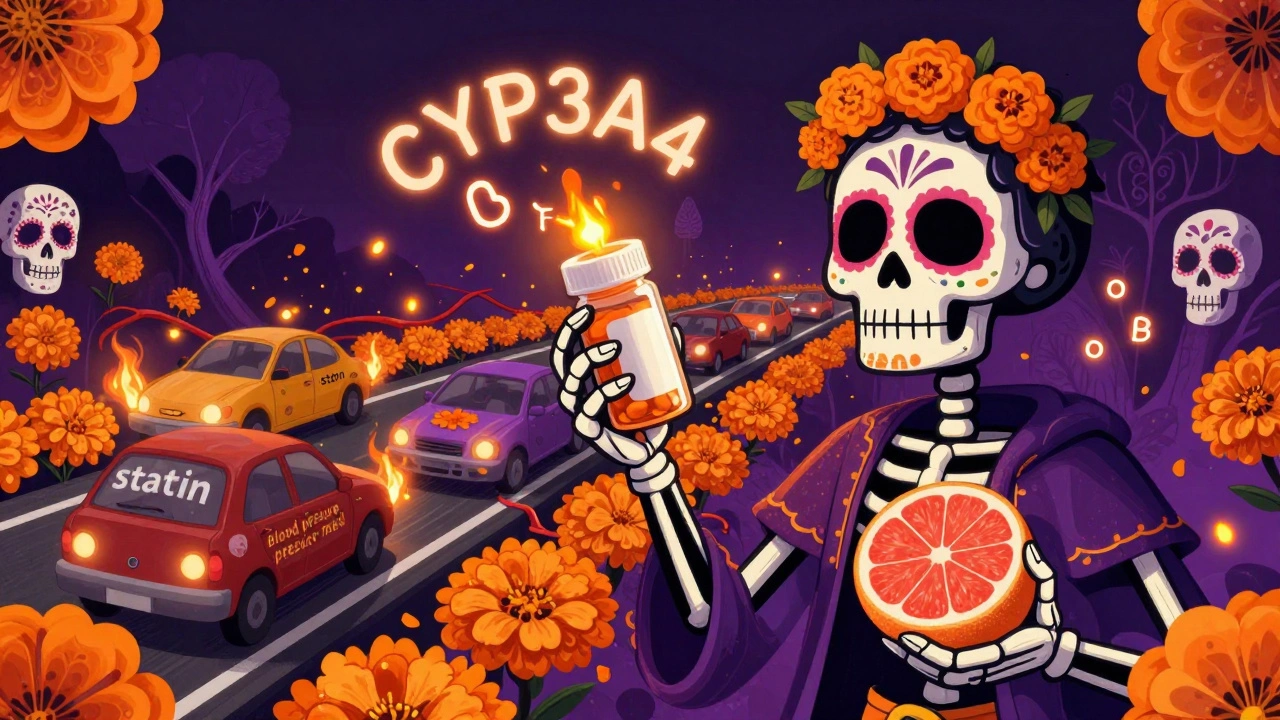
What you’re dealing with is called a pharmacokinetic drug interaction. That sounds complicated, but it’s really just one drug changing how your body handles another. Think of it like traffic on a highway. One car (your medication) slows down, blocks, or speeds up another car. The result? Too much of one drug builds up, or not enough reaches where it needs to go.
How Your Body Moves Drugs: The ADME System
Your body doesn’t just swallow a pill and let it sit. It has a four-step process to handle every medication: Absorption, Distribution, Metabolism, and Excretion. Together, that’s ADME.
Absorption is how the drug gets into your bloodstream from your gut. Distribution is how it travels through your blood to reach your organs. Metabolism is how your liver breaks it down. Excretion is how your kidneys flush it out. If any of these steps get disrupted, your drug’s effect can change - sometimes dangerously.
Let’s break down each step with real examples you might actually run into.
When Food or Other Pills Block Absorption
Some drugs need stomach acid to work. If you take an antacid for heartburn at the same time as ketoconazole (an antifungal), the acid gets neutralized - and the antifungal can’t be absorbed. You might as well have swallowed a sugar pill.
Then there’s calcium. Dairy products, calcium supplements, even some fortified orange juices can bind to antibiotics like tetracycline or doxycycline. This forms a hard-to-dissolve complex in your gut. Studies show this cuts absorption by up to 50%. That means your infection might not clear.
What to do? Space them out. Take antibiotics at least two to three hours before or after dairy, antacids, or calcium supplements. It’s that simple - and that effective.
And yes, grapefruit juice is on this list too. Not because it’s bad - but because it shuts down an enzyme in your gut called CYP3A4 that normally breaks down dozens of medications. One glass can make your blood levels of certain drugs shoot up. That includes some statins, blood pressure pills, and even some anti-anxiety meds. The FDA says at least 85 prescription drugs interact with grapefruit. If you’re on any medication, ask if grapefruit is safe.
When Drugs Compete for a Ride in Your Blood
Once a drug gets into your bloodstream, it doesn’t float freely. Most of it sticks to proteins like albumin - like a passenger holding onto a seatbelt. Only the unbound (free) part is active.
Now imagine two drugs that both want the same seat. Warfarin (a blood thinner) and diclofenac (an NSAID for pain) both cling tightly to albumin. If you take them together, diclofenac kicks warfarin off the protein. Suddenly, more warfarin is floating around - and your blood can’t clot as well. That’s when bleeding risks go up.
But here’s the catch: this kind of interaction only matters for drugs with a very narrow safety window. Warfarin is one. Digoxin is another. Most other drugs? Your body adjusts. The extra free drug gets broken down faster. So unless you’re on one of these high-risk meds, you don’t need to panic about protein binding.
The Big One: Liver Metabolism and the CYP450 System
This is where the most serious interactions happen. Your liver uses a family of enzymes - mostly CYP3A4 and CYP2D6 - to break down about 80% of all medications.
Some drugs are inhibitors. They block these enzymes. Others are inducers. They turn them up like a faucet.
Let’s say you’re on metoprolol (a beta-blocker for heart rate) and your doctor adds propafenone (for irregular heartbeat). Propafenone blocks the CYP2D6 enzyme that breaks down metoprolol. Result? Metoprolol builds up. Your heart rate could drop too low. Dose adjustments are needed.
Another example: clarithromycin (an antibiotic) and midazolam (a sedative). Clarithromycin shuts down CYP3A4. Midazolam can’t be broken down. You might fall into a deep, dangerous sleep. That’s why hospitals avoid this combo.
On the flip side, St. John’s Wort - a popular herbal supplement for mild depression - is a powerful inducer. It cranks up CYP3A4 and other enzymes. That means drugs like birth control pills, cyclosporine (for transplants), and even some antidepressants get broken down too fast. You could get pregnant. Your transplant could fail. Your depression could return.
Here’s the list of common offenders:
- Inhibitors: Grapefruit juice, clarithromycin, fluoxetine (Prozac), cimetidine (Tagamet), ketoconazole
- Inducers: St. John’s Wort, rifampin (for TB), carbamazepine (for seizures), phenobarbital
And yes - phenobarbital can also trigger toxic metabolites of lamotrigine (used for epilepsy and bipolar disorder), leading to dangerous drops in white blood cells or platelets. That’s not a guess. It’s documented in medical journals.

How Your Kidneys and Transporters Play a Role
Your kidneys don’t just filter waste. They have special transporters that push drugs out of your body. Sometimes, two drugs fight over the same transporter.
Probenecid (used for gout) blocks the transporter that clears cephalosporin antibiotics. Result? Higher antibiotic levels. Risk of kidney damage.
NSAIDs like ibuprofen or naproxen can reduce how fast methotrexate (used for arthritis and some cancers) leaves your body. That can cause bone marrow suppression - a scary drop in blood cells.
And then there’s digoxin. Used for heart failure. Very narrow safety range. Itraconazole (an antifungal) blocks the P-glycoprotein transporter that kicks digoxin out of your kidneys. Digoxin builds up. You could get a life-threatening heart rhythm. This isn’t theoretical. It’s happened.
The FDA says about 20% of serious drug interactions involve these transporter systems. And they’re often missed because they’re not in standard drug interaction checkers.
Real-Life Consequences: When It Goes Wrong
An 85-year-old woman in Canada started taking venlafaxine (an antidepressant) and propafenone (for heart rhythm). Both are processed by CYP2D6 and blocked by P-gp. The result? Venlafaxine levels spiked. She developed hallucinations and agitation. She ended up in the hospital.
Another case: an elderly man on warfarin started taking a new antibiotic. His INR (a blood clotting test) jumped from 2.5 to 8.0. He bled internally. He needed a transfusion.
These aren’t outliers. They’re predictable. And they’re preventable.
What You Can Do: 5 Simple Steps to Stay Safe
You don’t need to be a pharmacist to protect yourself. Here’s what works:
- Keep a full list of everything you take. That includes prescriptions, over-the-counter pills, vitamins, herbs, and even supplements like magnesium or melatonin. A 2020 study showed this cuts interaction risks by 47%.
- Use one pharmacy. Chain pharmacies have systems that flag dangerous combos. They prevent about 150,000 bad reactions every year in the U.S. alone. Don’t switch between pharmacies just for a better price.
- Ask two questions every time you get a new prescription: “Could this interact with any of my other medications?” and “Are there foods or drinks I need to avoid?” Mayo Clinic research shows this increases detection of risks by 63%.
- Know your high-risk drugs. Warfarin, insulin, and digoxin cause over one-third of all serious interaction-related ER visits. If you’re on any of these, be extra careful.
- Don’t ignore timing. Space thyroid meds (like levothyroxine) at least 4 hours from calcium, iron, or multivitamins. Take antibiotics away from dairy. Avoid grapefruit if your med label says so.
What Your Doctor and Pharmacist Are Doing
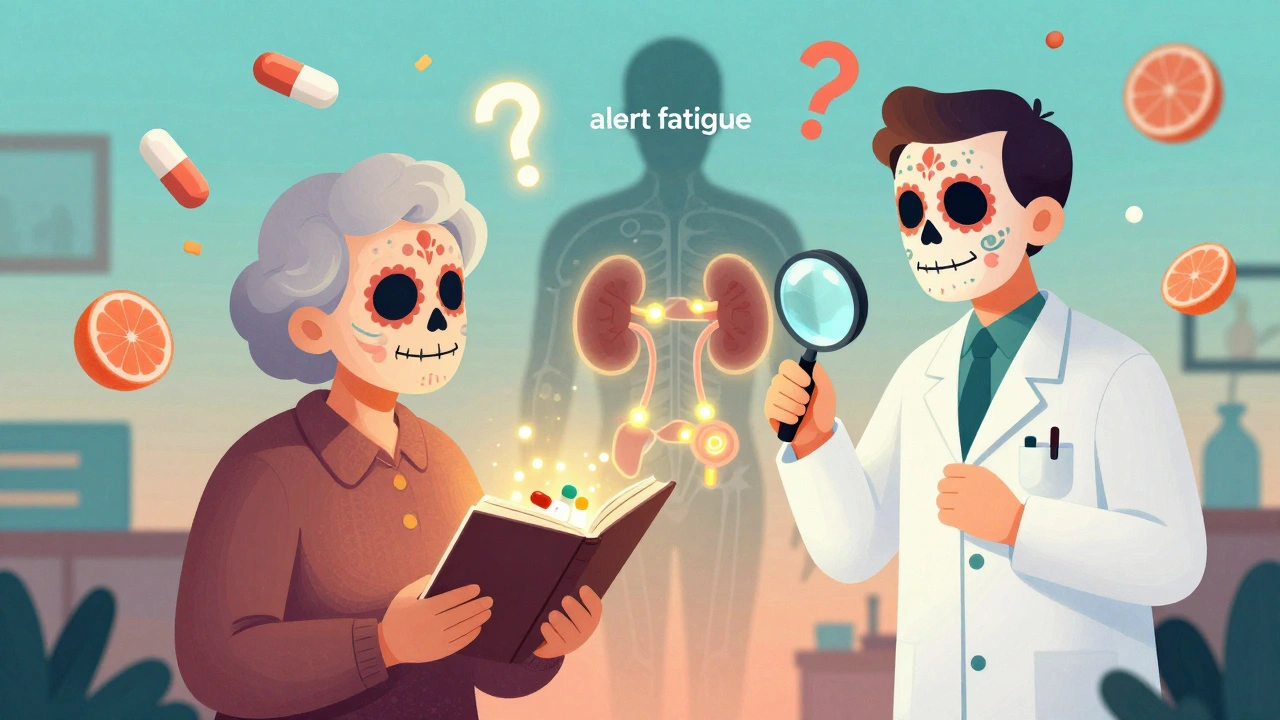
Most clinics now use electronic systems that pop up warnings when a new drug might clash with your current ones. But here’s the problem: doctors get so many alerts - 85% of major interactions are flagged - that they ignore 49% of them. It’s called alert fatigue.
That’s why pharmacists are your secret weapon. Medication therapy management (MTM) by a pharmacist reduces bad drug events by 22% in older adults on Medicare. They review your whole list, spot hidden risks, and talk to your doctor before you even leave the pharmacy.
Tools like Lexicomp and Micromedex give them access to detailed interaction data - including mechanisms, severity ratings, and how to fix them. You can’t access these tools directly, but your pharmacist can. Ask them to run a check.
The Future: Personalized Medicine
Genetics matter. Some people are “poor metabolizers” of CYP2C19 - meaning they break down clopidogrel (a blood thinner) very slowly. Others are “ultra-rapid” and clear it too fast. The FDA now includes pharmacogenomic info on 340 drug labels.
Age matters too. About 40% of adults over 65 have reduced kidney function. That changes how drugs are cleared. The American Geriatrics Society updated its Beers Criteria in 2023 to reflect this.
And telehealth platforms? 78% of major U.S. health systems now include automatic interaction checks during virtual visits. That’s new. That’s helpful.
The goal? To move from guesswork to precision. If you’re on multiple meds, ask about genetic testing. It’s not for everyone - but if you’ve had a bad reaction before, it might be worth it.
Drug interactions aren’t scary because they’re common. They’re scary because they’re silent. No warning signs until it’s too late. But you’re not powerless. You have tools. You have questions. And you have the right to ask for help.
Keep your list. Talk to your pharmacist. Say no to grapefruit if you’re on a statin. And never assume a new pill is safe just because it’s “over the counter.”
What exactly is a pharmacokinetic drug interaction?
A pharmacokinetic drug interaction happens when one medication changes how your body absorbs, distributes, metabolizes, or excretes another drug. This affects how much of the drug reaches your bloodstream and how long it stays active. It’s different from pharmacodynamic interactions, which are about how drugs affect your body’s response - like two drugs both lowering blood pressure too much.
Can I still drink grapefruit juice if I’m on medication?
Only if your medication doesn’t interact with it. Grapefruit juice blocks the CYP3A4 enzyme in your gut, which can cause dangerous spikes in blood levels of drugs like certain statins (atorvastatin, simvastatin), blood pressure meds (amlodipine), and anti-anxiety drugs (midazolam). The FDA lists at least 85 medications with this interaction. If your prescription label says “avoid grapefruit,” don’t risk it. Even one glass can last 24 hours.
Are herbal supplements safe to take with my prescriptions?
No, not necessarily. St. John’s Wort is one of the most dangerous - it speeds up the breakdown of birth control, antidepressants, and transplant drugs. Garlic, ginkgo, and ginger can increase bleeding risk when taken with warfarin. Even magnesium can interfere with thyroid meds. Always tell your doctor or pharmacist about every supplement you take - even if you think it’s “natural” or “harmless.”
Why does timing matter when taking medications?
Some drugs need to be taken on an empty stomach or spaced apart from others to be absorbed properly. For example, calcium in dairy or supplements can block antibiotics like doxycycline. Thyroid medication (levothyroxine) can’t be absorbed if taken with iron or calcium. Spacing them by 2-4 hours lets each drug do its job without interference.
How do I know if a drug interaction is serious?
Look for signs like unusual drowsiness, confusion, irregular heartbeat, unexplained bruising or bleeding, or sudden changes in how you feel - especially after starting a new drug. If you’re on warfarin, digoxin, insulin, or any drug with a narrow therapeutic window, even small changes can be dangerous. When in doubt, call your pharmacist. They’re trained to spot these red flags.
Should I get genetic testing for drug interactions?
It’s not needed for everyone, but if you’ve had a bad reaction to a medication before, or if you’re on multiple drugs that are known to be affected by genetics (like clopidogrel, codeine, or certain antidepressants), it’s worth asking your doctor. The FDA now includes pharmacogenomic info on 340 drug labels, and testing can help avoid dangerous side effects or ineffective doses.
What to Do Next
Start today. Grab a notebook or open a note on your phone. Write down every medication, supplement, and over-the-counter pill you take - including doses and times. Then call your pharmacy. Ask them to run a full interaction check. Don’t wait for your next doctor’s appointment. Do it now.
If you’re on warfarin, digoxin, insulin, or any high-risk drug, ask your pharmacist for a printed interaction report. Keep it in your wallet. Show it to any new provider.
You’re not just a patient. You’re the most important person in your own care. And you have more power than you think.