If you’ve ever been told by your pharmacy that you can’t get your doctor’s prescribed medication until you’ve tried cheaper ones first, you’ve run into step therapy. It’s not a glitch in the system-it’s a standard rule in most health insurance plans. Step therapy, also called a "fail-first" policy, forces patients to try lower-cost drugs, usually generics, before the insurer will pay for the medication their doctor actually recommended. For many, this means months of trial, error, and sometimes worsening symptoms before they get the treatment they need.
How Step Therapy Works
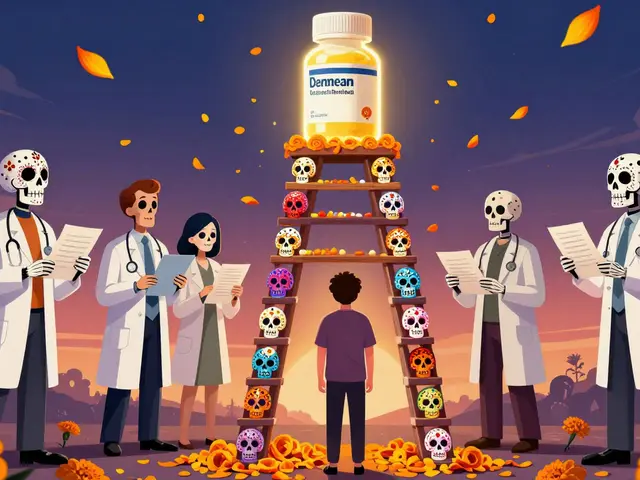
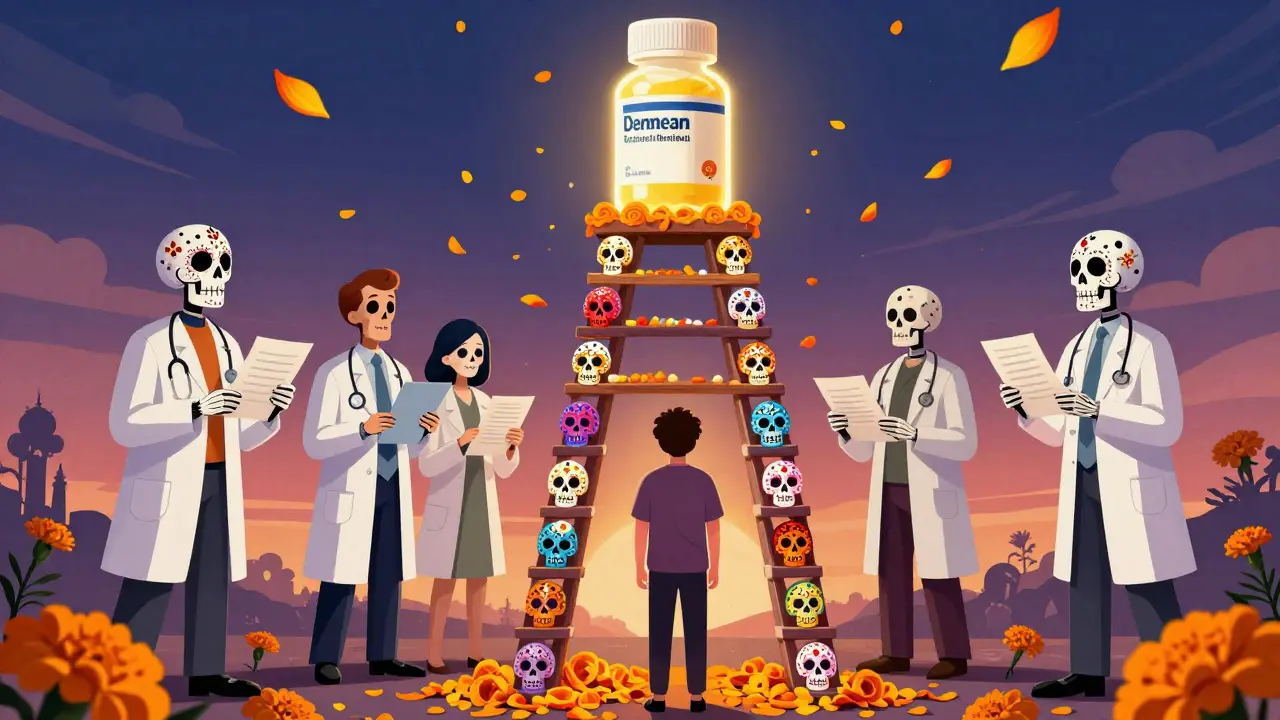
Step therapy isn’t random. Insurers build a ladder of medications for each condition. At the bottom? The cheapest options-usually generics. You have to climb each rung before you’re allowed to reach the top. For example, if your rheumatologist prescribes a biologic for rheumatoid arthritis, your insurer might require you to try three different NSAIDs or a generic DMARD like methotrexate first. Only after those fail-or cause side effects-can you move to the next step.This isn’t just for arthritis. It applies to asthma inhalers, antidepressants, diabetes drugs, MS treatments, and even skin conditions like psoriasis. The logic? Save money by starting with what works for most people. But what works for "most people" doesn’t always work for you.
According to a 2021 analysis published in PubMed, about 40% of all health plan drug coverage includes step therapy rules. That number’s been rising since 2018. Employer-sponsored plans, Medicare Advantage, and many private insurers use it. And while 90% of prescriptions filled in the U.S. are for generics, step therapy often kicks in only when brand-name or specialty drugs are involved. That’s the key: it’s not about generics being bad-it’s about forcing you to try them first, even if your doctor says they won’t help.
Why Insurers Use Step Therapy
Insurers don’t implement step therapy because they’re trying to make your life harder. They do it because drug prices are skyrocketing. A single course of a new biologic can cost $20,000 to $50,000 a year. A generic version might be $300. That’s a 98% difference.By requiring patients to try cheaper options first, insurers claim they can reduce drug spending by 5% to 15%, depending on the condition, according to a 2021 Congressional Budget Office report. That saves them-and sometimes you-money on premiums and out-of-pocket costs.
But here’s the catch: those savings come at a cost. Patients often wait weeks or months to get the right treatment. During that time, their condition can worsen. Joint damage in arthritis, nerve damage in neuropathy, or uncontrolled blood sugar in diabetes can become permanent. The American College of Rheumatology says step therapy puts patients at risk of irreversible harm. And they’re not alone.
When Step Therapy Goes Wrong
Real stories show how this plays out. One Reddit user, "ChronicPainWarrior," spent six months trying three different NSAIDs before their insurer approved a biologic for rheumatoid arthritis. By then, their joints were permanently damaged. Another patient, surveyed by the Arthritis Foundation, reported that 68% of people who went through step therapy saw their condition get worse. Forty-two percent had actual disease progression during the waiting period.It gets worse when you change jobs or switch plans. You might have been stable on a brand-name drug for years. But if your new insurer has different rules, you have to start the whole process over-even if your old insurer already approved it. That’s not just inconvenient. It’s dangerous.
And the paperwork? It’s brutal. Doctors spend an average of 18.3 hours per week just handling step therapy and prior authorization requests, according to the American College of Rheumatology. That’s time they’re not spending with patients.
What You Can Do: Step Therapy Exceptions
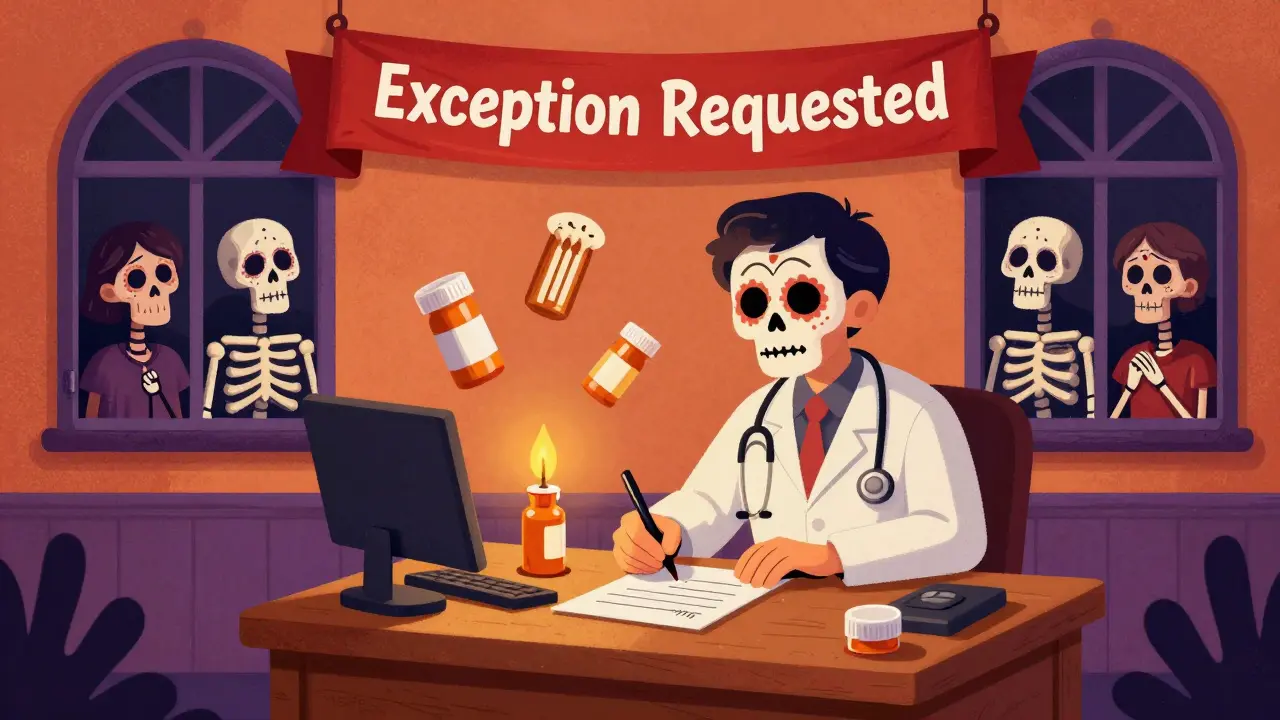
You’re not stuck. Federal and state laws require insurers to offer exceptions. If your doctor says the required drug won’t work for you-or could hurt you-you can ask for a bypass. This is called a step therapy exception.The Safe Step Act, introduced multiple times in Congress since 2017, outlines five clear situations where insurers must grant exceptions:
- The drug you’re being forced to try has already failed for you
- Delaying your treatment could cause severe or irreversible harm
- The required drug is medically contraindicated for you
- The drug would prevent you from doing daily activities
- You’re already stable on your current medication and it was previously covered
These aren’t vague guidelines. They’re legal requirements in 29 states. But here’s the problem: not all plans follow them. Self-insured employer plans (which cover about 61% of Americans) are regulated by federal law, not state laws. So if your employer pays for your insurance directly, you might not have the same protections.
How to Request an Exception
Requesting an exception isn’t hard, but it takes action. Here’s how:- Ask your doctor to write a letter of medical necessity. This isn’t a form-it’s a detailed note explaining why the step therapy drug won’t work for you. Include your medical history, previous treatment failures, lab results, and any side effects you’ve had.
- Submit the request through your insurer’s portal or fax. Most insurers have a form, but the letter from your doctor is what matters.
- Follow up. Blue Cross Blue Shield of Michigan says they review standard requests in 72 business hours and urgent ones in 24 hours. But other insurers take longer. If you don’t hear back in five days, call.
- Appeal if denied. You have the right to appeal. Many people give up after the first denial. Don’t. Keep pushing. Bring in your doctor again. Cite the Safe Step Act criteria.
Some patients get approved in days. Others wait weeks. The Arthritis Foundation found that 73% of patients needed one to three months to get an exception approved. And 28% gave up entirely and stopped taking their medication.
What to Do If You’re Already on a Drug
If you’ve been on the same medication for years and your insurer suddenly changes its formulary, you might get a notice saying you need to switch. Don’t panic. You have rights.Most plans offer a "transition fill"-a one-time supply of your current drug while you go through the exception process. Ask your pharmacy for it. If they say no, ask your doctor to call the insurer directly. Many providers have dedicated staff to handle these cases.
Also, check if your drug manufacturer offers a patient assistance program. Nearly 80% of major drugmakers now provide co-pay cards or free samples that can help you avoid step therapy entirely-especially if you’re on a high-deductible plan.
The Bigger Picture
Step therapy isn’t going away. Insurers see it as a tool to control costs. But the data shows it’s not always safe. The industry is moving toward more structured rules. In 2023, 14 more states introduced legislation to tighten exception timelines and expand protections. Analysts at Avalere Health predict step therapy will cover 55% of specialty drug prescriptions by 2025.But until federal law closes the gap for self-insured plans, there will be holes in protection. If you’re covered by a large employer plan, you might be on your own. That’s why knowing your rights-and having your doctor’s support-is critical.
Bottom Line
Step therapy is a cost-control tool that often puts patients in harm’s way. It’s not about generics being bad-it’s about forcing you to try them first, even when they’re not right for you. But you’re not powerless. You have legal rights. You have the right to appeal. You have the right to demand exceptions when your health is at stake.Don’t wait until you’re in crisis. Talk to your doctor now. Ask: "If I need this drug, will I have to go through step therapy?" Get the exception process in writing. Keep copies of every form, letter, and call. And if you’re denied-keep fighting. Your health isn’t a cost-saving experiment.
What is step therapy in insurance?
Step therapy is a rule used by health insurers that requires patients to try cheaper, usually generic, medications before the plan will pay for a more expensive drug prescribed by their doctor. It’s also called a "fail-first" policy because you must prove the cheaper option didn’t work before moving up.
Why do insurance companies require step therapy?
Insurers use step therapy to reduce drug costs. Brand-name and specialty medications can cost tens of thousands of dollars a year, while generics cost a fraction of that. By requiring patients to try lower-cost options first, insurers can cut spending by 5% to 15%, according to the Congressional Budget Office. But critics argue this savings comes at the cost of delayed care and worsening health.
Can I skip step therapy if my doctor says no?
Yes. You can request a step therapy exception if your doctor provides medical documentation showing that the required drug won’t work for you, has failed before, is contraindicated, or would cause harm. Federal and state laws require insurers to grant exceptions in five specific cases, including when treatment delay could cause irreversible damage.
How long does a step therapy exception take?
Standard requests typically take 5 to 10 business days, but some insurers take up to 8 weeks. Urgent cases-where delay could cause serious harm-must be reviewed within 24 to 72 hours, depending on the plan. Blue Cross Blue Shield of Michigan, for example, commits to 24 hours for urgent cases. But many patients report delays, and some give up before approval.
Are step therapy rules the same in every state?
No. Twenty-nine states have passed laws requiring insurers to allow exceptions and set time limits for reviews. But these laws usually don’t apply to self-insured employer plans, which cover 61% of Americans. Those are regulated by federal law (ERISA), and federal protections are weaker. So your rights depend on where you live and how your insurance is structured.
What if I’m already on a medication and my insurance changes its rules?
Most insurers must offer a "transition fill"-a one-time supply of your current drug while you go through the exception process. Ask your pharmacy for it. Also, your doctor can write a letter explaining why switching would be harmful. Don’t stop taking your medication without a plan. Contact your insurer and your doctor immediately to avoid treatment gaps.
Can pharmaceutical companies help me avoid step therapy?
Yes. Nearly 80% of major drugmakers offer patient assistance programs, including co-pay cards, free samples, or discount coupons. These can sometimes reduce your out-of-pocket cost enough that you don’t need to go through step therapy at all. Check the drug manufacturer’s website or ask your pharmacist for help.