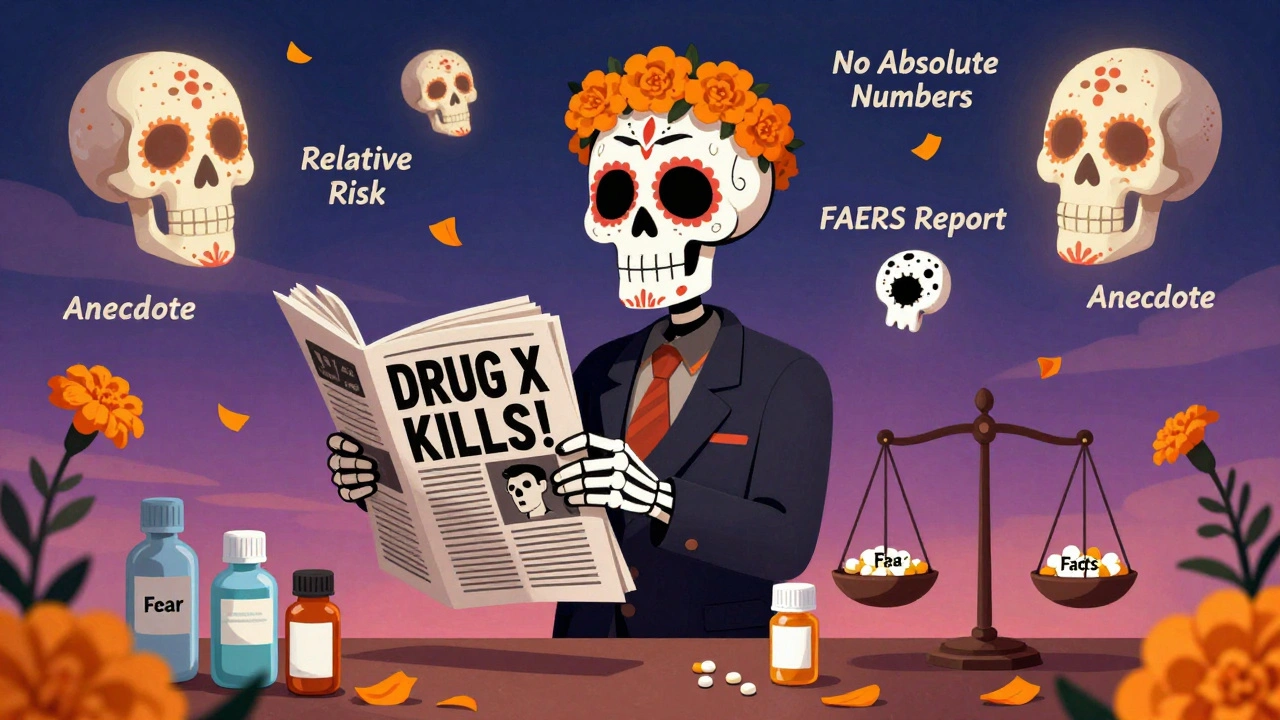
When you see a headline like "New Study Links Common Blood Pressure Drug to Heart Attacks," it’s natural to panic. You might even consider skipping your next dose. But before you do, stop and ask: Is this report accurate? Most media stories about medication safety are well-intentioned, but they often miss critical details that change everything. A 2021 study in JAMA Network Open found that nearly 8 out of 10 news articles about drug safety didn’t explain the study’s limitations. That means you’re getting half the story-and sometimes the wrong one.
Understand the difference between medication errors and adverse drug reactions
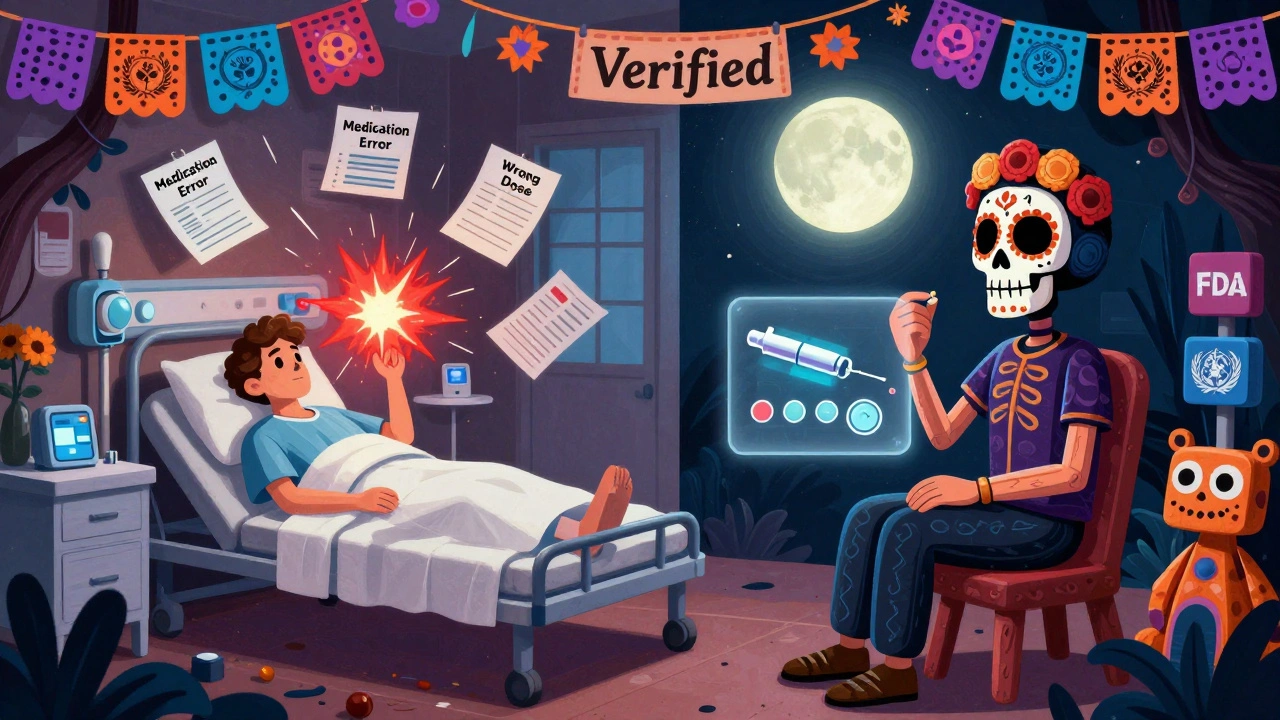
Not every bad outcome from a drug is the drug’s fault. A medication error is something that went wrong in the process: a doctor wrote the wrong dose, a pharmacist gave the wrong pill, a nurse administered it at the wrong time. These are preventable. An adverse drug reaction (ADR) is an unintended harmful effect that happens even when the drug is taken correctly. Some ADRs are rare but unavoidable-like a severe allergic reaction. Media reports often blur this line. A 2022 review in PLOS ONE showed only 32% of studies properly separated the two. If a headline says "Drug X causes liver damage," but the study actually found that 70% of cases involved patients who were taking five other drugs or had pre-existing liver disease, you’re being misled. Look for clear language: Did the report say the drug caused harm, or that harm occurred while taking it? The difference matters.Check if they’re using absolute risk or just relative risk
This is one of the most common tricks in drug safety reporting. Let’s say a study finds that Drug A increases your risk of a rare side effect from 1 in 10,000 to 2 in 10,000. That’s a 100% increase in relative risk. Sounds scary, right? But in absolute terms, your risk went from 0.01% to 0.02%. That’s still extremely low. A 2020 BMJ study analyzed 347 news articles and found that only 38% reported both absolute and relative risk. Cable news and digital outlets were worst-only 22% got it right. Print media did better, but even they missed it nearly half the time. Always look for numbers like "1 in 1,000 people" or "0.1% risk". If you only see "risk doubled" or "50% higher chance", dig deeper.Know the study method-and its limits
Not all safety studies are created equal. There are four main ways researchers find drug safety signals:- Incident reports: Doctors or patients voluntarily report problems to systems like the FDA’s FAERS. These are easy to collect but full of gaps-only about 1% of actual adverse events get reported.
- Chart reviews: Researchers go through medical records to find patterns. This method finds more events than incident reports, but it’s still limited. Dr. David Bates’ team found chart reviews capture only 5-10% of actual medication errors.
- Trigger tools: These use electronic flags (like a sudden spike in potassium levels) to automatically pull out potential problems. This is the most efficient method and was shown in a 2011 systematic review to balance accuracy and workload best.
- Direct observation: Researchers watch staff in real time. This finds the most errors, but it’s expensive and rarely used in large studies.
Verify the sources
Good reporting doesn’t just cite a study-it points you to the original source. Look for references to:- FAERS (FDA Adverse Event Reporting System)
- WHO’s Uppsala Monitoring Centre
- ClinicalTrials.gov
- PubMed or peer-reviewed journals
Look for context on the drug and its use
A drug that’s dangerous in high doses might be perfectly safe at the prescribed level. A 2022 Reddit thread with over 3,000 upvotes exposed a major media error: a story claimed a common blood pressure drug was "deadly," but the study used doses 10 times higher than what’s ever prescribed. The drug wasn’t dangerous-it was the dose. Check if the report mentions:- What the actual prescribed dose is
- Who the study participants were (age, health conditions, other meds)
- How long they took the drug
- Whether the study was done in real-world settings or a controlled trial
Compare with trusted guidelines
The American Society of Health-System Pharmacists (ASHP) and the World Health Organization have clear standards for evaluating medication safety. If a media report says a drug should be pulled from the market, ask: Does that match what ASHP recommends? What does the FDA say? The WHO’s P method gives 20 criteria to judge if an adverse event was preventable. If the article doesn’t mention any of these standards, it’s likely not grounded in real safety science. Also, check if the report references the Leapfrog Group’s hospital safety scores. These are publicly available ratings based on actual performance data-not opinion. If a news story claims "Hospital X is dangerous because of medication errors," but the hospital has an A+ Leapfrog rating, the story is misleading.
Watch out for emotional language and sensationalism
Words like "deadly," "scandal," "cover-up," or "hidden danger" are not scientific. They’re designed to grab attention. A 2023 analysis by the National Patient Safety Foundation found that social media posts about medication safety had a 68% error rate-far higher than traditional media. TikTok and Instagram videos often use dramatic music, flashing text, and personal stories to make claims sound urgent and true. But emotion doesn’t equal evidence. A woman sharing her story about a bad reaction might be real-but her experience is one data point. Science looks at thousands. If the report doesn’t mention how many people were studied, or how long the observation lasted, it’s not science-it’s anecdote.What to do if you’re worried
If a report makes you nervous about your medication:- Don’t stop taking it. Stopping suddenly can be dangerous-especially for blood pressure, seizure, or mental health drugs.
- Find the original study. Search the drug name + "study" + "journal name" on PubMed or Google Scholar.
- Check the FDA or Health Canada website. They post safety alerts and updates in plain language.
- Talk to your pharmacist. They’re trained to interpret safety data and can tell you if the risk is real for you.
- Report real side effects. If you’ve had a bad reaction, report it to Health Canada’s MedEffect program or the FDA’s MedWatch. Your report helps improve safety for everyone.
Final checklist: 5 questions to ask before believing a report
- Did they distinguish between medication errors and adverse reactions? If not, the report is flawed.
- Are both absolute and relative risk numbers given? If only "doubled risk" is mentioned, dig deeper.
- What method was used to find the problem? Spontaneous reports? Chart review? Trigger tool? Each has limits.
- Did they cite the original data source? FAERS? ClinicalTrials.gov? Peer-reviewed journal?
- Does the recommendation match official guidelines? ASHP, ISMP, FDA, WHO?
Can I trust news reports that say a medication is dangerous?
Not without checking the details. Many reports exaggerate risk by using relative risk instead of absolute risk, confuse correlation with causation, or misrepresent the study method. Always verify the source, look for numbers, and consult your pharmacist or doctor before making changes.
What’s the difference between FAERS and a clinical trial?
FAERS collects voluntary reports from doctors, patients, and manufacturers after a drug is on the market. It shows possible side effects, but can’t prove they were caused by the drug. Clinical trials are controlled studies done before approval, with strict protocols and comparison groups. They’re more reliable for establishing cause-and-effect.
Why do some drugs get pulled from the market after being on sale for years?
Because rare side effects only show up when thousands or millions of people use the drug over time. Clinical trials usually involve a few thousand people for a few years. Real-world use reveals problems that weren’t seen before. This is why ongoing safety monitoring-like the FDA’s Sentinel system-is essential.
Are social media posts about medication risks reliable?
No. A 2023 analysis found 68% of medication safety claims on Instagram and TikTok were inaccurate. These platforms favor emotional stories over facts. A single personal experience doesn’t reflect population-level risk. Always cross-check with official sources like Health Canada or the FDA.
Should I stop my medication if I see a scary headline?
No. Stopping a prescribed drug without medical advice can cause serious harm-like a rebound increase in blood pressure, seizures, or worsening depression. Contact your doctor or pharmacist first. They can help you understand if the risk is real for you and what to do next.