For years, doctors avoided prescribing statins to patients with liver disease. The fear? That these cholesterol-lowering drugs might damage an already weakened liver. But the science has changed. Today, we know statins are not just safe in most cases of chronic liver disease-they may actually help protect the liver while cutting heart attack and stroke risk.
Why Statins Were Once Avoided
Statins were developed in the 1970s and became widely used after lovastatin hit the U.S. market in 1987. They work by blocking HMG-CoA reductase, the enzyme your liver uses to make cholesterol. When that enzyme is slowed down, your liver pulls more LDL (bad) cholesterol out of your blood. That’s why statins can lower LDL by 25% to 60%, depending on the dose and type. Early on, doctors worried because statins are processed by the liver. If the liver was already damaged, wouldn’t the drug make things worse? That logic made sense on paper. But real-world data told a different story. In the 1994 EXCEL trial, 8,000 people took lovastatin for years. Not a single case of serious liver injury was linked to the drug. The 2008 JUPITER trial followed 18,000 patients on rosuvastatin. Rates of liver problems were the same as in the placebo group. These weren’t small studies. They were massive, long-term, and rigorous.The Real Risk: Almost None
Severe liver injury from statins? It happens in about 1 out of every 100,000 patient-years. That’s rarer than being struck by lightning. Most people who take statins never have a liver problem. Even if liver enzymes (ALT or AST) rise slightly, it’s usually temporary and doesn’t mean damage is happening. The American Heart Association’s 2018 Scientific Statement made it clear: routine liver tests aren’t needed for people on statins, even if they have liver disease. Why? Because checking them doesn’t predict harm-and it leads to unnecessary stopping of a life-saving drug. Dr. Neil Kaplowitz from USC Keck School of Medicine says it plainly: “Statins do not cause progressive liver injury.” He’s seen patients with transaminases up to three times the normal level take statins safely. Many of them saw their liver numbers improve over time.Statins Don’t Just Lower Cholesterol-They Help the Liver
This is where things get surprising. Statins aren’t just safe for the liver. They might help it. In cirrhosis, the liver becomes scarred and blood flow gets restricted. This leads to high pressure in the portal vein, which can cause dangerous bleeding from swollen veins in the esophagus (varices). Statins help by increasing nitric oxide and activating KLF2, a protein that relaxes blood vessels in the liver. A 2013 study on rats with cirrhosis showed simvastatin reduced liver blood pressure. A small human study with 30 cirrhotic patients found that after just 30 minutes of taking 40 mg of simvastatin, liver blood flow went up by 20% and resistance dropped by 14%. That’s not just a lab curiosity-it’s a real, measurable improvement in liver function. And the benefits go further. A 2023 study in Gastroenterology Research followed over 1,200 patients with cirrhosis. Those taking statins had:- 22% lower risk of liver decompensation
- 38% lower risk of variceal bleeding
- 26% lower risk of death
Who Should Take Statins in Liver Disease?
If you have chronic liver disease-whether from fatty liver, hepatitis, or alcohol-and you’re at risk for heart disease, statins should be considered. That includes:- People with non-alcoholic fatty liver disease (NAFLD)
- Those with compensated cirrhosis (Child-Pugh A or B)
- Patients with high LDL or a history of heart attack, stroke, or diabetes
What About Advanced Cirrhosis?
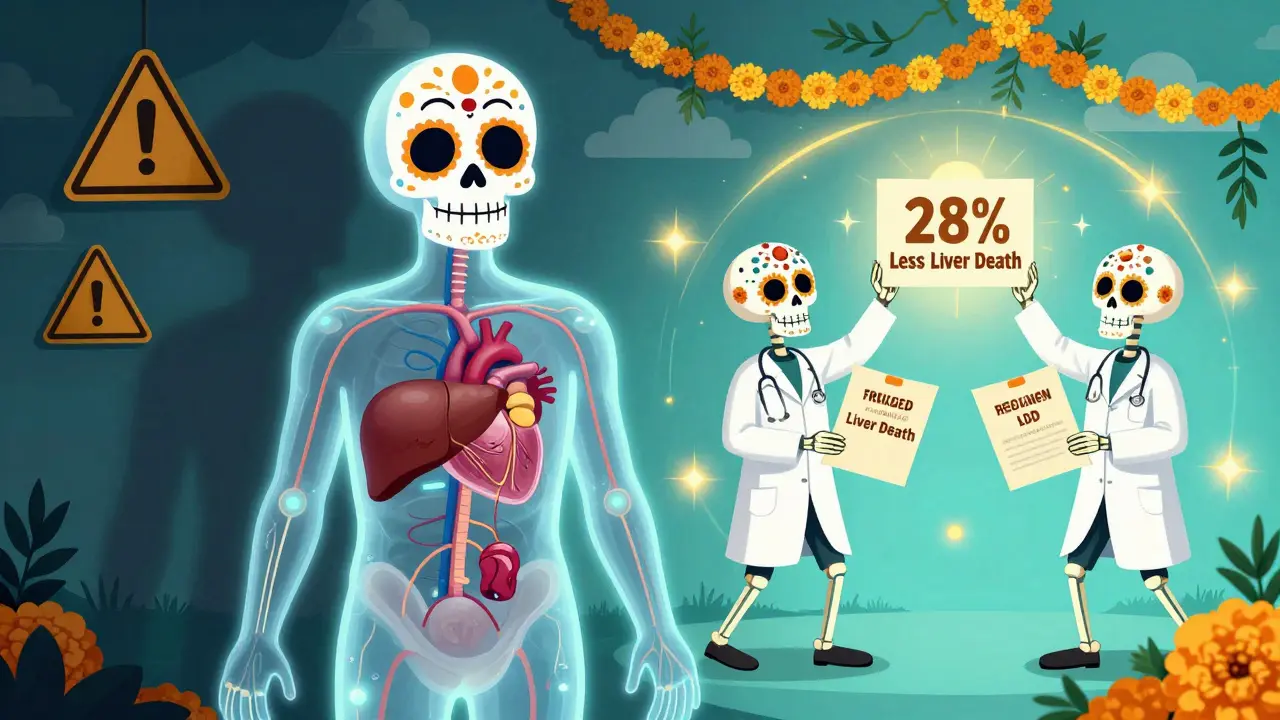
Even in Child-Pugh C cirrhosis-where the liver is severely damaged-statins can still help. A 2023 JAMA Network Open study of nearly 49,000 patients found that high-intensity statins (atorvastatin 40-80 mg, rosuvastatin 20-40 mg) reduced all-cause mortality by 17% compared to low or moderate doses. Yes, the risk of muscle side effects (myopathy) may be slightly higher in advanced liver disease. But the data shows it’s still rare: less than 0.3% in one large Japanese study. And the benefit? A 28% drop in liver-related death. The key is starting low and watching for muscle aches. If someone feels unexplained muscle pain, check CK levels. But don’t stop the statin just because liver enzymes are a little high. That’s not a reason to quit.What Patients Are Saying
Real people are seeing real results. On the American Liver Foundation’s forum, 87% of 142 patients with liver disease reported no liver side effects from statins. Over half said they had more energy. On Reddit’s r/liverdisease, 84% of 58 cirrhosis patients said they had no adverse liver effects. One wrote: “My liver numbers actually improved on atorvastatin.” Another said: “After starting rosuvastatin, my portal hypertension symptoms decreased significantly.” The biggest complaint? Doctors won’t prescribe them. One in three patients said they had to push back, research the guidelines, and even bring printouts to convince their doctor.What About Other Options?
You might wonder: What about ezetimibe? Or PCSK9 inhibitors? Ezetimibe lowers LDL a bit, but it doesn’t have the same proven benefits for liver outcomes. PCSK9 inhibitors are powerful, but they’re expensive and given by injection. They’re not first-line for liver disease patients. Statins are oral, cheap, and backed by decades of data. No other cholesterol drug has shown this kind of dual benefit-heart and liver.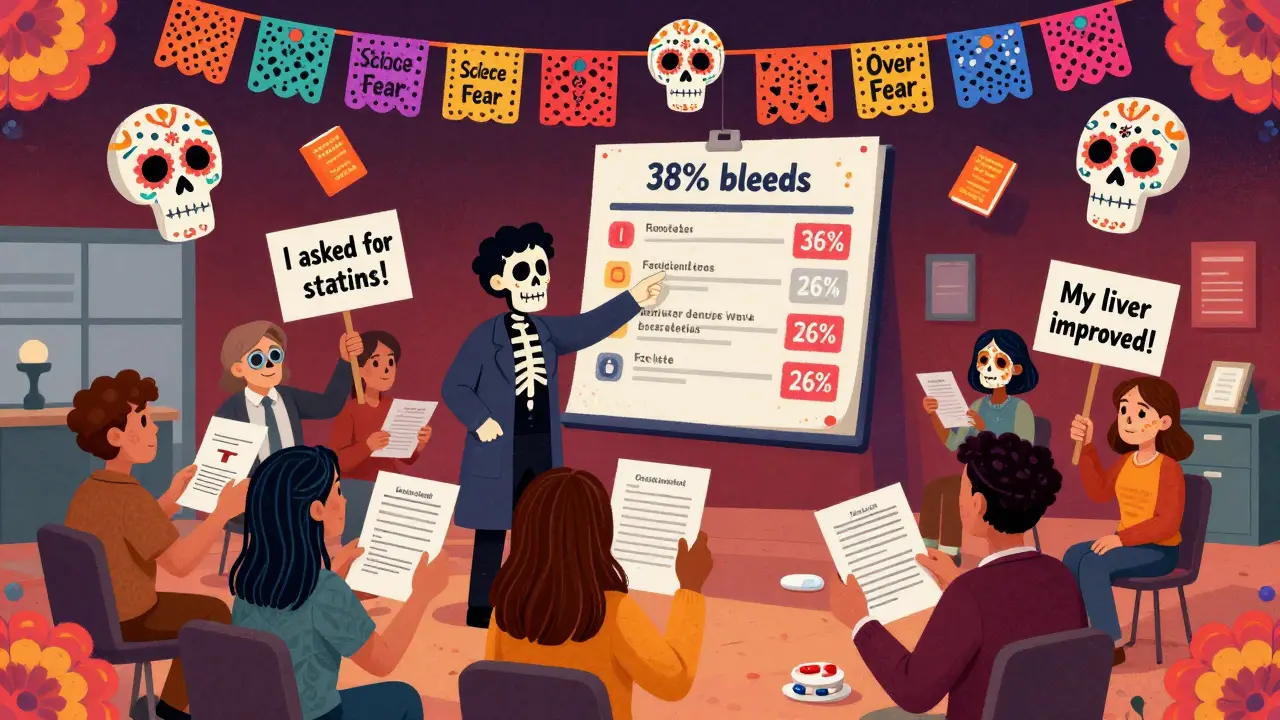
What to Do Next
If you have liver disease and haven’t been offered a statin, ask your doctor why. Ask: “Is my cardiovascular risk high enough to consider a statin?” Ask: “Are you avoiding statins because of outdated concerns about liver damage?” Ask: “Can we start with pravastatin or rosuvastatin at a low dose?” Don’t wait for your doctor to bring it up. The evidence is solid. The guidelines are clear. The risks are tiny. The benefits? They’re huge.What to Avoid
- Don’t stop your statin because your ALT or AST is slightly high. That’s normal. - Don’t take grapefruit juice with simvastatin, lovastatin, or atorvastatin. It can raise drug levels. - Don’t assume statins are unsafe just because you have cirrhosis. They’re not. - Don’t confuse statin side effects with liver disease symptoms. Muscle pain is the main one-not nausea, itching, or jaundice.Looking Ahead
The STATIN-CIRRHOSIS trial (NCT04567891) is currently recruiting patients with decompensated cirrhosis. Results are expected in late 2025. This could be the final nail in the coffin of outdated fears. By 2028, prescriptions for statins in liver disease are expected to grow 3.2% per year. Why? Because doctors are finally catching up to the science. The Institute for Clinical and Economic Review found statins save $1,200 to $3,500 per patient each year by preventing hospitalizations for liver complications. That’s not just good medicine-it’s smart economics. Statins in liver disease aren’t a gamble. They’re a proven strategy. For millions of people with fatty liver, hepatitis, or cirrhosis, they’re the best way to live longer-and better.Are statins safe if I have fatty liver disease?
Yes. Statins are not only safe in non-alcoholic fatty liver disease (NAFLD), they’re recommended by the European Association for the Study of the Liver (EASL) for patients with high cardiovascular risk. Studies show they reduce liver inflammation and may even improve liver enzyme levels over time. Many patients with NAFLD report better energy and fewer symptoms after starting statins.
Can statins cause liver damage?
No. Severe liver injury from statins is extremely rare-about 1 in 100,000 patients per year. Mild, temporary increases in liver enzymes happen in a small number of people but don’t indicate damage. These levels usually return to normal without stopping the medication. The risk of harm from not taking a statin-like a heart attack or stroke-is far greater than any theoretical liver risk.
Should I get my liver enzymes checked regularly while on statins?
No. The American Heart Association and American College of Cardiology no longer recommend routine liver testing for people on statins, even with liver disease. Blood tests before starting are fine, but ongoing monitoring doesn’t prevent harm and often leads to unnecessary discontinuation of a beneficial drug. Only test if you develop symptoms like jaundice, dark urine, or severe fatigue.
Which statin is best for someone with liver disease?
Pravastatin and rosuvastatin are preferred because they don’t rely heavily on liver enzymes for metabolism. This reduces the chance of drug interactions, especially important if you’re taking multiple medications. Start with low doses: pravastatin 20-40 mg or rosuvastatin 5-10 mg. Avoid simvastatin and lovastatin if you’re on many other drugs, as they interact with CYP3A4.
Can statins help prevent bleeding in cirrhosis?
Yes. Statins reduce pressure in the liver’s blood vessels by increasing nitric oxide and improving blood flow. A 2023 study found statins cut the risk of variceal bleeding by 38% in patients with cirrhosis. This is a major benefit since bleeding from swollen veins in the esophagus is one of the deadliest complications of advanced liver disease.
What if my doctor refuses to prescribe a statin because of my liver disease?
Ask for the specific reason. If it’s based on outdated guidelines or fear of liver damage, share the 2022 AASLD and 2021 EASL guidelines that support statin use. Bring printouts or show them the 2023 JAMA study showing reduced mortality. Many doctors still don’t know the latest evidence. You may need to advocate for yourself-but you’re not asking for something experimental. You’re asking for a proven, life-saving treatment.
Do statins help with liver-related death?
Yes. A 2024 study presented at the American Heart Association’s Scientific Sessions showed statins reduced liver-related death by 28% in patients with compensated cirrhosis. This is likely due to reduced portal pressure, less inflammation, and fewer episodes of liver failure. Statins are now one of the few treatments shown to directly improve survival in cirrhosis-not just heart health.