If you're taking medication for high blood pressure, eating black licorice candy or drinking licorice tea might be riskier than you think. It’s not just a sweet treat-it’s a substance that can quietly undo the work of your blood pressure pills. The active ingredient, glycyrrhizin, doesn’t just add flavor. It interferes with how your body handles salt, water, and potassium-exactly the systems your blood pressure meds are trying to control.
How Licorice Messes With Your Blood Pressure Meds
Glycyrrhizin breaks down in your gut into glycyrrhetic acid, which blocks an enzyme called 11β-HSD2. That enzyme normally keeps cortisol, a stress hormone, from acting like aldosterone-a hormone that tells your kidneys to hold onto salt and pee out potassium. When that enzyme is shut down, cortisol starts behaving like aldosterone. Result? Your body holds onto extra fluid and loses potassium. That’s bad news if you’re on blood pressure medication.
Your meds are designed to lower blood pressure by reducing fluid volume or relaxing blood vessels. But if you’re retaining 5-10% more fluid because of licorice, your blood pressure goes up. Even if you take your pills exactly as prescribed, the licorice is working against them. Studies show that people who consume high amounts of licorice see an average increase of 5.45 mmHg in systolic blood pressure-and that’s enough to make your treatment ineffective.
Who’s Most at Risk?
You don’t need to eat pounds of licorice to feel the effects. But you do need to be consistent. Consuming more than 100 mg of glycyrrhizin per day for two to four weeks is where problems start. That’s roughly 60-70 grams of traditional black licorice candy-about the size of a small bar of chocolate eaten daily.
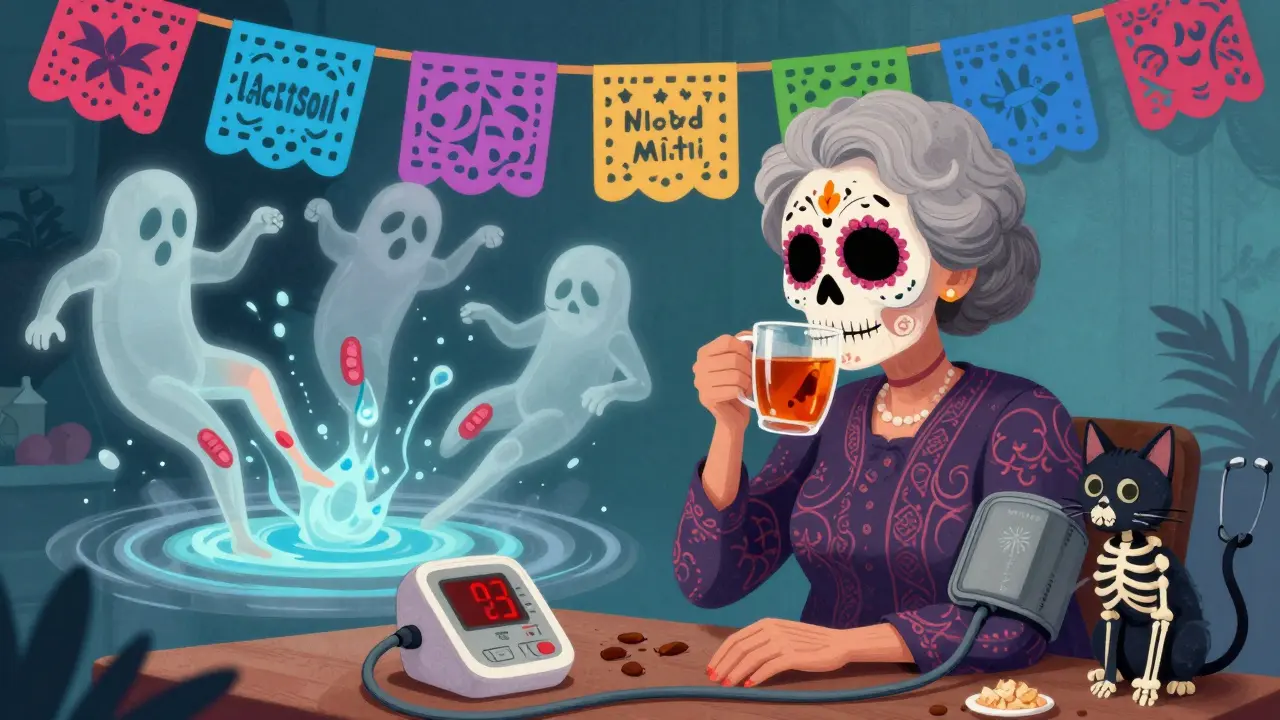
Some people are more sensitive. Older adults, women, and those already diagnosed with high blood pressure or heart disease are at higher risk. Your body processes glycyrrhizin slower as you age, and hormonal differences make women more prone to its effects. If you’ve noticed your blood pressure suddenly rising despite sticking to your meds, or if you’re feeling unusually tired, weak, or swollen in your legs, licorice could be the hidden cause.
Medications That Clash With Licorice
It doesn’t matter what kind of blood pressure medication you’re on-licorice can interfere. But some combinations are especially dangerous.
- Diuretics like hydrochlorothiazide: These help flush out fluid, but they also lower potassium. Licorice does the same thing-so together, they can drop your potassium dangerously low. Levels below 3.5 mmol/L can trigger muscle cramps, irregular heartbeat, or even paralysis.
- Digoxin (Lanoxin): This heart medication becomes toxic when potassium is low. Licorice-induced hypokalemia lets digoxin bind too tightly to heart cells, which can cause life-threatening arrhythmias. There are documented cases of older adults ending up in the hospital with heart failure after taking licorice supplements with digoxin.
- ACE inhibitors like lisinopril or captopril: These reduce fluid volume and relax arteries. Licorice does the opposite-so your blood pressure doesn’t drop like it should.
- Potassium-sparing diuretics like spironolactone: These are meant to keep potassium up. But licorice forces potassium out anyway, making them less effective.
Even if you’re not on these meds, licorice can still raise your blood pressure. But when combined with any of them, the risk jumps from inconvenient to dangerous.
What Counts as Licorice?
Not all licorice-flavored products are created equal. Many red or soft licorice candies use anise oil instead of real licorice root. But traditional black licorice, herbal teas labeled as “licorice root,” and dietary supplements often contain real glycyrrhizin.
Check labels. If it says “licorice root extract,” “Glycyrrhiza glabra,” or “glycyrrhizin,” avoid it if you’re on blood pressure meds. Supplements are especially tricky-they’re not required to list glycyrrhizin content. One capsule might have 50 mg. Two could push you over the 100 mg daily limit.
Even herbal laxatives and cough syrups sometimes contain licorice. If you’re using something natural for a stomach issue or sore throat, double-check the ingredients. What seems harmless could be quietly sabotaging your treatment.
Signs You Might Be Having a Reaction
The effects of licorice build up slowly. You won’t feel sick right away. But after weeks of daily use, symptoms start showing up:
- Unexplained rise in blood pressure (even if you’ve been compliant with meds)
- Muscle weakness, cramps, or twitching
- Swelling in ankles or legs (edema)
- Feeling unusually tired or sluggish
- Heart palpitations or irregular heartbeat
- Low potassium levels confirmed by blood tests
If you’re experiencing any of these, stop licorice immediately and get your potassium and blood pressure checked. A simple blood test can show if your cortisol-to-cortisone ratio is abnormal-this confirms licorice is interfering with your body’s hormone balance.

What to Do Instead
You don’t have to give up all sweets. Just avoid anything made with real licorice root. Look for “anise-flavored” or “licorice-free” labels. If you love the flavor, try deglycyrrhizinated licorice (DGL) supplements. These have the glycyrrhizin removed and are safe for people on blood pressure meds. DGL is commonly used for heartburn and stomach ulcers-and it won’t mess with your kidneys or electrolytes.
If you’ve been eating licorice regularly, don’t quit cold turkey without talking to your doctor. Sudden withdrawal after long-term use can sometimes cause temporary low blood pressure or fatigue. Your provider can help you adjust your meds if needed and monitor your potassium levels.
Why This Isn’t Common Knowledge
Most people don’t realize licorice is a problem because it’s sold as food, not medicine. The FDA doesn’t require manufacturers to list glycyrrhizin content on candy or supplements. You can buy a bag of black licorice at the grocery store with no warning labels. Even some herbalists recommend licorice for “adrenal support” without mentioning the risks.
Doctors often miss it too. If a patient’s blood pressure won’t come down, they check for noncompliance, stress, or kidney disease-but rarely ask about candy or herbal teas. That’s changing. More clinics now screen for licorice use in patients with treatment-resistant hypertension. If your doctor hasn’t asked you about it, bring it up.
Bottom Line
If you’re taking medication for high blood pressure, avoid black licorice, licorice root tea, and supplements containing glycyrrhizin. Even small daily amounts over weeks can reduce your meds’ effectiveness and put you at risk for dangerous side effects. Stick to licorice-free alternatives. Read labels. Talk to your doctor before taking any herbal product. Your blood pressure-and your heart-depend on it.
Can I eat licorice if I’m on blood pressure medication?
No, if you’re taking blood pressure medication, avoid traditional black licorice and supplements containing glycyrrhizin. Even small daily amounts can raise your blood pressure and lower your potassium, making your meds less effective. Stick to deglycyrrhizinated licorice (DGL) or anise-flavored alternatives if you want the flavor.
How much licorice is too much?
More than 100 mg of glycyrrhizin per day for two to four weeks can cause problems. That’s about 60-70 grams of traditional black licorice candy daily. Some people are more sensitive-especially older adults and women-so even lower amounts can be risky if consumed regularly.
Does all licorice contain glycyrrhizin?
No. Many red or soft licorice candies use anise oil instead of licorice root. Check the ingredient list: if it says “licorice root,” “Glycyrrhiza glabra,” or “glycyrrhizin,” it contains the active compound. Most herbal teas and supplements do. Look for “DGL” or “licorice-free” if you’re unsure.
What are the signs of licorice toxicity?
Symptoms include rising blood pressure, muscle weakness, swelling in the legs, fatigue, heart palpitations, and low potassium. In severe cases, it can cause abnormal heart rhythms or even heart failure, especially when combined with digoxin. If you notice these after eating licorice, stop immediately and see your doctor.
Can I take DGL instead of regular licorice?
Yes. Deglycyrrhizinated licorice (DGL) has the glycyrrhizin removed, so it doesn’t affect blood pressure or potassium. It’s safe for people on blood pressure medication and is often used for digestive issues like heartburn. Just make sure the product is labeled “DGL” and doesn’t contain added glycyrrhizin.
Should I tell my doctor if I’ve been eating licorice?
Absolutely. Many doctors don’t ask about herbal products or candy, but if your blood pressure isn’t responding to treatment, licorice could be the reason. Tell them what you’ve been consuming, how often, and for how long. This helps them rule out dietary causes and adjust your treatment plan safely.