When diabetes damages the kidneys, it doesn’t happen overnight. It starts quietly-tiny amounts of protein leaking into the urine, a sign the filtering units in the kidneys are wearing out. This is diabetic nephropathy, the leading cause of kidney failure in people with diabetes. Left unchecked, it can lead to dialysis or transplant. But there’s a powerful, well-studied way to slow it down: ACE inhibitors and ARBs. These aren’t just blood pressure pills. They’re kidney protectors, and when used right, they can change the course of the disease.
What Exactly Is Diabetic Nephropathy?
Diabetic nephropathy isn’t just high blood pressure or high sugar. It’s a specific type of kidney damage caused by long-term diabetes. The key sign? Persistent albuminuria-meaning more than 30 mg of protein per day in the urine, confirmed on two tests at least three months apart. This isn’t a one-time blip. It’s a signal that the tiny filters in the kidneys (glomeruli) are breaking down. Over time, this leads to scarring, reduced kidney function, and eventually, end-stage kidney disease. About 1 in 3 adults with diabetes will develop this. And it doesn’t just hurt the kidneys-it raises the risk of heart attack and stroke dramatically.
Why ACE Inhibitors and ARBs Are First-Line
For over 20 years, ACE inhibitors and ARBs have been the go-to treatment for diabetic nephropathy. Why? Because they do something no other blood pressure drug can: they directly reduce protein leakage from the kidneys. That’s not just a lab number-it’s protection. Lower protein in the urine means slower kidney damage.
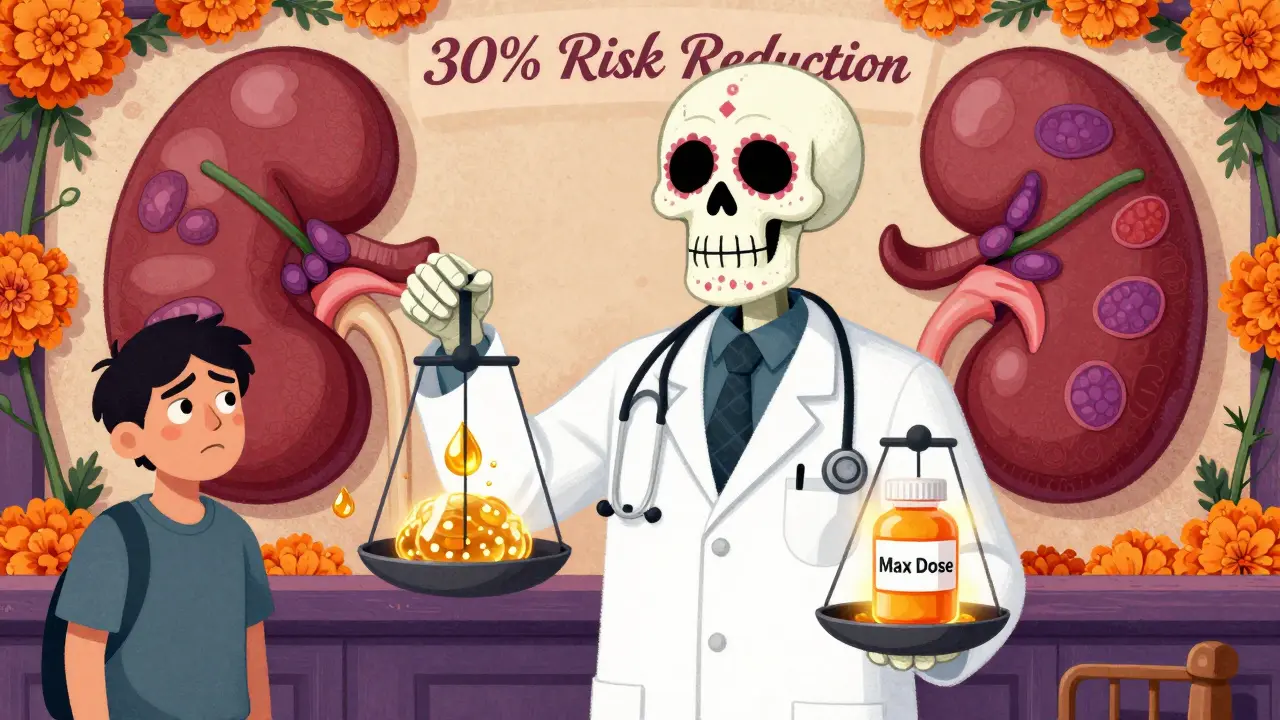
Both drugs block the renin-angiotensin-aldosterone system (RAAS), a hormone chain that tightens blood vessels and increases pressure inside the kidney’s filters. By relaxing those vessels, they lower the pressure inside the glomeruli. Less pressure means less strain, less protein loss, and less scarring. Studies like RENAAL and IDNT showed ARBs like losartan and irbesartan cut the risk of needing dialysis by up to 30% in people with severe proteinuria. ACE inhibitors like captopril and ramipril showed similar results.
How Much Do You Need to Take?
Here’s where things go wrong in real-world care. Many doctors start patients on low doses because they’re afraid of side effects. But that’s not enough. Clinical trials that proved these drugs work used maximally tolerated doses. A dose that’s too low gives you no kidney protection.
For example:
- Captopril: 25 mg three times daily (not once)
- Ramipril: Up to 10-20 mg daily
- Benazepril: 20-40 mg daily
- Losartan: 50-100 mg daily
- Irbesartan: 150-300 mg daily
Guidelines from the American Diabetes Association (ADA) and Kidney Disease: Improving Global Outcomes (KDIGO) are clear: titrate to the highest dose the patient can handle. If a patient can’t tolerate a higher dose because of cough or dizziness, switch to the other class-not reduce the dose. Many patients are stuck on 12.5 mg of lisinopril when they need 40 mg. That’s not treatment. That’s token therapy.
What About Rising Creatinine?
A common reason doctors stop these drugs? A small rise in serum creatinine. But here’s the truth: if creatinine goes up by less than 30% and the patient isn’t dehydrated, that’s not kidney damage. It’s the drug working. Lowering pressure inside the kidney means less blood flow through the filters-so creatinine rises slightly. That’s a sign of protection, not harm.
Stopping the medication because of this rise is one of the biggest mistakes in diabetes care. The ADA calls it suboptimal. Don’t confuse a hemodynamic effect with true kidney injury. Keep the drug going. Monitor. Recheck in a week. If it stabilizes, you’re doing right.
Don’t Combine ACE Inhibitors and ARBs
You might think doubling down would help. It doesn’t. Studies like VA NEPHRON-D, ONTARGET, and ALTITUDE showed combining an ACE inhibitor with an ARB doesn’t slow kidney disease any further. What it does do? Triple the risk of dangerously high potassium (hyperkalemia) and double the chance of sudden kidney failure. The same goes for adding drugs like aliskiren (a direct renin inhibitor). No benefit. Big risk. Avoid this combo entirely.
What About Other Drugs?
Diuretics, calcium channel blockers, and beta-blockers? They’re fine-but only as add-ons. If a patient needs more blood pressure control after hitting the max dose of an ACE inhibitor or ARB, then yes, add these. But never use them instead. They don’t reduce proteinuria like RAAS blockers do.
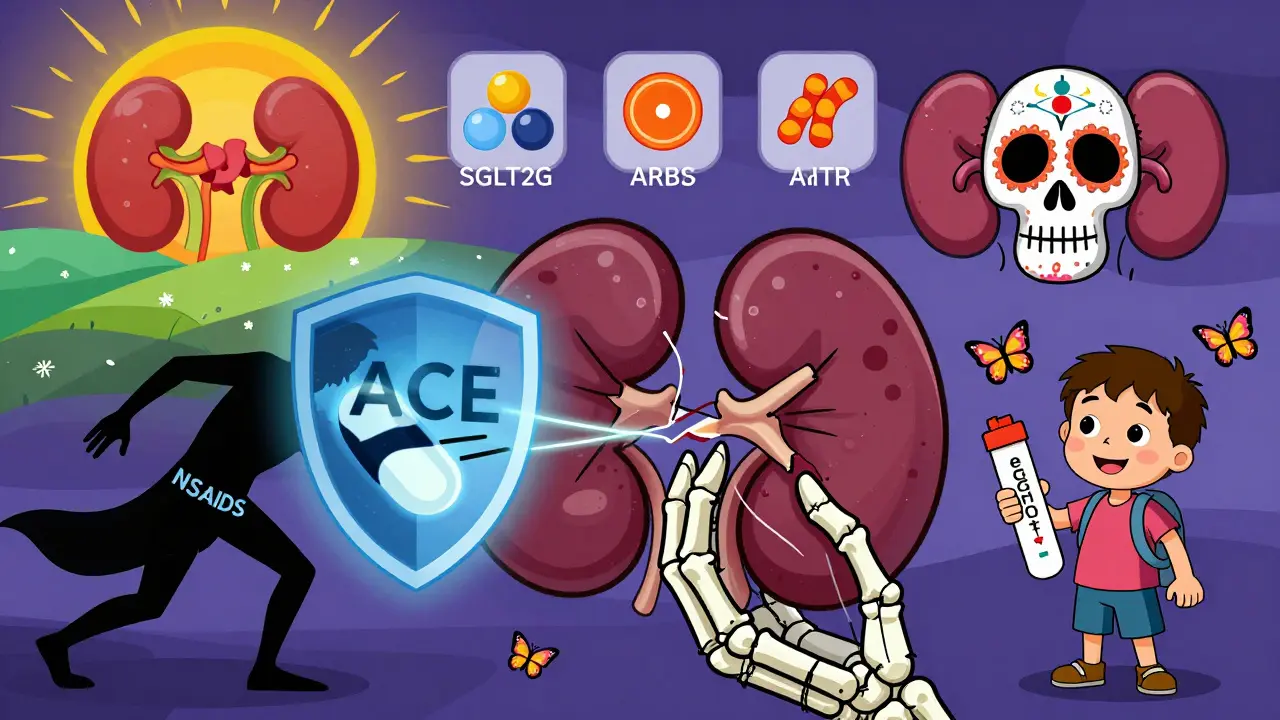
And what about newer drugs like SGLT2 inhibitors (e.g., empagliflozin, dapagliflozin)? They’re powerful. They reduce kidney disease progression and heart failure risk. But here’s the key: every major trial for SGLT2 inhibitors was done in patients already on maximally tolerated ACE inhibitors or ARBs. These drugs work best together, not instead of.
Who Should Get Them?
Not everyone with diabetes needs these drugs. The guidelines are specific:
- Start ACE inhibitors or ARBs if you have diabetes + high blood pressure + protein in your urine (UACR ≥300 mg/g).
- Start them if you have diabetes + eGFR below 60, even if urine protein is normal.
- Don’t start them in people with diabetes who have normal blood pressure, normal kidney function, and no protein in the urine. No benefit. No need.
And here’s a critical point: don’t wait for symptoms. By the time swelling or fatigue shows up, damage is advanced. Screen yearly with a urine albumin test and eGFR. If you’re diabetic and over 40, ask your doctor for these tests.
What to Avoid
Some medications make kidney damage worse when used with ACE inhibitors or ARBs:
- NSAIDs (ibuprofen, naproxen): These cut blood flow to the kidneys. Combine them with RAAS blockers? Risk of sudden kidney failure goes up sharply.
- Loop diuretics (furosemide, torsemide): Useful for swelling, but when paired with ACE/ARBs, they raise the risk of dehydration and kidney injury. Monitor closely.
- Contrast dye for CT scans: Stop the ACE/ARB for 24-48 hours before the scan, then restart once kidney function is stable.
Why So Many Patients Still Don’t Get Them
Studies show only 60-70% of eligible patients with diabetic kidney disease are actually on these drugs. Why? Three reasons:
- Doctors fear creatinine rise and stop the drug too soon.
- Patients don’t feel sick, so they skip pills.
- Prescribing habits lag behind guidelines-many still use low doses.
This isn’t about lack of knowledge. It’s about fear and inertia. But the evidence is overwhelming: if you have diabetic nephropathy and aren’t on a maximally tolerated ACE inhibitor or ARB, you’re at higher risk for kidney failure. That’s not a gamble. That’s preventable.
The Bottom Line
Diabetic nephropathy is serious, but it’s not inevitable. ACE inhibitors and ARBs are the foundation of treatment. They reduce proteinuria, slow kidney decline, and lower heart risk. But only if used at the right dose. Don’t settle for half-measures. Ask your doctor: "Am I on the highest tolerated dose?" and "Is my creatinine rise a sign of protection, not harm?" If you’re on these drugs, don’t stop them because of a small lab change. And if you’re not on them and you have protein in your urine or reduced kidney function-ask why not. Your kidneys are counting on it.