Most people don’t think about their liver until something goes wrong. But by the time symptoms show up, it’s often too late. Nonalcoholic fatty liver disease (NAFLD), now more accurately called Metabolic Associated Fatty Liver Disease (MAFLD), affects about 1 in 4 people worldwide. In the U.S. and Europe, that number jumps to nearly 1 in 3. And here’s the scary part: most of those people have no idea they have it.
MAFLD isn’t caused by drinking. It’s caused by the same things driving the obesity and diabetes epidemics: too much sugar, too little movement, and metabolic chaos. The liver gets overwhelmed with fat. At first, it’s just stored-harmless, silent. But over time, that fat turns toxic. Inflammation kicks in. Scarring begins. And without intervention, it can lead to cirrhosis, liver failure, or even cancer.
How MAFLD Progresses: From Silent Fat to Scarring
The journey from a healthy liver to a damaged one doesn’t happen overnight. It starts with simple steatosis-fat making up more than 5% of liver cells. This is NAFL. At this stage, your liver enzymes might be normal. You feel fine. But inside, things are already shifting.
Insulin resistance is the main driver. When your body can’t use insulin properly, fat cells start leaking fatty acids into your bloodstream. Your liver, already flooded with sugar from processed carbs, turns that sugar into even more fat. Studies show that in people with MAFLD, up to 26% of liver fat comes from new fat production inside the liver itself-compared to just 5% in healthy people.
That fat doesn’t just sit there. It triggers oxidative stress, damages mitochondria, and wakes up immune cells in the liver. This is where it turns into NASH-nonalcoholic steatohepatitis. Now you’ve got inflammation and liver cell death. The liver tries to heal itself by making scar tissue. That’s fibrosis. And if it keeps going, fibrosis turns into cirrhosis-the liver becomes stiff, lumpy, and can’t function.
Not everyone progresses. Some people stay at the fatty stage for life. But others move quickly. Why? Genetics play a role. So does gut health. A leaky gut lets bacteria and toxins into the bloodstream, which go straight to the liver and fuel inflammation. And the more belly fat you have, the higher your risk. A 2022 study found that people with visceral fat over 100 cm² had a 5x higher chance of developing advanced fibrosis.
Reversing MAFLD: It’s Not Magic-It’s Mechanics
The good news? MAFLD is one of the few chronic liver diseases you can actually reverse. Not just slow down. Reverse. The science is clear: lose weight, move more, eat better-and your liver can heal.
The most powerful tool? Weight loss. Losing just 3% to 5% of your body weight reduces liver fat. Lose 7% to 10%, and you can clear up inflammation and even reduce fibrosis. The LEAN study in 2013 showed that 90% of people with NASH who lost 10% of their body weight saw their liver inflammation disappear.
But not all weight loss is equal. Crash diets don’t work. They make your liver worse. Sustainable changes do.
The Mediterranean Diet: The Only Proven Eating Plan
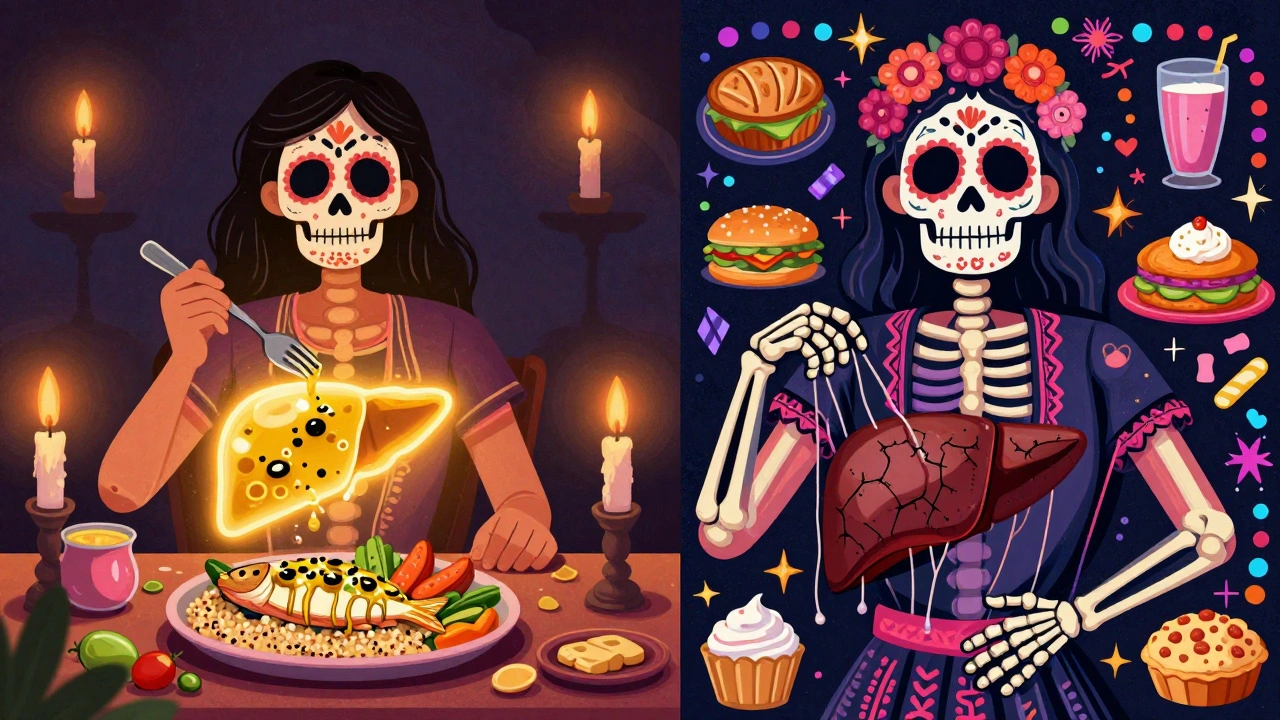
Forget low-fat. Forget keto. The Mediterranean diet is the gold standard. It’s not a fad-it’s a lifestyle. Think olive oil, vegetables, nuts, fish, legumes, whole grains, and minimal sugar. A 2019 study showed that after six months on this diet, 60-70% of people saw a significant drop in liver fat.
Here’s what it looks like in practice:
- Breakfast: Oatmeal with walnuts and berries, not cereal with syrup
- Lunch: Grilled salmon, quinoa, and roasted broccoli with olive oil
- Dinner: Lentil stew with spinach and a slice of sourdough
- Snacks: Almonds, hummus, apple slices
It’s high in fiber (25-30 grams a day), which helps control blood sugar and feeds good gut bacteria. It’s rich in antioxidants from colorful plants, which fight liver inflammation. And it’s naturally low in added sugar and refined carbs-the two biggest triggers of fat buildup in the liver.
Exercise: Not Just for Weight Loss
Exercise doesn’t just burn calories. It reprograms your liver. Aerobic activity-walking, cycling, swimming-burns fat directly from the liver. Resistance training-weights, bands, bodyweight-builds muscle, which improves insulin sensitivity.
One study found that people who did both aerobic and strength training lost 30% more liver fat than those who only did cardio. You don’t need to run a marathon. 150 minutes a week of brisk walking (that’s 30 minutes, five days a week) plus two days of lifting or pushing/pulling exercises is enough.
And timing matters. A 2023 study showed that doing exercise before meals reduced post-meal blood sugar spikes by 25%, which means less fat gets stored in the liver.
Medications: What Works, What Doesn’t
There’s no magic pill yet. But some drugs show real promise.
Pioglitazone (a diabetes drug) improves liver inflammation in about half of patients. But it causes weight gain-2 to 4 kilograms on average. Not ideal if you’re trying to lose fat.
GLP-1 receptor agonists like semaglutide (Wegovy) and liraglutide (Victoza) are game-changers. They help you lose weight, reduce liver fat, and lower inflammation. One trial showed a 28% drop in a key liver damage marker. But they’re expensive, and insurance often denies them for MAFLD alone-even though they’re FDA-approved for weight loss.
Resmetirom, approved by the FDA in March 2024, is the first drug specifically for NASH. It targets the thyroid hormone receptor in the liver, boosting fat burning and reducing scarring. In trials, it cleared NASH in 26% of patients-double the placebo rate. It’s not a cure, but it’s a major step forward.
Other drugs in the pipeline include lanifibranor and combination therapies. But for now, lifestyle is still the most effective treatment.
The Gut-Liver Connection: Why Your Digestion Matters
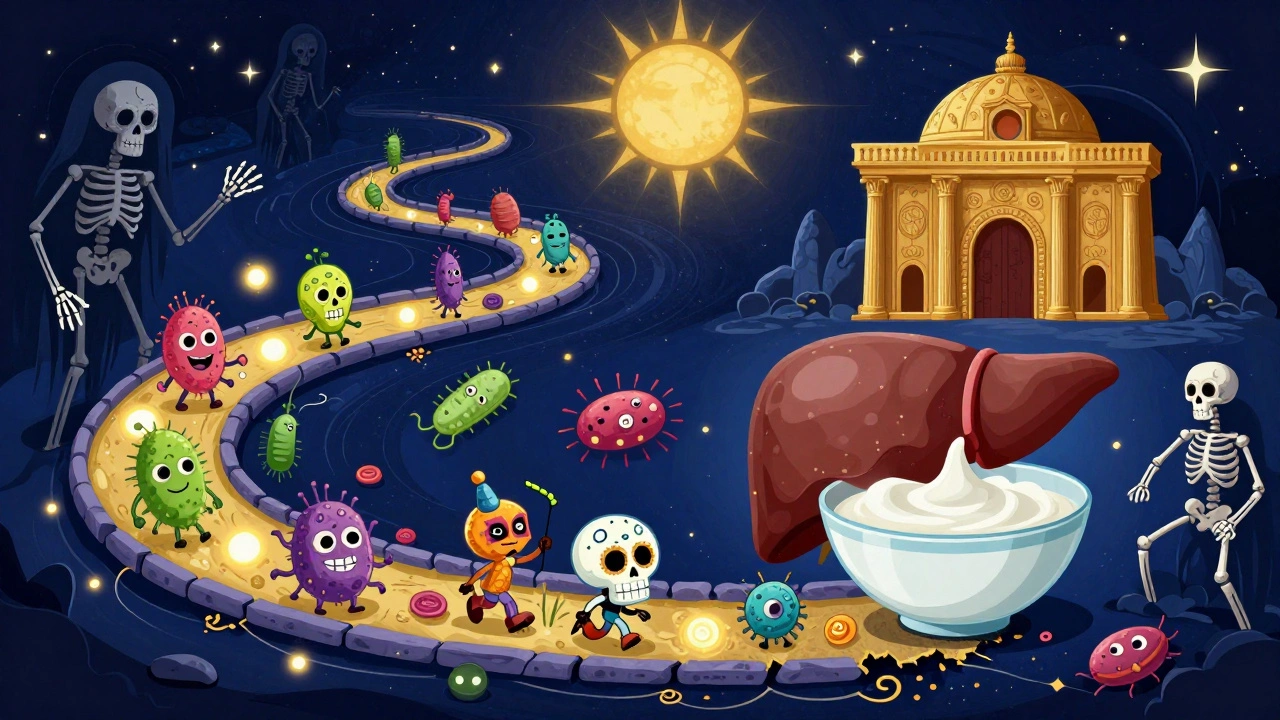
Your gut and liver are best friends. When your gut lining gets damaged (from sugar, alcohol, or antibiotics), bad bacteria and toxins leak into your blood. These toxins go straight to your liver and trigger inflammation.
Studies show that people with NASH have different gut bacteria than healthy people. Probiotics like Lactobacillus rhamnosus GG have been shown in mice to reduce liver fat by 40%. Human trials are smaller, but promising. One pilot study found that fecal transplants from healthy donors improved liver fat by 25-30% in just a few weeks.
So eat fermented foods: yogurt with live cultures, sauerkraut, kimchi, kefir. Avoid artificial sweeteners-they mess with gut bacteria. And eat more fiber. It’s not just for digestion. It’s your liver’s best friend.
What Doesn’t Work (and Why People Get Frustrated)
Many people try everything: juice cleanses, detox teas, liver supplements. None of them work. Milk thistle? No solid evidence. Vitamin E? Only helpful in specific cases, and high doses can be risky.
And yes, progress is slow. Liver fat doesn’t vanish in a month. It takes 6 to 12 months of consistent effort to see real change. Blood tests improve in 3 to 6 months. Fibrosis takes longer. That’s why so many people give up. Reddit threads are full of people saying, “I’ve been eating clean for a year and my ALT is still high.” But they’re not measuring the right thing. Liver enzymes don’t tell the whole story. FibroScan or MRI-PDFF scans do.
And here’s the cruel reality: most doctors don’t screen for MAFLD. Only 35% of primary care offices have access to FibroScan. Insurance rarely covers it. So people are left guessing.
How to Know If You’re Getting Better
You can’t feel your liver healing. But you can measure it.
- Weight loss: 7-10% reduction over 6-12 months
- Blood tests: ALT and AST levels dropping toward normal (below 30 U/L for men, below 19 U/L for women)
- Imaging: FibroScan (transient elastography) showing lower liver stiffness scores
- Metabolic markers: Lower fasting insulin, improved HbA1c, reduced waist circumference
If you’re losing belly fat, feeling more energy, and your blood sugar is steadier-you’re on the right track. Don’t wait for a doctor to confirm it. Track your own progress.
What’s Next: The Future of MAFLD
By 2030, NASH is expected to become the top reason for liver transplants. But it doesn’t have to be. We have the tools now. We just need to use them.
AI is helping. Algorithms like Deep Liver can predict fibrosis risk with 89% accuracy using simple blood tests and imaging. That means you might not need a biopsy to know your risk.
And the name change to MAFLD? It’s more than semantics. It shifts the focus from “what’s not causing it” to “what is causing it”-metabolic dysfunction. That means doctors will start treating it like diabetes or heart disease: early, aggressively, and with lifestyle at the core.
The next five years will bring new drugs, better screening, and more awareness. But none of it matters if you don’t act now.
Your liver doesn’t need a miracle. It needs consistency. One meal at a time. One walk at a time. One day at a time.
Can you reverse fatty liver without losing weight?
It’s extremely difficult. Weight loss is the single most effective intervention. Even modest loss (3-5%) reduces liver fat, but for inflammation and fibrosis, you need 7-10%. Some people with mild disease may improve with diet and exercise alone, but without weight loss, long-term reversal is unlikely.
Is MAFLD the same as NAFLD?
MAFLD is the newer, more accurate term. NAFLD was defined by what it wasn’t-no alcohol, no viruses. MAFLD is defined by what it is: fat in the liver plus metabolic dysfunction like obesity, type 2 diabetes, or high blood pressure. The shift helps doctors treat the root cause, not just rule out others.
Can I drink alcohol if I have MAFLD?
No. Even small amounts can speed up liver damage. The definition of MAFLD excludes significant alcohol use-but that doesn’t mean it’s safe. Alcohol increases oxidative stress and inflammation. For anyone with fatty liver, complete abstinence is the safest choice.
Do I need a liver biopsy?
Not usually. Non-invasive tests like FibroScan, ELF blood test, or MRI-PDFF are now preferred. Biopsies are only used when results are unclear or if advanced fibrosis is suspected. Most people can be monitored without a needle.
How long does it take to reverse MAFLD?
Liver fat can drop in 3-6 months with consistent lifestyle changes. Inflammation (NASH) takes longer-usually 6-12 months. Fibrosis improvement can take 1-2 years. Patience and persistence are key. The liver is resilient, but it needs time.