
If you’re taking medication for high blood pressure, and you’ve been sipping licorice tea, snacking on black licorice candy, or popping herbal supplements labeled "licorice root," you could be putting your health at serious risk. It’s not just a myth or an old wives’ tale - licorice root can quietly undo the work of your blood pressure meds, sometimes within days.
What’s Actually in Licorice Root?
Licorice root comes from the plant Glycyrrhiza glabra, and it’s been used for thousands of years - from ancient Egyptian remedies to traditional Chinese medicine - for coughs, stomach issues, and sore throats. But what makes it sweet isn’t just flavor. The real culprit is a compound called glycyrrhizin, which is about 50 times sweeter than sugar and has powerful effects on your body’s salt and water balance.Glycyrrhizin breaks down in your body into glycyrrhetic acid, which blocks an enzyme called 11β-hydroxysteroid dehydrogenase type 2. That enzyme normally keeps cortisol - a stress hormone - from acting like aldosterone, a hormone that makes your kidneys hold onto salt and water. When that enzyme is blocked, cortisol starts mimicking aldosterone. The result? Your body holds onto more sodium, loses potassium, and retains extra fluid. All of that pushes your blood pressure up.
How Much Is Too Much?
You don’t need to eat a whole bag of candy to trigger this. Research shows that consuming more than 100 mg of glycyrrhizin per day for two weeks or longer can cause noticeable problems. That’s roughly 50 grams - about 1.75 ounces - of real licorice candy. But here’s the catch: not all licorice products are created equal.In the U.S., most black licorice candy sold in stores doesn’t even contain real licorice root. About 95% use anise oil instead, which tastes similar but doesn’t carry the risk. But if you’re buying herbal teas, supplements, or imported candies, you might be getting the real thing. Look for ingredients like "Glycyrrhiza glabra," "licorice extract," or "glycyrrhizin" on the label. If it’s not listed, it’s probably safe - but if it is, proceed with extreme caution.
How It Interferes With Your Blood Pressure Meds
Licorice doesn’t just raise blood pressure - it makes your medications less effective. Here’s how it breaks down by drug class:- ACE inhibitors (like lisinopril): Licorice can reduce their effectiveness by 30-50%. One patient in a 2006 study saw his systolic pressure jump from 128 to 172 mmHg after just 10 days of daily licorice tea.
- ARBs (like losartan): Effectiveness drops by around 25%. The body’s fluid retention overwhelms the drug’s ability to relax blood vessels.
- Calcium channel blockers (like amlodipine): Blood pressure control worsens by 15-20%. Some studies suggest licorice may also interfere with how these drugs are broken down in the liver, making the interaction even harder to predict.
- Potassium-sparing diuretics (like spironolactone): This is the most dangerous combo. Licorice causes potassium loss, while these drugs try to keep potassium high. The result? A tug-of-war that leaves your electrolytes out of balance and your blood pressure soaring. One case report showed a patient’s BP hitting 210/115 mmHg after combining the two.
The effects don’t disappear right away. Glycyrrhizin sticks around in your system for up to two weeks after you stop taking it. So even if you quit licorice, your blood pressure might stay elevated for days - or even weeks - while your body resets.

Real People, Real Consequences
This isn’t theoretical. People are ending up in emergency rooms because of this interaction.A 68-year-old man in Canada was managing his blood pressure well on lisinopril - until he started drinking licorice tea daily for "digestive support." Within 10 days, his BP spiked from 130/80 to 185/105. His doctor found the cause only after asking about supplements.
On Reddit, a user named u/HypertensionWarrior shared how their doctor discovered they were eating licorice candy while on amlodipine. Their systolic pressure climbed 22 points over two weeks. They had no idea the candy contained real licorice root.
Even more alarming: a New Zealand case report from 2019 described a 55-year-old man on fludrocortisone (a steroid that also affects salt balance) who developed panic attacks and a blood pressure of 210/115 after starting licorice supplements. He was hospitalized.
Of the 84 relevant posts on PatientsLikeMe about licorice and blood pressure, 92% reported worsened control. Seventeen of those cases required emergency care.
What About DGL Licorice?
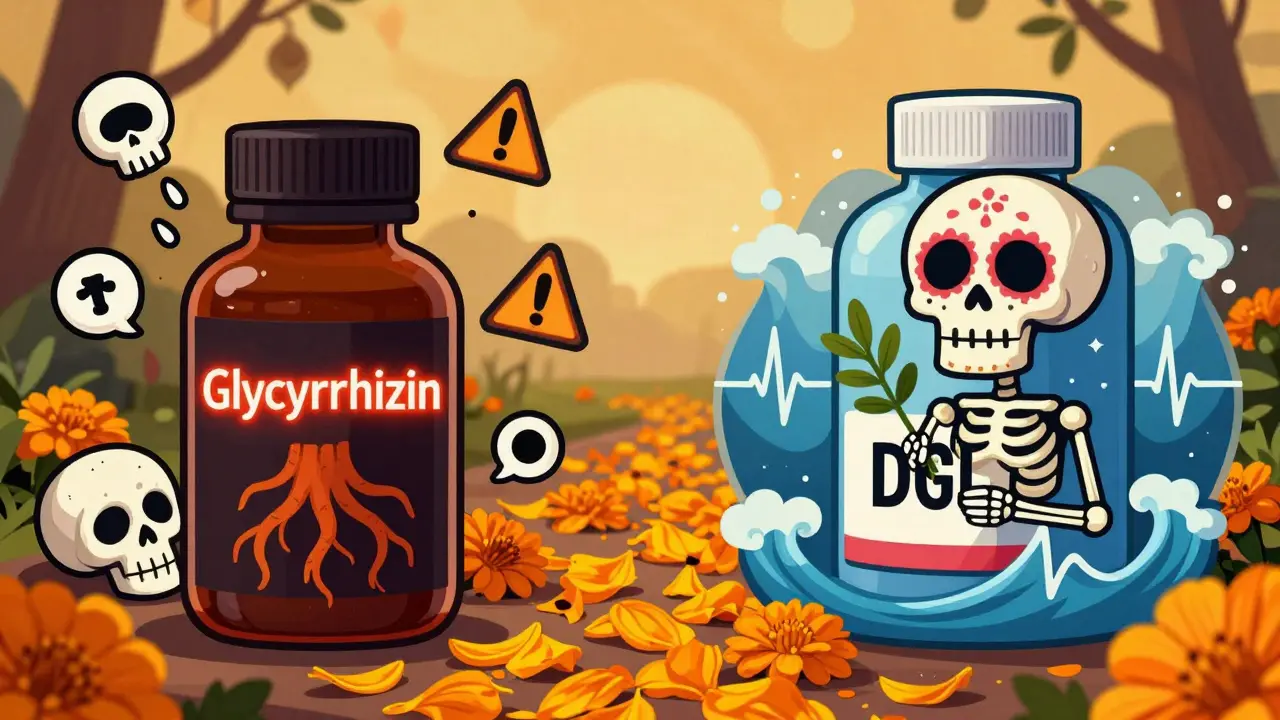
You might see "DGL" on supplement labels - that stands for deglycyrrhizinated licorice. This version has the glycyrrhizin removed, so it doesn’t affect blood pressure or potassium levels. DGL is commonly used for stomach ulcers and heartburn, and it’s considered safe for people on blood pressure meds.If you’re using licorice for digestive issues, make sure you’re getting DGL - not regular licorice root. Check the label carefully. If it says "licorice root extract" without mentioning "deglycyrrhizinated," assume it’s risky.
What Should You Do?
If you’re on blood pressure medication, here’s your action plan:- Stop all licorice root products - including teas, candies, capsules, and herbal blends - unless they’re clearly labeled as DGL.
- Check your labels. Look for "Glycyrrhiza glabra," "licorice extract," or "glycyrrhizin." Avoid them.
- Ask your pharmacist. Many herbal supplements, cough syrups, and even some tobacco products contain licorice root. Pharmacists can check your current products for hidden sources.
- Monitor your potassium. If you’ve been taking licorice, even briefly, ask your doctor for a blood test. Levels below 3.5 mmol/L are dangerous and can cause muscle weakness, irregular heartbeat, or worse.
- Track your blood pressure. If you’ve recently stopped licorice, keep checking your BP daily for at least two weeks. It may take time to return to normal.
Why Is This Still a Problem?
Despite decades of research, many people don’t know about this interaction. In the U.S., the FDA hasn’t required warning labels on licorice supplements, even though the European Union has since 2012. A 2021 study found that only 37% of licorice supplement labels mention the risk to blood pressure.And it’s not just candy. Licorice root is a common ingredient in traditional Chinese medicine formulas - about 25% of them contain it. It’s also in 30% of herbal laxatives. People take these for "natural" relief without realizing they’re sabotaging their heart health.
The supplement industry is worth nearly $200 million a year globally, and licorice root is one of the most popular herbs. But without clear labeling or consumer education, people are walking into this trap unknowingly.
What’s Changing?
There’s hope on the horizon. The FDA’s proposed Dietary Supplement Listing Act of 2023 would require manufacturers to list active ingredients - including glycyrrhizin - with exact amounts. If passed, this would make it much easier for patients and doctors to spot risky products.In the meantime, the best defense is awareness. If you’re on blood pressure medication, treat licorice root like alcohol or grapefruit - something you avoid unless your doctor says it’s safe.
Can I have licorice tea if I’m on blood pressure medication?
No. Most licorice teas are made from real licorice root and contain glycyrrhizin. Even one cup a day over several weeks can raise your blood pressure and reduce the effectiveness of your meds. If you want a sweet herbal tea, choose rooibos, chamomile, or peppermint instead.
Does all black licorice contain licorice root?
No. In the U.S., about 95% of black licorice candy uses anise oil for flavor, not real licorice root. But imported candies, organic brands, and herbal products often contain the real thing. Always check the ingredient list for "Glycyrrhiza glabra" or "licorice extract."
How long does it take for licorice to affect blood pressure?
Effects can show up in as little as a few days, but significant changes usually occur after two weeks of daily use. The longer you take it, the worse the effect becomes. Even after you stop, it can take up to two weeks for your body to clear glycyrrhizin and return to normal.
Can licorice root cause low potassium?
Yes. Licorice root causes your kidneys to excrete potassium, leading to low levels (hypokalemia). Studies show potassium can drop by 0.5-1.5 mmol/L within 10 days of regular use. This can cause muscle cramps, fatigue, and dangerous heart rhythms. If you’re on diuretics or have kidney issues, this risk is even higher.
Is DGL licorice safe for people on blood pressure meds?
Yes. DGL (deglycyrrhizinated licorice) has had the glycyrrhizin removed, so it doesn’t affect blood pressure or potassium levels. It’s commonly used for stomach ulcers and acid reflux. Just make sure the product specifically says "DGL" - if it just says "licorice root," it’s not safe.
Final Thoughts
Your blood pressure medication works because it’s carefully balanced with your body’s chemistry. Licorice root throws that balance off - not with a loud warning, but with a slow, silent creep. It doesn’t matter if you think you’re being "natural" or "gentle." If you’re taking it daily, you’re likely undermining your treatment.If you’ve been using licorice root and your blood pressure hasn’t improved - or has gotten worse - this might be why. Talk to your doctor or pharmacist. Get your potassium checked. Stop the licorice. And don’t assume something labeled "herbal" or "natural" is automatically safe. Sometimes, the most dangerous things are the ones that taste sweet.