Hyperkalemia ECG Risk Visualizer
Serum Potassium Level
Slide to see how potassium levels affect heart rhythm
Cardiac Risk Assessment
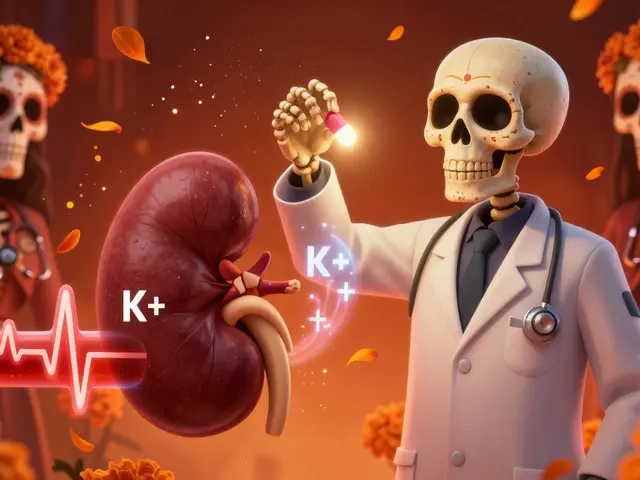
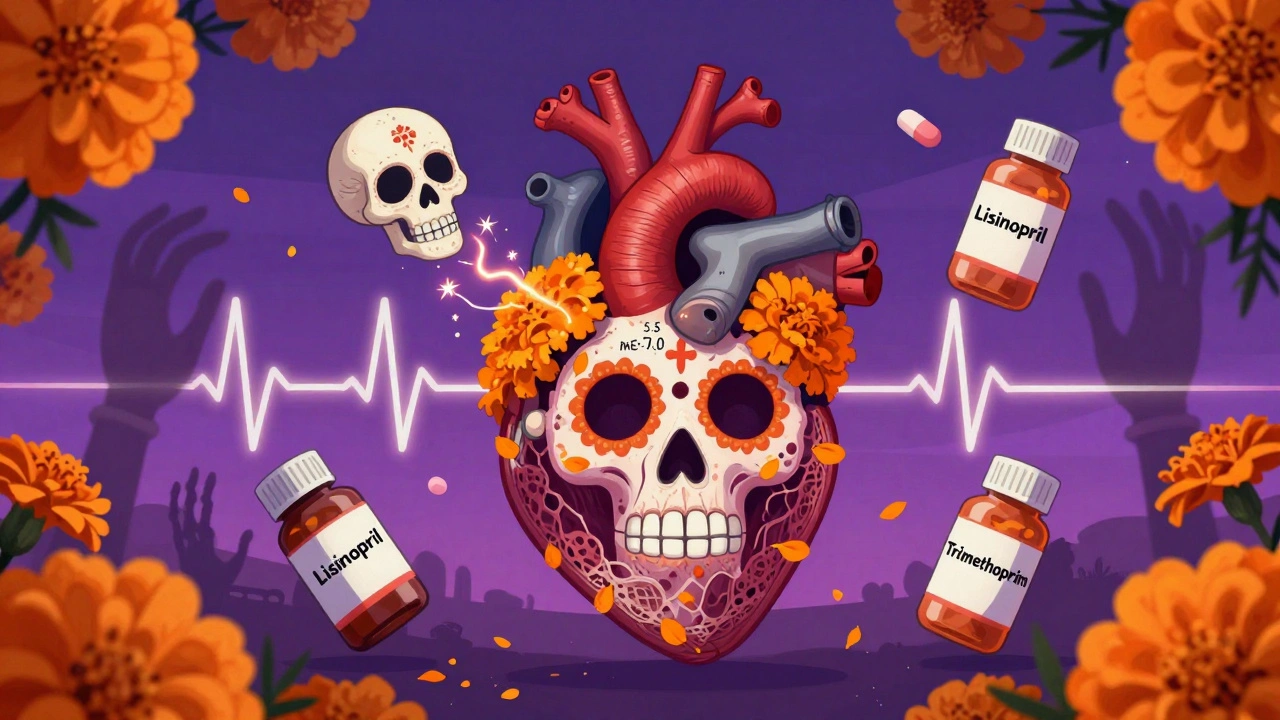
When your blood potassium climbs too high, your heart doesn’t just skip a beat-it can stop. This isn’t science fiction. It’s a real, preventable danger hiding in plain sight, tucked inside common prescriptions for high blood pressure, heart failure, and kidney disease. Many people take these medications without knowing they’re walking a tightrope between life-saving therapy and sudden cardiac risk. Hyperkalemia-defined as serum potassium above 5.5 mEq/L-isn’t rare. It affects up to 20% of patients on RAAS inhibitors like lisinopril, losartan, or spironolactone. And when it hits, especially above 6.5 mEq/L, the clock starts ticking.
How Medications Turn Potassium Into a Time Bomb
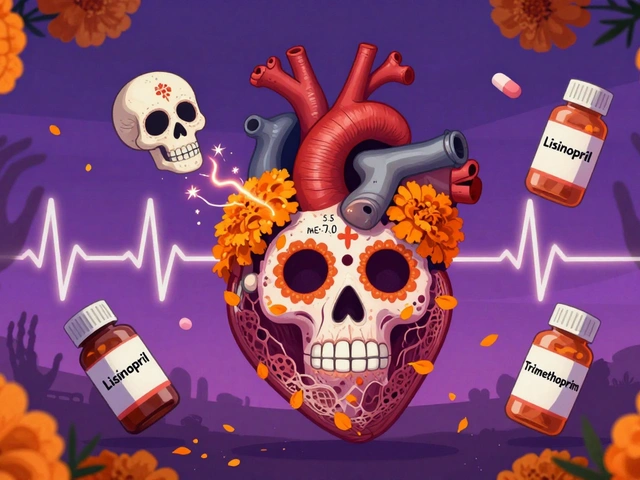
Potassium is essential. It helps your muscles contract, including your heart. But too much, and it throws off the electrical signals that keep your heartbeat steady. The problem isn’t that you’re eating too many bananas. It’s that your body can’t get rid of the extra potassium-and the drugs you’re taking are why. Medications like ACE inhibitors (lisinopril), ARBs (losartan), and mineralocorticoid antagonists (spironolactone) are cornerstones of heart and kidney care. They reduce blood pressure, protect kidney function, and lower death rates in heart failure. But they all interfere with aldosterone, the hormone that tells your kidneys to flush out potassium. When aldosterone drops, potassium builds up. Add in a diuretic like amiloride, or even a common antibiotic like trimethoprim-sulfamethoxazole, and the risk spikes. One study found that combining spironolactone with trimethoprim-sulfamethoxazole raised the risk of sudden death by more than five times. Patients with chronic kidney disease, diabetes, or over age 65 are especially vulnerable. Their kidneys are already slower at clearing potassium. Dehydration makes it worse. A simple cold, a missed dose of diuretics, or even skipping meals can push potassium into the danger zone-often without warning.The Silent Warning Signs: What Your Heart Is Trying to Tell You
Unlike a fever or a cough, hyperkalemia rarely causes obvious symptoms until it’s too late. Many people feel nothing at all. Others report mild fatigue, muscle weakness, or an odd fluttering in their chest. These are easy to ignore. But your heart doesn’t ignore it. When potassium rises above 5.5 mEq/L, your ECG starts changing. First, you see tall, pointed T-waves-like little spikes on the monitor. At 6.5 mEq/L, the PR interval stretches out, meaning the signal between your heart’s upper and lower chambers slows down. By 7.0 mEq/L, your QRS complex widens. This isn’t just a graph anomaly. It means your heart muscle is struggling to fire properly. Left unchecked, the pattern turns into a sine wave, then ventricular fibrillation-your heart quivers instead of pumps. Death follows in minutes. The danger isn’t just in the number. It’s in the speed. Someone with normal heart function might tolerate 6.8 mEq/L for hours. Someone with prior heart disease or kidney failure could crash at 6.2. That’s why doctors don’t just look at the lab value-they look at your ECG, your history, your symptoms.Emergency Treatment: Stopping the Heart From Failing
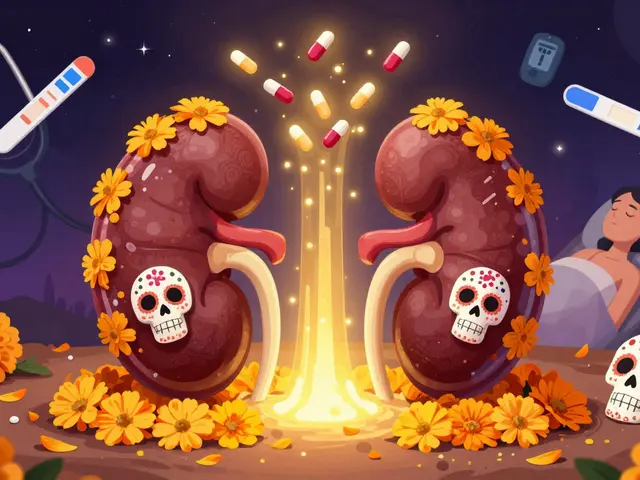
If potassium hits 6.5 mEq/L or higher-or if ECG changes are already visible-this is a medical emergency. There’s no time for waiting. Treatment happens in three phases: stabilize, shift, and remove. First: stabilize the heart. Calcium gluconate (1-2 grams IV) is given immediately. It doesn’t lower potassium. It doesn’t fix the root problem. But it protects your heart muscle from the electrical chaos. Effects start in under three minutes. This is the difference between life and death. Second: shift potassium into cells. Insulin and glucose (10 units of insulin with 25 grams of glucose) force potassium into muscle and liver cells, lowering blood levels by 0.5-1.5 mEq/L within 15-30 minutes. Albuterol, inhaled through a nebulizer, does the same thing-cutting potassium by 0.5-1.0 mEq/L. These are fast, temporary fixes. They buy time. Third: remove potassium from the body. Diuretics like furosemide help if you’re not anuric. Dialysis is the most effective method for patients with kidney failure. But for most, the real game-changer is potassium binders.
Long-Term Solutions: Keeping RAAS Drugs Without the Risk
For years, the only answer to hyperkalemia was to stop the heart-protective drugs. That’s like turning off your smoke alarm because it goes off too often. Now, we have better tools. Patiromer (Veltassa) and sodium zirconium cyclosilicate (Lokelma) are oral binders that trap potassium in your gut and flush it out in your stool. They don’t affect kidney function. They don’t interfere with blood pressure control. They let you keep your lisinopril or spironolactone-without the danger. Clinical trials show that with these binders, 86% of patients stayed on their full RAAS dose. Without them, nearly 40% had to lower or stop their meds because of mild hyperkalemia. That’s not just convenience-it’s survival. Patients on RAAS inhibitors have 20-25% lower risk of heart failure hospitalization and death. Losing those drugs because of potassium is a lose-lose. These binders aren’t perfect. About 15-20% of people get constipation. A smaller group gets diarrhea. But compared to the risk of cardiac arrest, they’re a win.What You Can Do: Monitoring, Diet, and Communication
If you’re on one of these medications, don’t panic. But do act.- Get your potassium checked every 1-4 weeks after starting or changing your dose-especially if you have kidney disease or diabetes.
- Don’t take potassium supplements unless your doctor tells you to. That includes salt substitutes. Many contain potassium chloride.
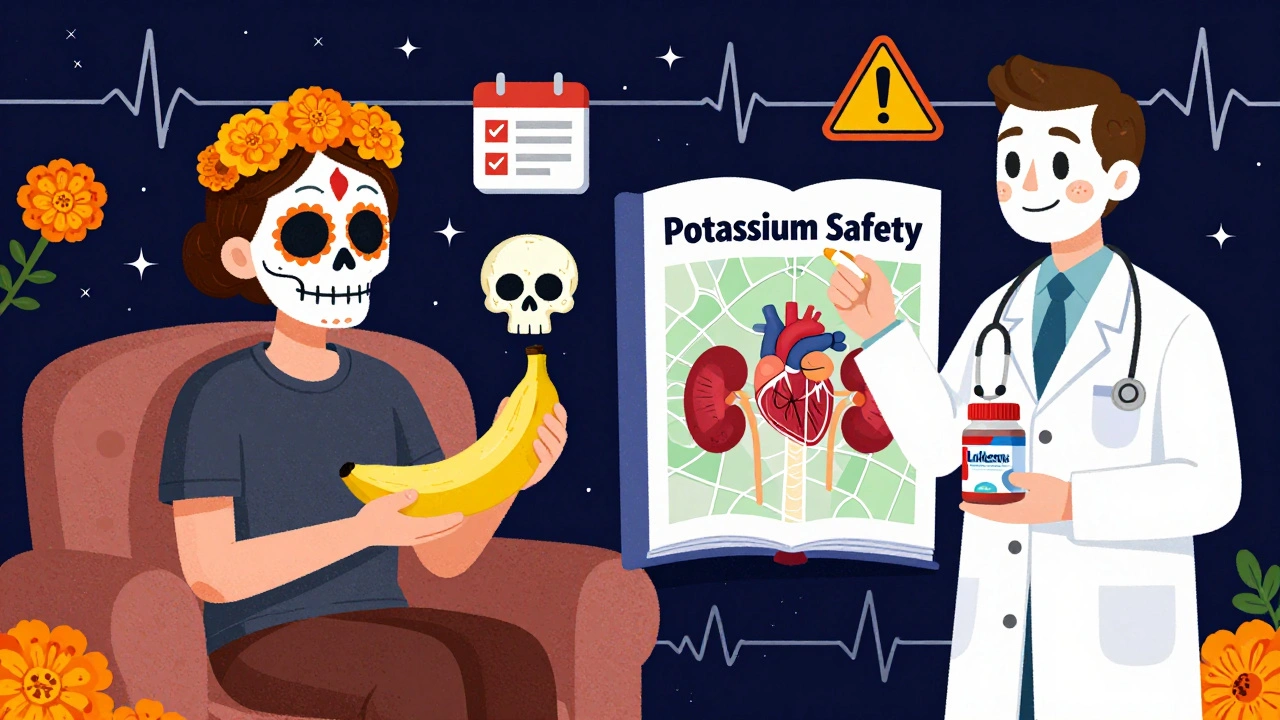
- Limit high-potassium foods if your levels are borderline: bananas, oranges, potatoes, spinach, tomatoes, avocados, and dried fruit. Aim for 2,000-3,000 mg per day, not the usual 4,700 mg recommendation for healthy people.
- Talk to your doctor before starting any new medication-even over-the-counter ones. NSAIDs like ibuprofen can reduce kidney blood flow and raise potassium.
- Know your ECG signs. If you ever feel sudden weakness, chest tightness, or an irregular heartbeat, get checked immediately.
The Bigger Picture: Why This Matters Now
We’ve spent decades perfecting heart and kidney drugs. But we’ve been treating the side effects the wrong way-by backing off. Now we’re learning to manage the risk without giving up the benefit. Potassium binders aren’t magic. But they’ve changed the game. They let people with heart failure live longer, with better quality of life, without the constant fear of sudden cardiac arrest. The future isn’t about avoiding these drugs. It’s about using them safely. And that means smarter monitoring, better education, and access to these new treatments. Too many patients still don’t know their potassium is high until they’re in the ER. That has to change.FAQ
Can high potassium from medications be reversed?
Yes, but how fast depends on the severity. For mild cases (5.5-6.0 mEq/L), stopping the offending medication and adjusting diet can bring levels down in days. For severe cases (above 6.5 mEq/L), emergency treatment with calcium, insulin, and binders is needed immediately. Potassium binders like Lokelma and Veltassa can lower levels within hours and are used for long-term control.
What medications cause hyperkalemia the most?
The top culprits are RAAS inhibitors: ACE inhibitors (like lisinopril), ARBs (like losartan), and mineralocorticoid receptor antagonists (like spironolactone). Potassium-sparing diuretics (amiloride, triamterene) and the antibiotic trimethoprim-sulfamethoxazole also significantly raise risk-especially when used together. Even nonsteroidal anti-inflammatory drugs (NSAIDs) can worsen it by reducing kidney function.
Do I need to stop my blood pressure medicine if I have high potassium?
Not necessarily. In the past, doctors would stop these drugs. Now, with potassium binders like Veltassa and Lokelma, most patients can stay on their heart-protective medications safely. Stopping them increases your risk of heart failure, stroke, and death. The goal is to manage the potassium, not abandon the treatment.
How often should I get my potassium checked?
If you’re on RAAS inhibitors or have kidney disease, check every 1-4 weeks after starting or changing your dose. Once stable, every 3-6 months is usually enough. If you’re on a potassium binder, your doctor may check every 2-4 weeks at first, then space it out. Don’t wait for symptoms-many people feel nothing until it’s critical.
Can I eat bananas if I have high potassium?
If your potassium is elevated, limit high-potassium foods. One banana has about 420 mg. If you’re aiming for 2,000-3,000 mg per day, you can have small portions occasionally, but don’t rely on them. Better options include apples, berries, cabbage, and rice. Work with a dietitian to create a balanced plan that protects your heart without leaving you hungry.