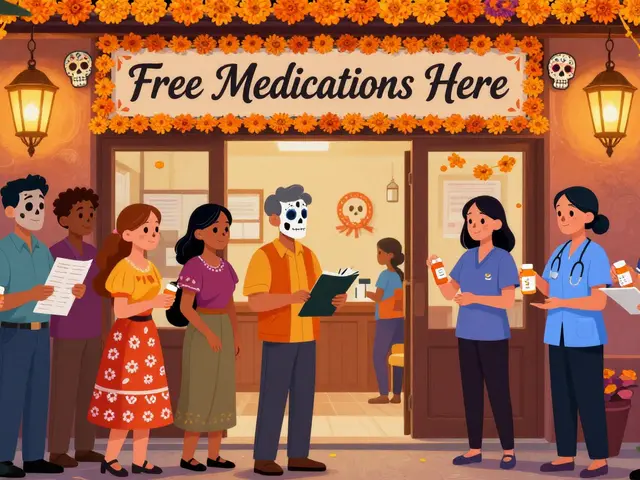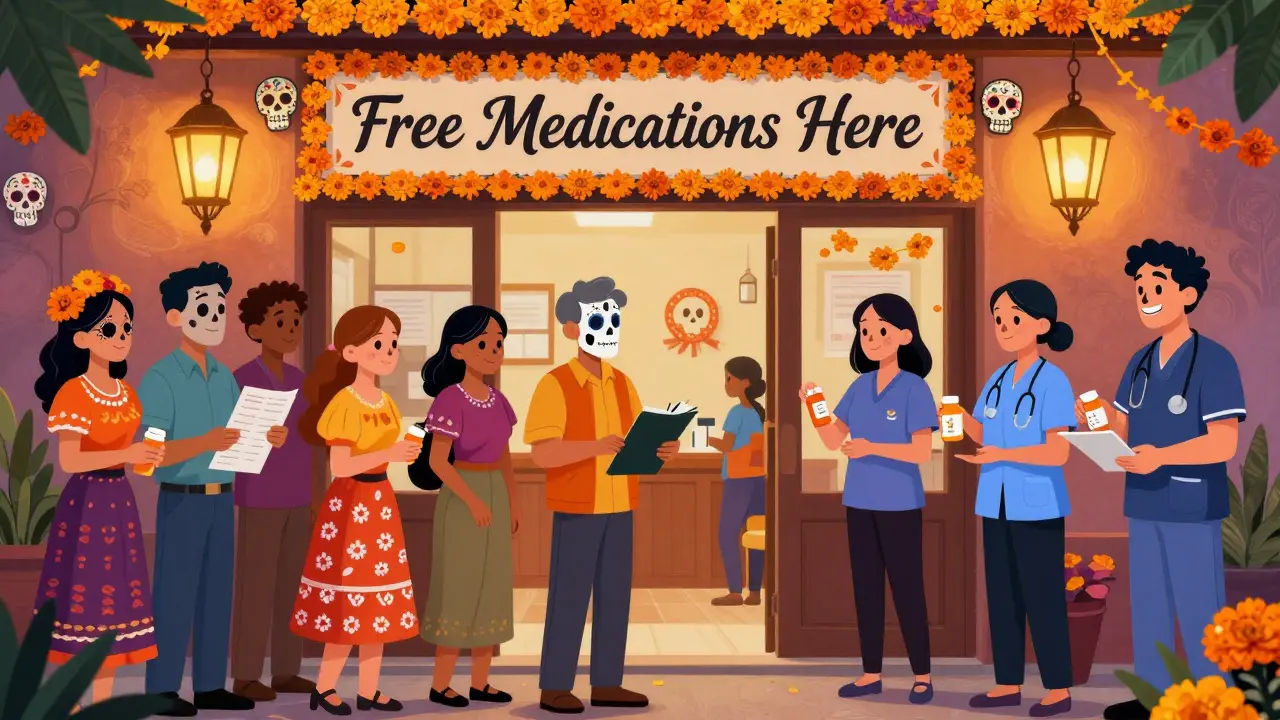
If you’re struggling to pay for your prescriptions, you’re not alone. Over 30 million Americans don’t have health insurance, and even those with coverage often face copays and deductibles that make medications unaffordable. The good news? Free and low-cost community clinics across the U.S. are stepping in to fill the gap - offering essential medicines for diabetes, high blood pressure, asthma, depression, and more, often at no cost. But knowing where to look and how to get help isn’t always obvious. Here’s exactly where to go, what to bring, and what to expect.
Start with Federally Qualified Health Centers (FQHCs)
FQHCs are the most reliable option for affordable medications. These clinics are funded by the federal government and must offer care on a sliding fee scale based on your income and family size. Even if you make just above the poverty line, you’ll likely pay $20 to $50 per visit - and that often includes your prescriptions. Many FQHCs have an in-house pharmacy or partner with local pharmacies to fill your prescriptions at a discount. You don’t need insurance to qualify. All you need is proof of income - like recent pay stubs or tax returns - and proof of residency. Use the HRSA Find a Health Center tool to locate one near you. These centers are open longer hours than most free clinics and often offer dental, mental health, and lab services too.
Find Free Clinics Through the National Network
Free clinics are different from FQHCs. They’re usually run by volunteers and serve only people who are uninsured and earn less than 200% of the federal poverty level - about $29,160 a year for one person in 2023. Medications here are often completely free. The National Association of Free & Charitable Clinics (NAFC) maintains a directory of over 1,400 clinics nationwide. You can search by state to find one near you. Keep in mind: these clinics often have limited hours. Some only open two evenings a week. Wait times for appointments can be 4 to 6 weeks, so plan ahead. But if you need insulin, blood pressure pills, or asthma inhalers and can’t afford them, this is your best shot.
Pharmaceutical Companies Give Away Free Drugs
Big drug companies have patient assistance programs (PAPs) that give free or deeply discounted medications to people who qualify. But you can’t apply directly through the company - you need a clinic to help you. Free clinics and FQHCs act as intermediaries. They verify your income, fill out paperwork, and coordinate with the manufacturer. Medications like metformin for diabetes, lisinopril for high blood pressure, or sertraline for depression are commonly available through these programs. Americares, one of the largest nonprofit distributors, delivered $190 million in donated medicines in 2023 to clinics serving over 7 million people. If your clinic doesn’t have the drug you need, they’ll likely know how to get it through a PAP. Don’t assume it’s impossible - ask.
Mental Health Medications Are a Growing Priority
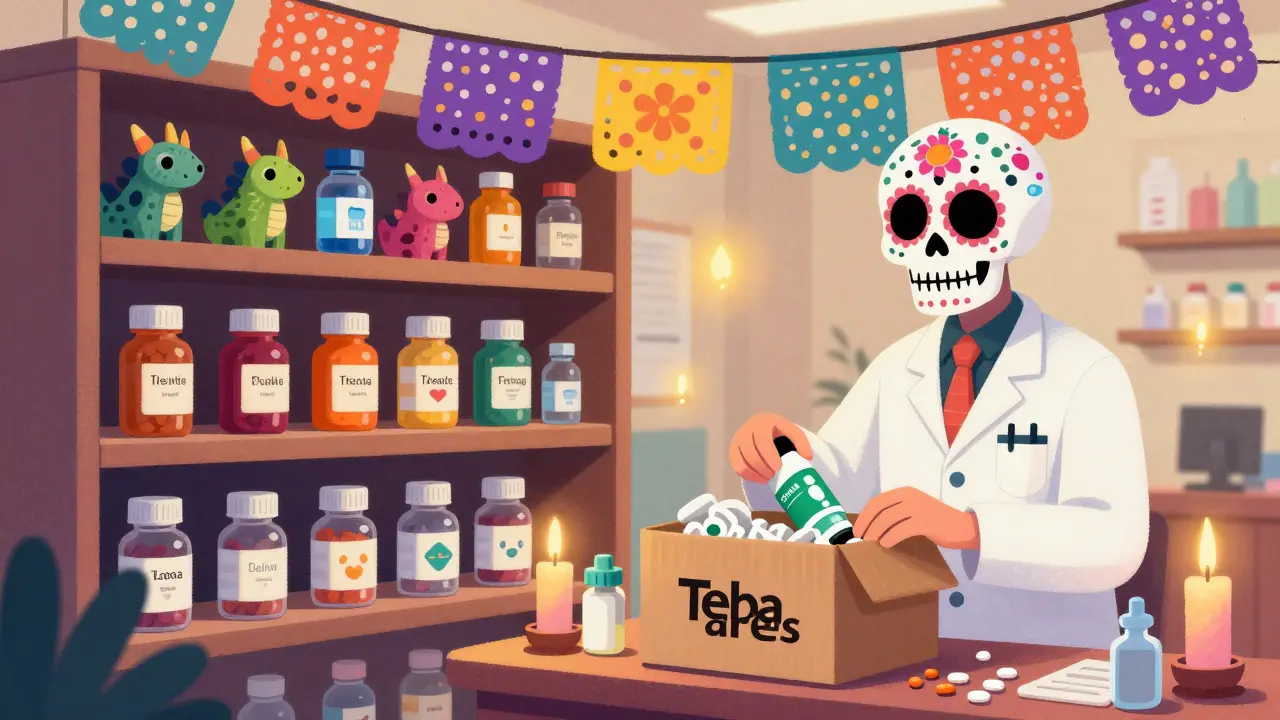
Depression, anxiety, and other mental health conditions are among the most common reasons people skip meds - they’re expensive, and stigma keeps some from seeking help. But that’s changing. In early 2023, a major partnership between Direct Relief, NAFC, and Teva Pharmaceuticals launched the Community Routes: Access to Mental Health Care program. It’s giving $75,000 grants to clinics in California, Florida, New Jersey, and five other states to expand access to antidepressants, anti-anxiety meds, and mood stabilizers. If you’re struggling with mental health and can’t afford your prescriptions, ask your clinic if they’re part of this program. Even if they’re not, many clinics now prioritize mental health meds because demand is so high. The AAFP Foundation reports that most new patients at free clinics are working adults - people with jobs but no benefits - who are skipping meals to pay for their antidepressants.
What You Need to Bring
Don’t show up empty-handed. Clinics need proof you qualify. Bring:
- Proof of income: recent pay stubs, tax return, or unemployment letter
- Proof of residency: utility bill, lease, or ID with your current address
- Photo ID
- List of current medications and dosages
- Any past prescriptions or doctor’s notes
Some clinics may also ask for your Social Security number, but you’re not required to give it. If you’re undocumented, many clinics still serve you - immigration status doesn’t matter. The goal is to get you the meds you need, not to report you.
Why This System Exists - And Why It’s Struggling
These clinics exist because the system fails too many people. A 2022 survey by NAFC found that 42% of free clinics reported medication shortages. Many rely on donations from pharmaceutical companies, which can be unpredictable. A clinic might have a full shelf of insulin one month and none the next. Volunteers run most of these places - medical students, retired doctors, nurses who give up their weekends. It’s heroic, but it’s not sustainable. That’s why clinics with mixed funding - a little government grant, some donations, a small patient fee - are 37% more likely to stay open. If you can afford even $5 or $10 toward your meds, many clinics will appreciate it. It helps them keep the lights on and the shelves stocked.
What to Do If You Can’t Get an Appointment Right Away
Waiting 6 weeks for a clinic appointment is common - but if you’re running out of meds, you can’t wait. Here’s what to do:
- Call your local hospital’s social work department. They often know which clinics have open slots or emergency supplies.
- Check with your pharmacy. Some offer $4 generic lists for common drugs like metformin, lisinopril, or levothyroxine.
- Use GoodRx or RxSaver apps. Even without insurance, you can often find discounts that cut the price in half.
- Go to an urgent care center. Some offer sliding scale fees and can give you a 30-day supply while you wait for your clinic appointment.
Don’t skip your meds because you’re waiting. There are stopgaps. Use them.
How to Help
If you know someone struggling to pay for meds, don’t just feel bad - help them act. Drive them to the clinic. Help them gather documents. Call ahead to ask what they need. If you’re able, donate unused medications to a clinic (check their policy first - some only accept unopened, unexpired pills). Volunteer your time. Even a few hours a month helping with intake or organizing pills makes a difference. These clinics survive because people like you care enough to show up.
The truth is, no one should have to choose between rent and their insulin. That’s not a policy debate - it’s a daily reality for millions. Community clinics are the frontline defense. They’re not perfect, but they’re working. And if you know where to look, you can get the help you need - or help someone else get it.