When a spinal cord is injured, the body’s communication lines between brain and muscles get severed. What happens next isn’t just about paralysis-it’s about relearning how to live. Every year, nearly 18,000 people in the U.S. face this life-altering moment. For many, it’s not a car crash or a fall that changes everything-it’s the sudden silence where movement used to be. But recovery isn’t just about waiting for healing. It’s about rebuilding, adapting, and using every tool available to regain control.
What Happens When the Spinal Cord Is Damaged
The spinal cord isn’t just a bundle of nerves. It’s the highway for signals that tell your arms to lift, your legs to walk, your bladder to empty. When it’s injured, those signals stop. The level of the injury determines what’s lost. A break at C5 might mean you can move your shoulders but not your hands. A T12 injury might leave your arms fully functional but take away leg movement. Complete injuries mean no sensation or movement below the injury. Incomplete injuries mean some signals still get through-sometimes enough to regain walking, sometimes just enough to feel a touch.It’s not just muscles that go quiet. Bladder and bowel control often vanish. Blood pressure can drop dangerously low. Your body can’t regulate temperature. Breathing becomes harder if the injury is high in the neck. These aren’t side effects-they’re part of the injury. And they don’t fix themselves.
Rehabilitation Starts the Day You’re Stabilized
Too many people think rehab begins after weeks of rest. It doesn’t. Within 24 to 72 hours of injury, if you’re stable, rehab starts. That’s when therapists begin passive range-of-motion exercises-moving your arms and legs for you to prevent stiff joints and muscle shrinkage. If you’re in a flaccid state, once a day is enough. If you start spiking muscle tightness, you’ll need it two or three times daily.By week two, you’re likely sitting up, learning how to shift your weight to avoid pressure sores. You’re being taught how to breathe deeply with a device that helps clear mucus-critical if your injury is above T6. You’re learning to manage your bladder with catheters and bowel programs that take 45 to 90 minutes every day. These aren’t optional. Skip them, and you risk infections, ulcers, or even sepsis.
At major rehab centers like Mayo Clinic or Spaulding, you’ll get at least three hours of therapy five days a week. Not just PT and OT. You’ll work with neuropsychologists to cope with depression, social workers to plan your home setup, nurses to manage medications, and speech therapists if swallowing is affected. This isn’t a luxury-it’s the standard. Facilities that don’t offer this level of care are falling behind.
The Tools That Bring Back Movement
Assistive devices aren’t just wheelchairs. They’re the difference between being stuck and being mobile.For those with lower injuries, powered exoskeletons like Ekso and ReWalk let you stand and take steps. They’re not magic. You need strong upper body strength to use them. Sessions last 25 to 45 minutes because they’re exhausting. But for someone who hasn’t stood in years, those steps matter. One user on Reddit said it gave him his first steps in three years. But the catch? Most insurance only covers part of it. Out-of-pocket costs can hit $100,000.
For upper body weakness, robotic arms like Armeo help you practice reaching and grasping. Functional Electrical Stimulation (FES) bikes use electric pulses to make paralyzed legs pedal. A study showed FES cycling boosted oxygen use by 14.3%-far more than regular arm cycling. And it’s not just fitness. It lowers heart disease risk, which is 2 to 3 times higher after SCI.
For those with high cervical injuries, implantable diaphragm pacemakers are now FDA-approved. These devices stimulate the diaphragm directly, cutting ventilator use by 74%. That’s not a small win-it’s life-changing independence.
What Works Better: Treadmill vs. Overground Walking
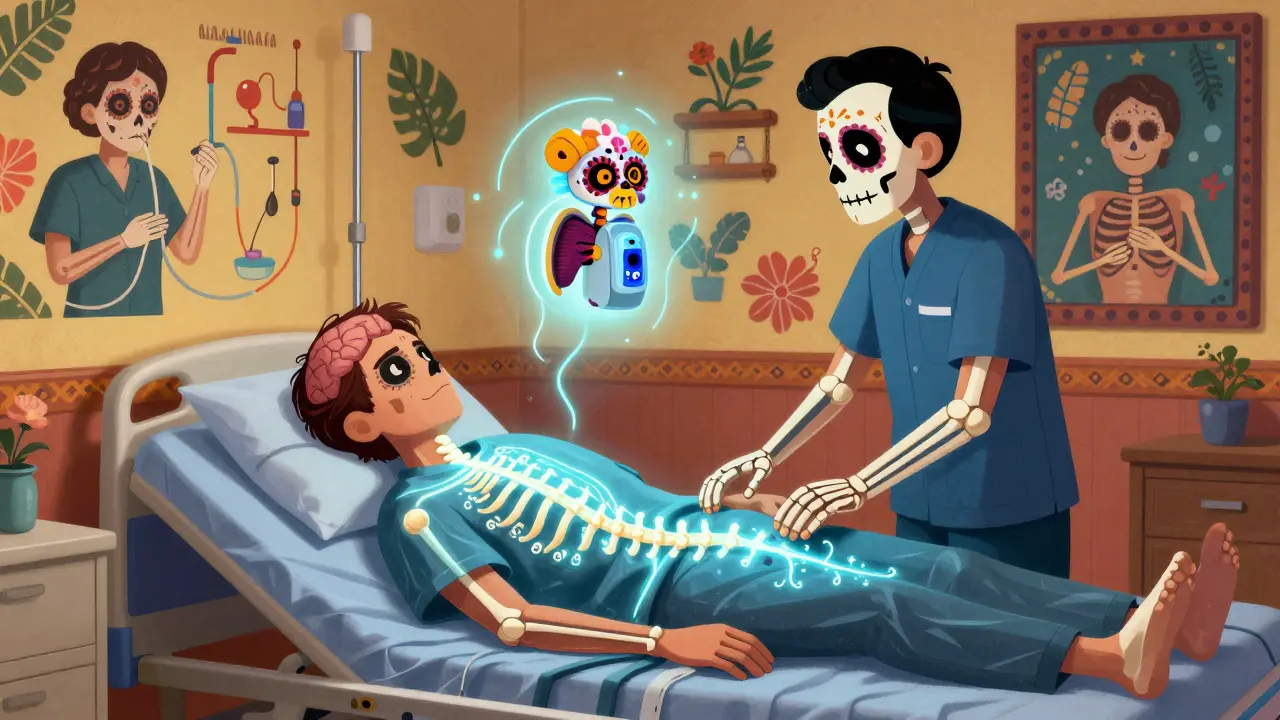
If you have an incomplete injury and some leg movement, you’ll likely try gait training. There are two main ways: walking on a treadmill with body weight support, or walking on the floor with therapists holding you up.Studies show treadmill training improves walking speed 23% more than overground walking after 12 weeks. Why? It trains your brain’s walking center more intensely. But here’s the trade-off: your steps get shorter and faster than natural walking. You might walk faster on the treadmill, but struggle to match that pace outside.
For many, the real goal isn’t walking for miles. It’s standing up to reach a shelf. Taking a few steps to get to the bathroom. That’s where task-specific training matters more than distance.
Spasticity, Pain, and the Hidden Struggles
Sixty-five to seventy-eight percent of people with SCI deal with spasticity-muscles that lock up without warning. It’s not just tightness. It can cause pain, disrupt sleep, and make transfers painful. The standard fix? Oral meds like baclofen, plus targeted Botox injections. Mayo Clinic data shows this combo reduces spasticity scores by 40-60% in nearly 8 out of 10 patients.Then there’s neuropathic pain-burning, shooting pain with no clear trigger. It doesn’t respond to regular painkillers. It needs nerve-targeted drugs like gabapentin or pregabalin. Many patients go years without proper treatment because doctors don’t screen for it.
And don’t forget caregivers. Poor transfer techniques cause 32% of shoulder injuries in family members who help lift or move someone with SCI. Training them isn’t optional-it’s safety.
Why People Quit Rehab at Home
You leave the rehab center feeling hopeful. Then you get home. No therapists. No equipment. No structure. Within six months, 68% of people stop their home exercises. Why? Lack of motivation. Lack of follow-up. Lack of visible progress.That’s why telehealth is growing fast. Top rehab centers now offer virtual check-ins, video coaching for exercises, and remote monitoring of movement. One study found that patients with weekly virtual sessions were twice as likely to stick with their program.
Peer support matters too. At Spaulding, 82% of patients said talking to someone who’d been through it helped them adjust more than any therapy. Online forums, local meetups, mentoring programs-they’re not extras. They’re essential.
The Cost and the System
Rehab isn’t cheap. A year of intensive care can cost over $1 million. Medicare covers 80% of wheelchair costs after your deductible, but you’re still on the hook for $1,200 to $3,500 for custom seating. FES bikes cost $5,000 out of pocket. Exoskeletons? Often not covered at all.Only 32% of general hospitals offer full SCI rehab. The rest send patients to specialized centers-there are just 15 in the U.S. That means long waits, travel, and delays. And even at top centers, Medicare pays only 83% of actual costs. That’s why many programs cut corners.
What’s Next: Brain Chips and AI
The future is coming fast. Brain-computer interfaces are now being tested. In early trials, people with C4 injuries regained 38% more hand movement by thinking about moving their fingers-and the device did it for them. It’s not ready for mass use, but it’s real.AI is already helping. By 2025, two-thirds of leading rehab centers will use AI to personalize therapy plans based on your progress, muscle response, and even mood. No more one-size-fits-all routines.
And new devices keep arriving. The Tethered Pelvic Assist Device at Columbia University helps with balance during standing. It’s not in every clinic yet-but it will be.
You’re Not Just Recovering. You’re Rebuilding.
Spinal cord injury doesn’t end with a diagnosis. It begins with a decision: will you fight for function, or settle for survival? The tools exist. The science is solid. The support is there-if you know where to look. Progress isn’t always walking. Sometimes it’s standing up alone. Sometimes it’s using your hands to feed yourself again. Sometimes it’s just sleeping through the night without pain.The goal isn’t to go back to who you were. It’s to become who you can be-with the right help, the right tools, and the right mindset.
Can you walk again after a spinal cord injury?
It depends on whether the injury is complete or incomplete. Only 1-3% of people with complete paraplegia regain walking ability. But 59% of those with incomplete injuries can walk again with training. Exoskeletons and FES devices can help you stand and take steps even if you can’t walk independently. Progress varies by injury level, age, and rehab intensity.
How long does spinal cord injury rehab last?
Acute rehab lasts 6 to 12 weeks in a hospital setting. But recovery doesn’t stop there. Most people continue outpatient therapy for 6 to 12 months. Some keep working on strength and mobility for years. The biggest gains happen in the first year, but improvement can continue for up to two years-especially with consistent exercise and new tech like robotic devices.
What’s the most effective assistive device for SCI?
There’s no single best device-it depends on your injury level and goals. For lower-body paralysis, powered exoskeletons like Ekso or ReWalk offer standing and stepping. For upper-body weakness, robotic arms like Armeo help with daily tasks. FES bikes improve heart health and muscle tone. For high injuries, implantable diaphragm pacemakers reduce ventilator dependence. The most effective device is the one that fits your life and is covered by insurance.
Why do some people with SCI develop pressure sores?
Lack of movement means constant pressure on skin over bones-especially the tailbone, hips, and heels. Without regular weight shifts or specialized cushions, blood flow stops, tissue dies, and sores form. People with SCI are at high risk because they can’t feel discomfort. Prevention means shifting position every 15-30 minutes, using pressure-relieving cushions, and checking skin daily.
Is it possible to prevent secondary complications after SCI?
Yes, but it requires daily discipline. Key steps: daily skin checks, bladder catheterization on schedule, bowel program every day, passive range-of-motion exercises, deep breathing with incentive spirometry, and regular cardiovascular exercise like FES cycling. Skipping even one of these increases infection risk. People who stick to their routine have 65% fewer hospital readmissions.
Does insurance cover spinal cord injury rehab and devices?
Medicare and most private insurers cover inpatient rehab, wheelchairs, and basic therapy. But coverage for advanced tech like exoskeletons, FES bikes, or implantable devices is inconsistent. Medicare covers 80% of wheelchair costs after deductible, but you pay the rest. FES bikes and exoskeletons often require prior authorization and may be denied. Many patients appeal or turn to nonprofits and state programs for help.
How important is mental health support after SCI?
Extremely. Depression and anxiety affect up to 70% of people after SCI. Rehab centers with integrated mental health services see better outcomes in mobility, adherence to therapy, and long-term adjustment. Peer counseling is especially powerful-82% of patients at top centers say talking to someone who’s been through it helped them more than therapy alone. Mental health isn’t a side note-it’s part of recovery.
What should caregivers know about helping someone with SCI?
Caregivers must learn safe transfer techniques to avoid shoulder injuries-32% of caregiver injuries come from improper lifting. They need to know how to manage catheters, bowel programs, and skin checks. They also need emotional support. Many burn out within a year. Look for caregiver training programs, respite care, and support groups. Helping isn’t just physical-it’s sustainable only with support.