Managing multiple medications can feel overwhelming. You’ve got pills for your blood pressure, your diabetes, your cholesterol, maybe even supplements and over-the-counter pain relievers. And if you’re like most people, you’ve forgotten to take one - or mixed up the timing - more than once. That’s where a medication action plan comes in. It’s not just a list of your drugs. It’s a personalized roadmap, co-created with your care team, that turns confusion into clarity and helps you stick to your regimen - for good.
What Exactly Is a Medication Action Plan?
A Medication Action Plan (MAP) is a clear, written guide that tells you exactly what to do with your medications - not just what to take, but when, why, and what to do if something goes wrong. Unlike a simple pill list, it includes specific steps tailored to your life. For example: "Take your morning insulin after brushing your teeth," or "If you feel dizzy after noon dose, sit down and call your pharmacist." It’s designed to fit into your routine, not force you to change it.
This isn’t new. Germany started requiring these plans for patients on three or more medications back in 2016. In the U.S., they’re part of Medication Therapy Management (MTM), a service covered by Medicare Part D since 2006. But here’s the key: the best plans aren’t handed to you. They’re built with you - in a conversation that takes 30 to 60 minutes, often with your pharmacist or care coordinator.
Who Should Have One?
If you’re taking five or more medications regularly - especially for chronic conditions like diabetes, heart disease, or COPD - you’re a prime candidate. Medicare now covers MTM services for beneficiaries taking 5+ chronic medications (down from 8 in 2023), which means millions more people are eligible. But even if you’re not on Medicare, many private insurers and employer plans now offer similar services.
It’s especially helpful if:
- You’ve been hospitalized recently because of a medication issue
- You take medications from more than one doctor
- You’re unsure why you’re taking a certain pill
- You’ve had side effects or missed doses
- You use supplements, vitamins, or OTC drugs regularly
Even if you don’t think you need it, ask. Studies show patients who use a personalized MAP improve adherence by 25-40%. That’s not just about taking pills - it’s about avoiding hospital visits, emergency rooms, and dangerous side effects.
How to Start: Preparing for Your Appointment
Don’t walk into your appointment guessing. Come prepared. Bring everything you take - even the stuff you think doesn’t matter. That includes:
- All prescription medications (in original bottles if possible)
- Over-the-counter drugs (ibuprofen, antacids, sleep aids)
- Vitamins, minerals, and herbal supplements (fish oil, turmeric, melatonin)
- Any patches, inhalers, eye drops, or injectables
- A list of your allergies or past reactions
Also, think ahead. What’s been hard? Do you forget doses? Do you skip pills because they’re expensive? Do you hate swallowing big pills? Do you take them at the wrong time because your schedule changes? Write down your biggest frustrations. These aren’t complaints - they’re clues your care team needs to build a plan that actually works for you.
The Conversation: Building the Plan Together
Your care team - likely a pharmacist, nurse, or care coordinator - will review everything you brought. They’ll check for:
- Duplicate medications (two pills doing the same thing)
- Harmful interactions (e.g., blood thinners with certain herbal supplements)
- Unnecessary drugs (maybe you were prescribed something that’s no longer needed)
- Cost barriers (can you afford it? Are there cheaper generics?)
Then comes the real work: turning that review into action. The plan will include:
- A clear list of every medication, its purpose, and dose
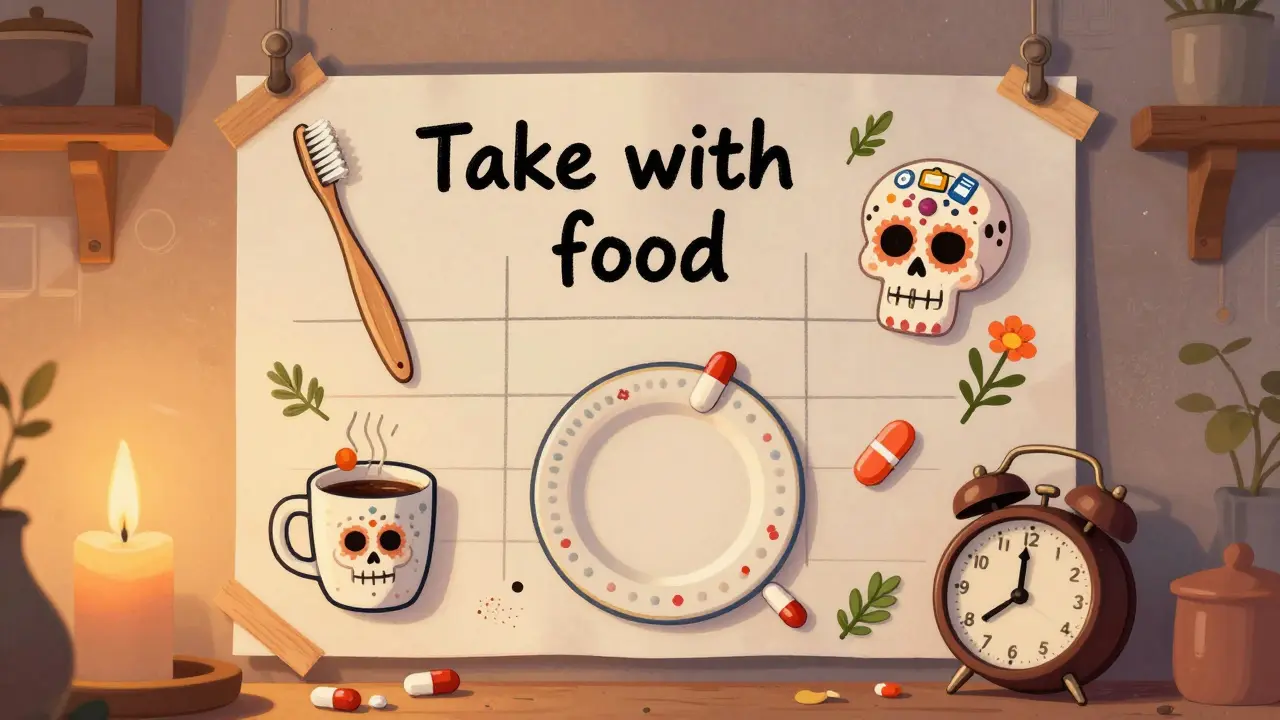
- Simple instructions: "Take with food," "Avoid grapefruit," "Do not crush"
- Specific, measurable goals: "Take all morning doses 7 days in a row this month"
- Action steps tied to your routine: "Put your evening pills next to your coffee maker"
- What to do if something goes wrong: "If you feel faint after taking this, call us before going to the ER"
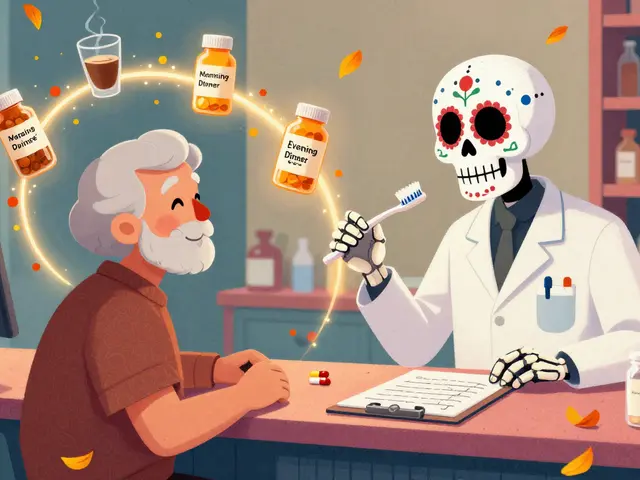
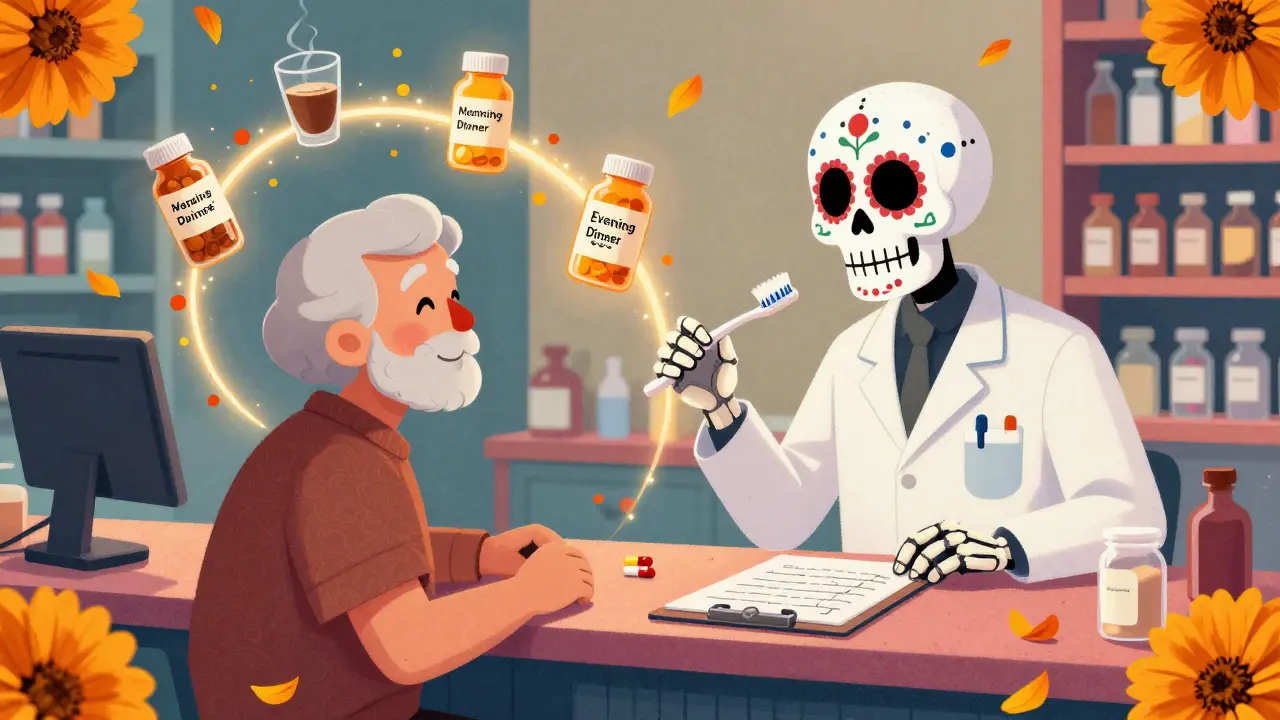
One patient in Calgary, 68, turned her MAP into a visual chart. She stuck pictures of her pills next to daily items: toothbrush for morning meds, dinner plate for evening ones. Her adherence jumped from 65% to 95%. That’s the power of personalization.
What Makes a Good Plan?
Not all plans are created equal. A good one has three things:
- Personalization - It reflects your life, not a template. If you work nights, your plan shouldn’t say "take at 8 a.m."
- Clarity - No medical jargon. "Antihypertensive" becomes "blood pressure pill." "Dyslipidemia" becomes "cholesterol medicine." If you don’t understand it, ask again.
- Measurability - Goals like "improve adherence" are useless. Goals like "take all 3 evening pills for 21 straight days" are trackable.
A bad plan? One you get printed from a generic form with no discussion. Studies show those don’t change behavior. The best plans come from conversations - where you ask questions and your care team listens.
Keeping It Alive
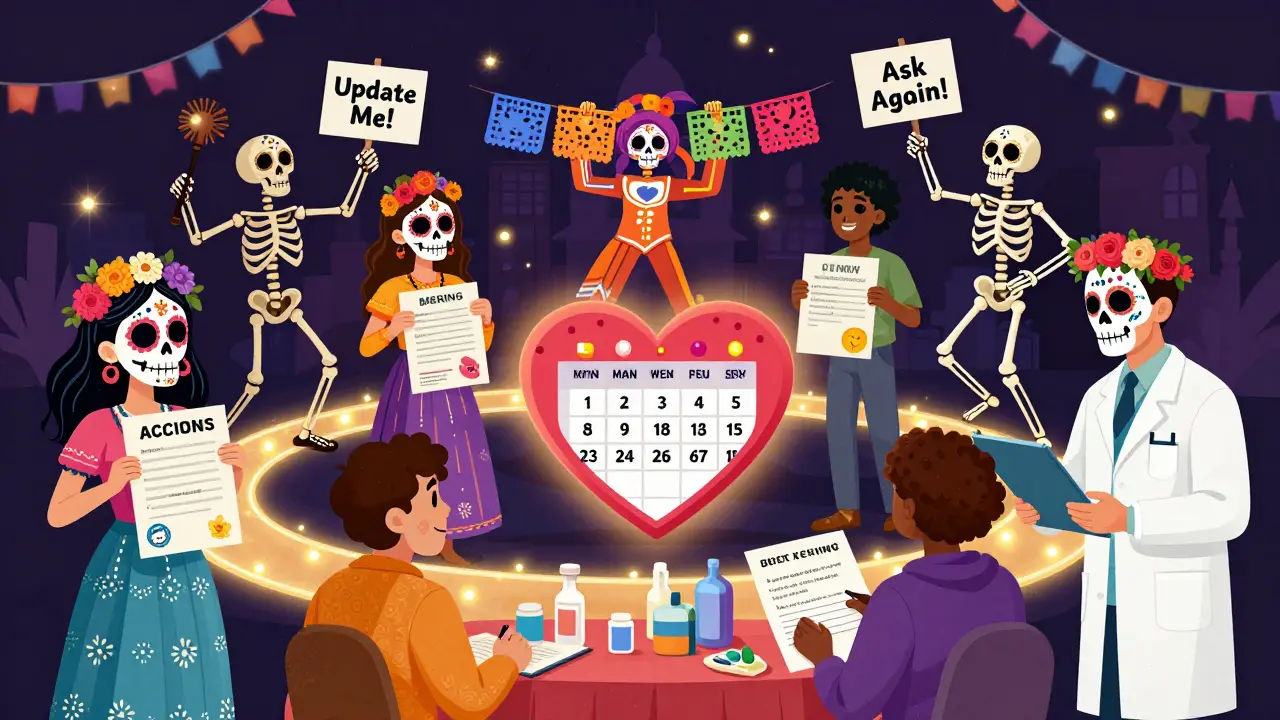
Your plan isn’t a one-time thing. Your body changes. Your meds change. Your schedule changes. A good MAP gets updated every 3 to 6 months - or anytime you:
- Start or stop a medication
- Go to the hospital
- See a new doctor
- Change your pharmacy
- Have a new symptom or side effect
Pharmacists in Germany update these plans every time they dispense medication. In Canada and the U.S., you can ask for a review at any time. Don’t wait for your next appointment. Call your pharmacy. Say: "I’d like to update my medication action plan. Can we set up a quick chat?"
Why This Matters
Every year in the U.S., about 280,000 people are hospitalized because of medication errors. Many of those are preventable. A well-made MAP cuts hospital visits by 32% in the first year. For every dollar spent on these plans, the healthcare system saves $12.30 in avoided care.
But the real win? You feel more in control. One Medicare beneficiary said: "I finally understood why I take each pill. I didn’t just have a list - I had a reason." That’s what this is about. Not just taking pills. Understanding them. Managing them. Living better because of them.
What If You’re Not Eligible?
If you’re not on Medicare or your insurance doesn’t cover MTM, you still have options. Many community pharmacies offer free or low-cost medication reviews. Ask your local pharmacist: "Do you help patients create personalized medication action plans?" Independent pharmacies often do. You can also bring your full medication list to your family doctor and ask them to help you build one. Bring a printed copy of your meds - and your questions.
Even without a formal plan, start tracking. Use a simple notebook or phone app. Note when you take your meds, what side effects you feel, and what’s hard. That data becomes your own action plan - and gives you something concrete to bring to your next appointment.
Final Thought
You don’t need to be perfect. You just need to be heard. The goal isn’t to take every pill exactly on time. It’s to have a plan that works for your life - one that’s clear, simple, and updated when things change. Your care team is there to help you build it. Don’t wait for them to ask. Ask them.
Can I create a medication action plan on my own without a care team?
You can start by listing all your medications, including over-the-counter drugs and supplements. Use a free app or notebook to track when you take them and any side effects. But without professional input, you might miss dangerous interactions, duplicate meds, or outdated prescriptions. A care team - especially a pharmacist - has the training to spot risks you can’t. The best MAPs are co-created, not DIY. If you can’t access formal services, at least bring your list to your doctor or pharmacist for a quick review.
What if my care team uses medical jargon I don’t understand?
Say so - right away. You have the right to understand your care. Ask them to rephrase: "Can you explain that in simpler terms?" or "What does this medicine actually do?" If they don’t adjust, ask to speak with someone else. Many pharmacists are trained in health literacy and know how to explain things without technical terms. A good plan uses words like "blood pressure pill" instead of "antihypertensive." If they can’t do that, they’re not helping you - they’re just writing.
Do I need a medication action plan if I only take two or three pills?
It’s less critical, but still useful. Even two or three medications can interact. For example, a common painkiller like ibuprofen can raise blood pressure or affect kidney function if you’re on heart meds. If you’ve ever missed a dose, been confused about timing, or felt unsure why you’re taking something - a plan helps. It’s not just about quantity. It’s about clarity. If you’re managing a chronic condition, even with few meds, a plan reduces risk.
Can my family members help with my medication action plan?
Absolutely. In fact, involving a family member or caregiver often improves outcomes. They can help you remember doses, spot side effects you might miss, and ask questions during appointments. Bring them along to your review. Many care teams welcome it. If you’re older or have memory issues, having someone else understand your plan is a safety net. Just make sure the plan includes your preferences - not just what your family thinks you should do.
What if my medications change after I get my plan?
Update it - immediately. A medication action plan is a living document. If you start a new drug, stop one, or your dose changes, your plan should change too. Don’t wait for your next appointment. Call your pharmacy or care coordinator and say: "I’ve been prescribed [new med] and stopped [old med]. Can you update my plan?" Many pharmacies can update it the same day. If you’re using a paper copy, cross out the old info and write the new one clearly. If you’re using an app, update it right away. Outdated plans are dangerous.
Next Steps
Start today. Grab a pen and write down every medication you take - even the ones you think are "just supplements." Bring that list to your next doctor or pharmacy visit. Ask: "Can we create a medication action plan together?" If they say no, ask why - and ask again at your next visit. You’re not asking for a favor. You’re asking for a tool that keeps you safe, healthy, and in control.