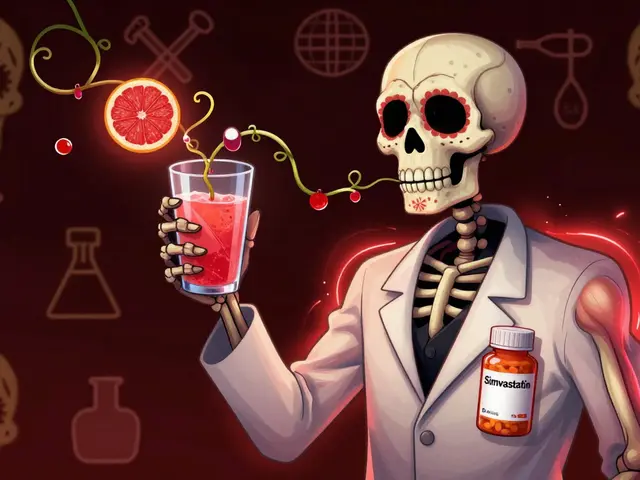
One glass of grapefruit juice in the morning might seem like a healthy habit-until you're on a statin. For people taking certain cholesterol-lowering drugs, that small glass could be the difference between safe use and a dangerous spike in drug levels that leads to muscle damage, kidney failure, or worse. This isn’t a myth or a warning from an overcautious doctor. It’s backed by decades of research, real-world cases, and FDA labeling. The question isn’t whether grapefruit interacts with statins-it’s how much is risky, and for whom.
Which Statins Are Affected?
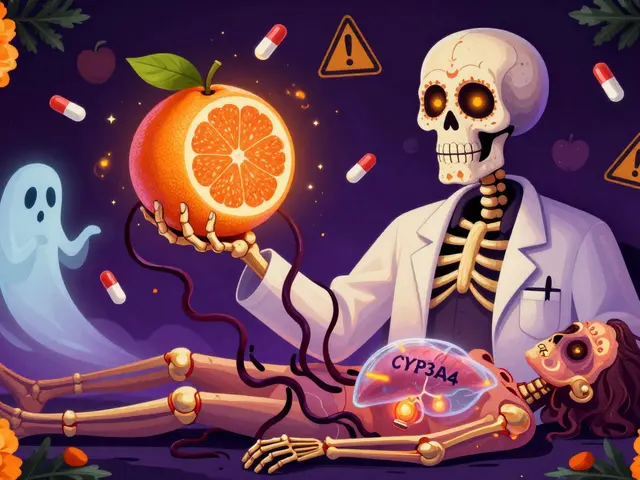
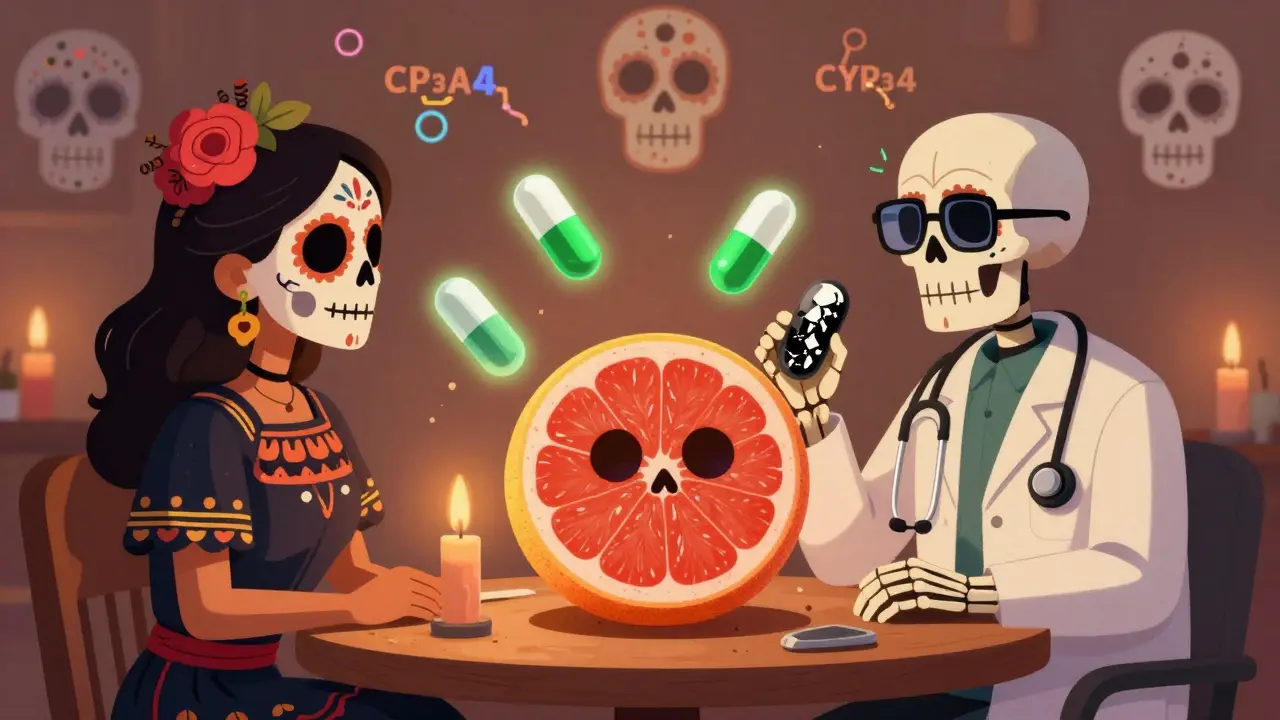
Not all statins react the same way to grapefruit. The problem only happens with those that rely on the CYP3A4 enzyme to break down in your gut. That’s the key. If your statin uses a different pathway, grapefruit won’t touch it.Statins that are risky with grapefruit:
- Simvastatin (Zocor, FloLipid)
- Atorvastatin (Lipitor)
- Lovastatin (Mevacor)
These three make up the majority of statin prescriptions in North America. Simvastatin is the most sensitive. Even a single glass of juice can raise its blood levels by 3 to 4 times. Atorvastatin is less affected, but still risky at higher doses or with daily use. Lovastatin falls in between.
Statins that are safe:
- Pravastatin (Pravachol)
- Rosuvastatin (Crestor)
- Fluvastatin (Lescol)
- Pitavastatin (Livalo, Zypitamag)
These are metabolized through other liver enzymes, so grapefruit juice doesn’t interfere. If you love grapefruit and are on a statin, switching to one of these might be the easiest fix.
How Much Grapefruit Is Too Much?
The short answer: 200-250 ml (about 8 oz) is the threshold where risk becomes measurable.That’s one standard glass. Not a large bottle. Not a whole grapefruit. One glass. And it doesn’t take days of drinking to cause a problem. A single serving can spike drug levels within hours. A 2006 study in the British Journal of Clinical Pharmacology showed that just 200 ml of grapefruit juice daily increased simvastatin levels by 3.6 times. Peak levels jumped nearly fourfold. That’s not a small change-it’s a clinical red flag.
But here’s where it gets messy: not everyone reacts the same. Some people’s guts have more CYP3A4 enzymes. Others have less. Genetics, age, liver health, and even other medications you take can change how your body handles the interaction. One study found that after drinking 250 ml of grapefruit juice, some people had zero increase in statin levels, while others saw an 8-fold rise. That’s why blanket warnings don’t always fit.
Still, guidelines are clear: if you’re on simvastatin or atorvastatin, don’t make grapefruit juice part of your daily routine. The FDA and Health Canada both warn that consuming more than 250 ml per day significantly raises the risk of muscle damage. And if you’re on a high dose-say, 80 mg of simvastatin-then even a small glass is too risky. The European Medicines Agency explicitly advises complete avoidance in those cases.

What’s the Real Risk?
The scary part isn’t the juice. It’s what happens when the drug builds up too high.Statins work by blocking an enzyme in the liver that makes cholesterol. But at high levels, they also start damaging muscle cells. That’s called myopathy. In rare cases, it can turn into rhabdomyolysis-where muscle tissue breaks down and floods your bloodstream with proteins that can wreck your kidneys. This is life-threatening. It’s rare, but it happens.
Between 1990 and 2021, the FDA recorded only 17 cases of rhabdomyolysis linked to grapefruit and statins. That sounds low. But here’s the catch: most cases go unreported. And those 17 cases? All involved people who regularly drank grapefruit juice while on high-risk statins. One case involved a 72-year-old man on 40 mg simvastatin who drank a glass of grapefruit juice every morning. He developed severe muscle pain and kidney failure. He recovered after stopping both the juice and the statin.
Dr. David Bailey, who first discovered this interaction in 1991, says the risk is real but often overstated. “Most people who drink a glass of grapefruit juice once in a while aren’t going to have a problem,” he told the Canadian Medical Association Journal in 2012. “But if you do it daily, especially on simvastatin, you’re playing Russian roulette with your muscles.”
Can You Still Drink Grapefruit Juice?
Yes-but with conditions.If you’re on simvastatin or atorvastatin and really like grapefruit, here’s how to manage it:
- Switch statins. Talk to your doctor about switching to pravastatin, rosuvastatin, or pitavastatin. These are just as effective for lowering cholesterol and don’t interact with grapefruit. No guesswork. No risk.
- If you must keep your current statin: Limit grapefruit to less than 8 oz per day, and never drink it at the same time you take your pill. Since most statins are taken at night (when cholesterol production peaks), have your juice in the morning. That gives your body time to clear some of the grapefruit compounds before the statin hits your system.
- Watch for symptoms. Muscle pain, tenderness, weakness, or dark urine (like cola) are red flags. If you notice any of these, stop the juice and call your doctor. Don’t wait. Rhabdomyolysis can develop fast.
- Avoid whole grapefruit too. The juice isn’t the only problem. The pulp and peel contain the same furanocoumarins. Eating half a grapefruit has the same effect as drinking juice.
Some doctors say even 8 oz is too much for high-risk patients. Others say one glass a week is fine if you’re not on a high dose. The American College of Cardiology’s 2023 guidelines lean toward personalization: “Don’t ban grapefruit. Test the patient’s habits, then tailor the advice.”
What About Other Citrus Fruits?
Not all citrus is dangerous. Seville oranges (used in marmalade) and pomelos have the same furanocoumarins as grapefruit and should be avoided. Regular oranges and tangerines? Safe. Limes and lemons? Also safe. The problem is specific to grapefruit and its close relatives.Even some grapefruit-flavored products matter. Check labels on sodas, candies, or supplements. If it says “grapefruit extract” or “furanocoumarin,” skip it.
What Should You Do Right Now?
If you’re on a statin and drink grapefruit juice:- Check your medication label. If it says “avoid grapefruit,” take it seriously.
- If you’re unsure what statin you’re on, look at the pill bottle or call your pharmacy. Simvastatin, atorvastatin, and lovastatin are the red flags.
- If you’ve been drinking grapefruit juice daily for months, schedule a check-up. A simple blood test can check for muscle damage (CK levels).
- Don’t quit your statin cold turkey. Stopping suddenly can raise your cholesterol and increase heart risk. Talk to your doctor first.
For most people, the answer isn’t to give up grapefruit forever. It’s to understand the balance. One glass a week, with a safe statin? Fine. Daily juice with simvastatin? Not worth it. Your heart health matters. So does your muscle health. You don’t have to choose one over the other-you just need to pick the right combo.
Can I drink grapefruit juice if I take rosuvastatin?
Yes. Rosuvastatin (Crestor) is not broken down by the CYP3A4 enzyme, so grapefruit juice doesn’t affect its levels in your blood. It’s one of the safest statins to use if you enjoy grapefruit regularly.
How long does grapefruit juice stay in my system?
The enzyme-blocking effect of grapefruit juice lasts up to 72 hours. That means even if you drink it in the morning and take your statin at night, there’s still a risk. The only way to be safe is to avoid grapefruit entirely if you’re on a high-risk statin-or switch to a safe one.
Is grapefruit juice worse than eating the whole fruit?
No. Both contain the same furanocoumarins that block CYP3A4. One grapefruit equals about 8 oz of juice. Eating half a grapefruit has the same effect as drinking the juice. The form doesn’t matter-the compounds do.
What if I only drink grapefruit juice once a week?
For people on low-dose atorvastatin or lovastatin, occasional use may be acceptable. But if you’re on simvastatin-even at 20 mg-it’s still risky. The safest approach is to avoid it completely if you’re on a high-risk statin, or switch to a safer one.
Can grapefruit interact with other medications besides statins?
Yes. Grapefruit can affect blood pressure meds like felodipine, anti-anxiety drugs like buspirone, immunosuppressants like cyclosporine, and some heart rhythm drugs. Always check with your pharmacist or doctor before combining grapefruit with any new medication.