
For many people with PTSD, sleep isn’t rest-it’s a battleground. Every night, the same terrifying scenes replay: a car crash, a firefight, an assault, a loss. These aren’t just bad dreams. They’re trauma-related nightmares, and they can last for years, even decades. No matter how much you talk about the trauma in therapy, the nightmares keep coming. That’s where Imagery Rehearsal Therapy (IRT) steps in-not to erase the past, but to rewrite the dream.
Why Nightmares Stick Around
Up to 72% of people with PTSD experience frequent, recurring nightmares. That’s not coincidence. Trauma doesn’t just live in your memory-it gets stuck in your brain’s nighttime processing. While most people forget dreams quickly, trauma survivors often relive them with the same intensity as the original event. These aren’t symbolic or metaphorical. They’re exact replays: the same sounds, the same smells, the same helplessness.
Standard PTSD treatments like talk therapy or exposure therapy often help with flashbacks and anxiety-but they rarely touch the nightmares. That’s because nightmares aren’t just about fear. They’re about disrupted sleep architecture. Your brain doesn’t get the chance to process the memory safely during REM sleep. Instead, it loops the trauma, over and over.
And it gets worse. Poor sleep from nightmares fuels irritability, depression, and hypervigilance. It makes daytime symptoms worse. It’s a cycle: trauma → nightmares → poor sleep → worse PTSD → more nightmares.
What Is Imagery Rehearsal Therapy?
Imagery Rehearsal Therapy (IRT) is a simple, evidence-backed method designed specifically for trauma nightmares. Developed in the early 2000s and backed by over 13 clinical trials, it’s now the first-line psychological treatment recommended by the American Academy of Sleep Medicine. Unlike medication, it doesn’t rely on chemicals. It works by changing how your brain rehearses the nightmare.
Here’s how it works in four clear steps:
- Write it down - Right after waking from a nightmare, grab a pen and paper (no phone screens-blue light messes with sleep). Write the nightmare exactly as you remember it. Don’t edit. Just record the details: who was there, what happened, how you felt.
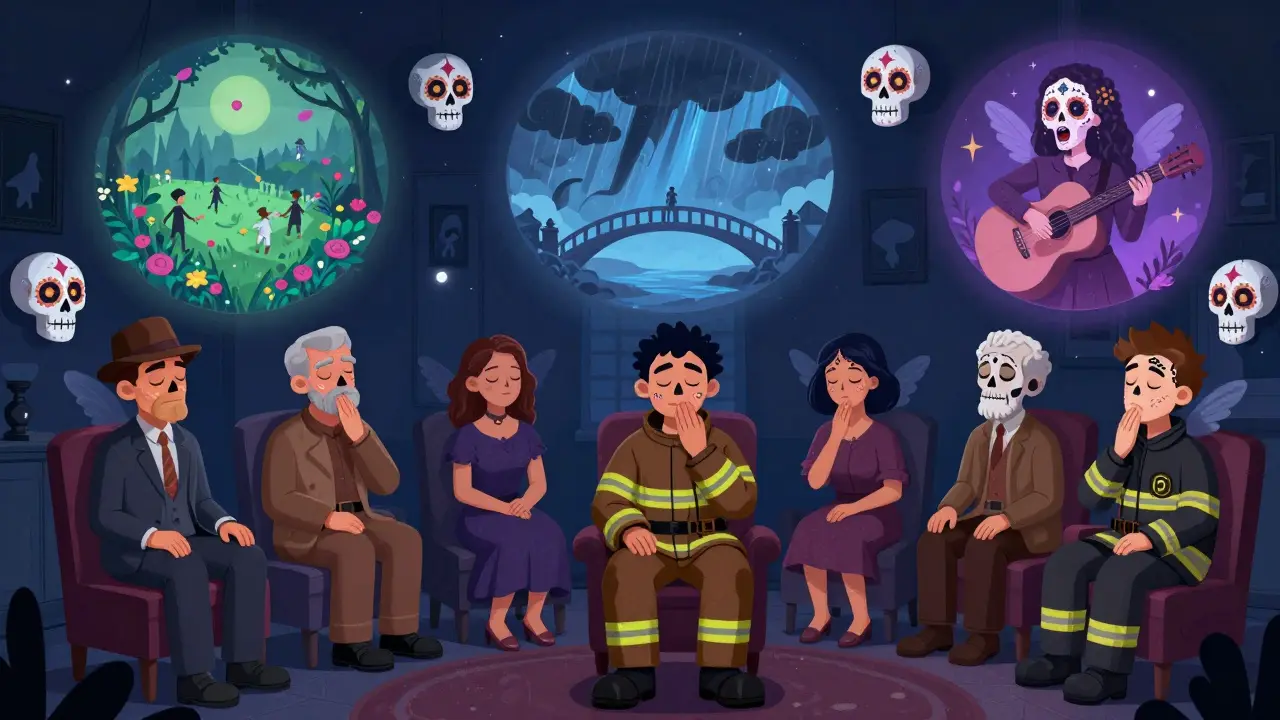
- Change it - Now, rewrite the nightmare. Not to make it happy. But to make it less terrifying. Maybe you turn from victim to survivor. Maybe the attacker disappears. Maybe you find a door you didn’t know was there. The key? Change something-anything-that gives you power, safety, or control.
- Rehearse it - Before bed, close your eyes and imagine the new version. Picture it clearly. Feel the new ending. Do this for 10-15 minutes every night. Some people pair it with slow breathing or muscle relaxation to deepen focus.
- Repeat it - Do this nightly for 4-6 weeks. You don’t need to believe it. You don’t need to like it. Just practice it. Your brain learns by repetition.
That’s it. No hypnosis. No drugs. No reliving the trauma. Just a mental rewrite.
Why It Works
Research shows IRT doesn’t just reduce nightmares-it rewires them. A 2014 meta-analysis of 13 studies found that IRT reduced nightmare frequency by over 80% and improved sleep quality with a large effect size (d = 0.98). Even better, these gains lasted 6-12 months after treatment ended.
One reason it works is that nightmares aren’t memories. They’re dream representations of memories. You don’t need to change the real event-you just need to change how your brain replays it at night. IRT helps you take back control of that replay.
It also interrupts the fear loop. When you rehearse a new ending, your brain starts to associate sleep with safety instead of terror. Over time, the nightmare loses its emotional punch. It doesn’t vanish-but it stops haunting you.

What the Research Says
IRT isn’t just theory. It’s proven.
- A 2018 VA study tested prazosin-a drug commonly prescribed for PTSD nightmares-and found it worked no better than a placebo.
- Meanwhile, IRT showed large improvements: 83% of veterans reported at least a 50% drop in nightmares. 62% stopped having them entirely after 4-6 sessions.
- A 2023 pilot study in Brazil tested a one-session version of IRT combined with narrative therapy. It cut nightmare frequency by 72.3% and intensity by 68.5%.
And here’s the kicker: IRT works even when other treatments fail. It’s not a cure for PTSD-but it’s the most reliable way to stop the nightmares that make PTSD unbearable.
Who It Works For (and Who It Doesn’t)
IRT is most effective for people with:
- Recurring, specific nightmares tied to trauma
- Clear memory of the nightmare content
- Willingness to practice nightly
- No severe sleep apnea or other primary sleep disorders
It’s less effective if:
- Your nightmares are vague, fragmented, or change every night
- You have severe dissociation or psychosis
- You’re unwilling to change the dream-even slightly
- You have other sleep disorders like restless legs or sleep apnea
Most importantly: IRT isn’t about forgetting. It’s about rewriting. You don’t need to forgive. You don’t need to move on. You just need to change the ending of the dream.
What to Expect
Most people notice changes within 2-3 weeks. By session 3 or 4, nightmares often become less intense. By week 6, many report sleeping through the night for the first time in years.
Some resistance is normal. People often say: “But that really happened.” Or: “I shouldn’t change it.” That’s okay. Clinicians help you separate the memory from the dream. The trauma happened. The dream is just your brain’s way of trying to process it. You’re not denying the past-you’re giving your brain a new tool.
And if you struggle to visualize? Start small. Picture one detail: a light turning on. A door opening. A hand reaching out. You don’t need a movie. Just a shift.
How to Get Started
IRT is now standard care in VA hospitals, trauma centers, and sleep clinics across North America. If you’re a veteran, ask your VA provider. If you’re civilian, look for a therapist trained in trauma and sleep disorders. You can find certified practitioners through the International Society for Traumatic Stress Studies.
Want to try it yourself? Start tonight:
- Keep a notebook by your bed.
- Write down your next nightmare in detail.
- Tomorrow, rewrite it-with a small change that gives you safety.
- Practice it for 10 minutes before bed.
You don’t need a therapist to begin. But if nightmares persist after 4 weeks, seek professional help. IRT works best with guidance.
The Bigger Picture
Over 90% of people with PTSD struggle with sleep. Nightmares are often the last symptom to improve-and the most disabling. IRT fills that gap. It’s brief, cheap, and doesn’t carry the side effects of medication. It’s also scalable: telehealth versions are now being tested, with VA allocating $3.7 million for research through 2026.
As prazosin fails in large trials and other drugs show limited benefit, IRT stands alone as the only psychological treatment with strong, lasting results. It’s not magic. But it’s science-and for millions of people, it’s the first real break in a long, dark night.