Every year, millions of people in Canada and the U.S. save hundreds of dollars by switching to generic drugs. But if you’ve ever picked up a prescription and thought, “This doesn’t look right”, you’re not alone. The truth is, legitimate generic drugs are just as safe and effective as brand-name ones - but counterfeit versions are out there, and they can be dangerous. Knowing how to spot the real thing isn’t just smart - it’s essential.
What Makes a Generic Drug Legitimate?
A legitimate generic drug contains the exact same active ingredient as the brand-name version. It works the same way in your body, at the same dose, and with the same risks and benefits. The difference? Price. Generics cost 80-85% less because they don’t repeat expensive clinical trials. Instead, manufacturers prove they’re bioequivalent - meaning your body absorbs and uses the drug at nearly identical rates. In Canada, Health Canada approves all generics. In the U.S., the FDA does the same. Both require strict testing. For example, a generic must deliver the drug within 80% to 125% of the brand-name’s absorption rate. Real-world data shows that 98.7% of approved generics meet this standard - often within 1% of the original. But here’s what most people don’t realize: appearance doesn’t matter. A generic version of Lipitor might be blue instead of white, oval instead of round, and have a different imprint. That’s legal. Brand-name companies hold patents on color, shape, and packaging - so generics have to look different. That’s not a red flag. It’s the law.How to Spot a Fake Generic Drug
Counterfeit drugs don’t follow any rules. They might contain too little or too much active ingredient. Some have no medicine at all - just sugar, chalk, or worse, toxic chemicals. Here’s what to look for:- Cracked, crumbly, or bubbled tablets - legitimate pills are factory-made with smooth, even surfaces.
- Mold, dust, or crystals in the bottle - signs of poor storage or tampering.
- Wrong color or shape compared to your last refill - if it’s different from what you got before, ask the pharmacist.
- Misspelled drug names or incorrect dosages on the label - “Amlopidine” instead of “Amlodipine” is a classic red flag.
- Foreign language on the packaging - if you’re in Canada or the U.S., your prescription shouldn’t have Chinese, Russian, or Spanish text unless it’s a bilingual label from a licensed Canadian pharmacy.
- Medication in a plastic bag, not the original bottle - pharmacies are required to dispense drugs in tamper-evident containers.
- Crooked or peeling labels - over 78% of counterfeit drugs reported to the FDA had poorly printed or misaligned labels.
Verify the Pharmacy First
Most fake drugs come from fake websites. The National Association of Boards of Pharmacy (NABP) found that 96% of online pharmacies selling drugs without a prescription are illegal. Even if a site looks professional, it might be a scam. Before you buy online - or even if you’re unsure about your local pharmacy - check if it’s verified. In Canada, look for the Canadian International Pharmacy Association (CIPA) seal. In the U.S., look for the .pharmacy domain. You can verify both for free: If the pharmacy won’t let you see the original bottle, refuses to give you the lot number, or pressures you to buy without a prescription - walk away.Check the Bottle and Label
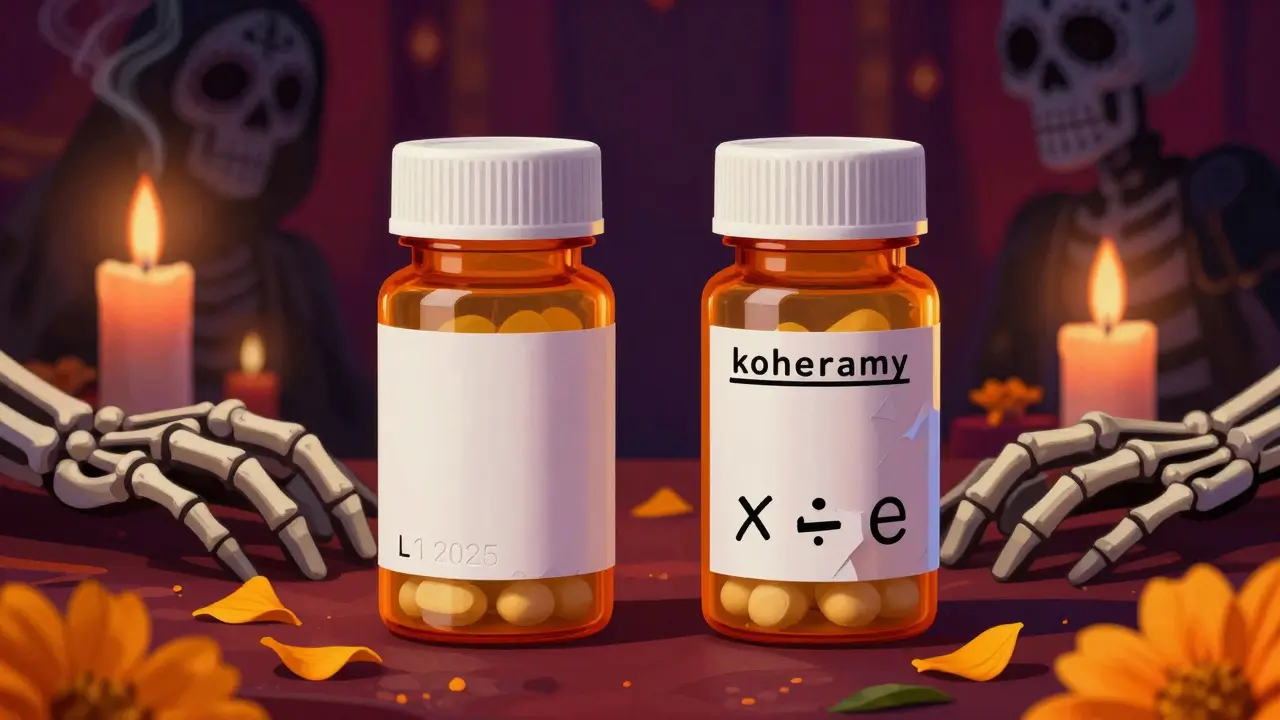
When you get your prescription, spend 30 seconds checking the container. Legitimate generics always include:- Your name and date of birth
- The drug name (generic and brand, if listed)
- Strength (e.g., “10 mg”)
- Manufacturer name (e.g., Teva, Sandoz, Mylan)
- Lot number
- Expiration date
- Pharmacy name and contact info
Use the Lot Number to Verify
Every bottle has a lot number. It’s not just for tracking - it’s your safety net. If there’s a recall, the manufacturer or regulator will use it to pull bad batches. In Canada, you can check Health Canada’s Recall and Safety Alert Database. In the U.S., use the FDA’s Drug Recall Database. Enter the lot number - it takes less than a minute. If the drug was recalled, you’ll see it right away. Some pharmacies even let you scan a QR code on the bottle with your phone. Newer generics from Teva, Sandoz, and Viatris now include 2D barcodes that link directly to verification tools like MediSafe. Just scan it - it’ll tell you the drug’s origin, batch, and expiration.Know the Manufacturers You Can Trust
Not all generic makers are the same. Some have decades of experience and flawless inspection records. Others have been fined for cutting corners. In North America, these companies consistently rank high for quality and reliability:- Teva - World’s largest generic manufacturer; 4.6/5 on PharmacyChecker
- Sandoz - A Novartis company; 4.5/5 on PharmacyChecker
- Mylan (Viatris) - Known for high-volume production and strict controls
- Apotex - Canadian-based; trusted across North America
- Amneal - Strong FDA inspection record
What to Do If Something Feels Off
If your medicine doesn’t work like it used to - if your blood pressure spikes, your pain returns, or you feel dizzy after taking it - don’t ignore it. That’s not “just a bad batch.” That could be a fake. Also, if the pill tastes different, smells weird, or leaves a strange aftertaste - that’s another sign. One Reddit user reported a “metallic, bitter taste” with a fake version of metformin. After switching back to the original bottle, the taste vanished. Report suspicious drugs immediately:- In Canada: Contact Health Canada’s Adverse Reaction Reporting System
- In the U.S.: File a report with the FDA’s MedWatch program
Why This Matters More Than You Think
Generic drugs save the Canadian healthcare system over $2 billion a year. They make chronic conditions like high blood pressure, diabetes, and depression affordable. But if counterfeit drugs slip through, those savings vanish - and lives are at risk. The FDA received over 1,200 counterfeit reports in 2022. Nearly half involved heart medications and erectile dysfunction drugs - the exact types people are most tempted to buy online without a prescription. The good news? If you get your medicine from a licensed pharmacy, the odds of getting a fake are less than 0.1%. The system works - if you use it right.Quick Checklist: Is Your Generic Drug Legit?
Use this before you leave the pharmacy:- ✅ Is the pharmacy licensed? (Check .pharmacy or CIPA seal)
- ✅ Is the drug in a sealed, labeled bottle - not a bag?
- ✅ Does the label have your name, lot number, and expiration date?
- ✅ Does the pill look like your previous refill? (Color/shape can change - but texture shouldn’t)
- ✅ Is the manufacturer a known, reputable company?
- ✅ Can you scan a QR code or look up the lot number online?
Are generic drugs really as effective as brand-name drugs?
Yes. By law, generic drugs must deliver the same amount of active ingredient into your bloodstream at the same rate as the brand-name version. Studies show 98.7% of approved generics meet this standard. Millions of people use generics daily with the same results as brand-name drugs - often for a fraction of the cost.
Why do generic pills look different from brand-name ones?
Brand-name companies hold patents on the color, shape, and design of their pills. To avoid infringement, generic manufacturers must make them look different. This doesn’t affect how the drug works. It’s just a legal requirement. A blue generic pill isn’t weaker - it’s just not allowed to be the same color as the brand.
Can I trust online pharmacies that offer generics at very low prices?
Only if they’re verified. Websites offering drugs at 80% off are often selling counterfeits. Legitimate generics are cheaper than brand names, but not that cheap. If a site doesn’t require a prescription, doesn’t have a physical address, or won’t let you speak to a pharmacist - it’s not safe. Always use pharmacies with the .pharmacy domain or CIPA certification.
What should I do if I think I got a fake generic drug?
Stop taking it immediately. Keep the bottle, even if it’s empty. Contact your pharmacist and ask them to report it. Then file a report with Health Canada (in Canada) or the FDA’s MedWatch program (in the U.S.). Your report helps track dangerous products and prevents others from being harmed.
Are all generic drugs made in the U.S. or Canada?
No. Many generic drugs are made in India, China, or other countries - but they’re still safe if approved by Health Canada or the FDA. What matters isn’t where it’s made, but whether it passed inspection. Both agencies inspect overseas manufacturing sites regularly. As long as the label shows a licensed manufacturer and you bought it from a verified pharmacy, the origin doesn’t affect safety.
Next Steps: Stay Safe, Stay Informed
You don’t need to be a pharmacist to protect yourself. Just follow three simple rules:- Always get your medicine from a licensed pharmacy - never from unverified websites.
- Check the bottle. If something looks off, ask questions.
- Report anything suspicious. One report could save someone’s life.