Statin-Grapefruit Interaction Checker
Check if your statin medication interacts dangerously with grapefruit. This tool helps you understand the risk level based on the specific statin you're taking.
• If you take simvastatin or lovastatin, you should avoid grapefruit completely.
• If you take atorvastatin, avoid daily grapefruit consumption.
• If you take pravastatin, rosuvastatin, fluvastatin, or pitavastatin, grapefruit is generally safe.
If you take a statin to lower your cholesterol, eating a grapefruit or drinking a glass of grapefruit juice might seem harmless-maybe even healthy. But for some statins, that small fruit can turn into a silent danger. The interaction between grapefruit and certain statins isn’t just a minor inconvenience. It can push your drug levels so high that your muscles start breaking down, your kidneys could fail, and you could end up in the hospital. This isn’t a myth. It’s science. And it’s happening to people right now.
How Grapefruit Turns a Safe Drug Into a Toxic One
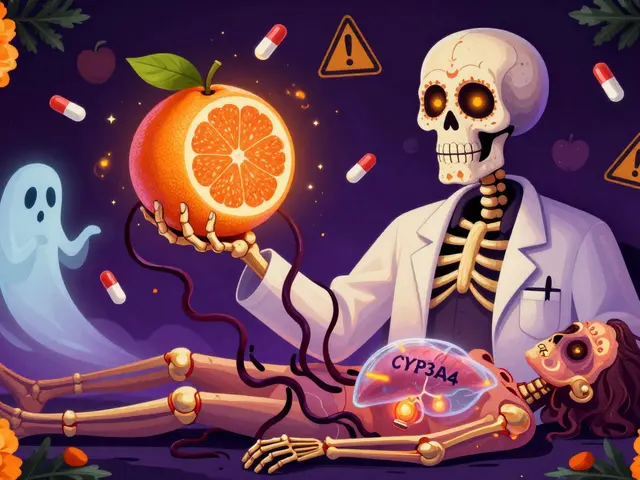
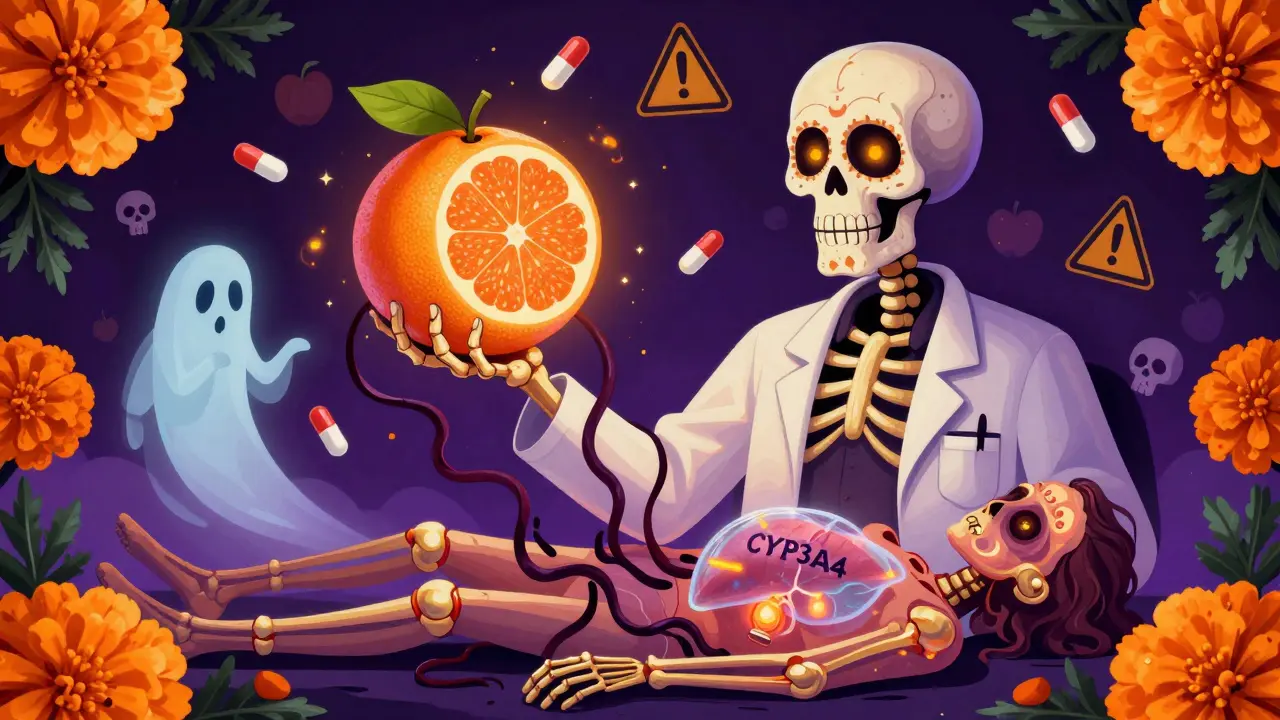
Statins work by blocking an enzyme in your liver that makes cholesterol. But your body doesn’t just absorb them like sugar. It has to break them down first, mostly using a system called CYP3A4. This enzyme lives in your gut and liver, and it’s what keeps the amount of statin in your bloodstream at a safe level. Grapefruit doesn’t just slow this process-it shuts it down. The culprit? Furanocoumarins. These are natural chemicals in grapefruit that bind permanently to CYP3A4 enzymes in your intestines. Once they’re blocked, your body can’t break down the statin properly. The result? More of the drug gets into your bloodstream than it should. It’s like taking two or three pills at once-without knowing it.
This isn’t a guess. In a landmark 1998 study, people who drank grapefruit juice while taking simvastatin saw their drug levels spike by up to 16 times. That’s not a typo. Sixteen times. Even a single glass of juice can cause this effect. And because the enzyme damage is permanent until new enzymes grow back (which takes about three days), having grapefruit even once every few days can keep your statin levels dangerously high.
Which Statins Are Safe? Which Are Not?
Not all statins react the same way. The risk depends on how much they rely on CYP3A4 to get processed. Here’s the breakdown:
| Statin | Grapefruit Interaction Risk | Why |
|---|---|---|
| Simvastatin (Zocor) | High | Almost entirely broken down by CYP3A4. Grapefruit can raise levels over 10-fold. |
| Lovastatin (Mevacor) | High | Same as simvastatin. Strongly dependent on CYP3A4. |
| Atorvastatin (Lipitor) | Moderate | Partly metabolized by CYP3A4. Small amounts of grapefruit may be okay, but avoid daily use. |
| Pravastatin (Pravachol) | Low | Uses a different pathway. No significant interaction. |
| Rosuvastatin (Crestor) | Low | Minimal CYP3A4 involvement. Safe with grapefruit. |
| Fluvastatin (Lescol) | Low | Metabolized by other enzymes. Not affected. |
| Pitavastatin (Livalo) | Low | Very little CYP3A4 use. Minimal risk. |
If you’re on simvastatin or lovastatin, the advice is simple: avoid grapefruit completely. No exceptions. Even one glass a week can be risky. Atorvastatin users can occasionally have a small serving, but don’t make it a habit. The rest? You’re fine.
The Real Danger: Rhabdomyolysis
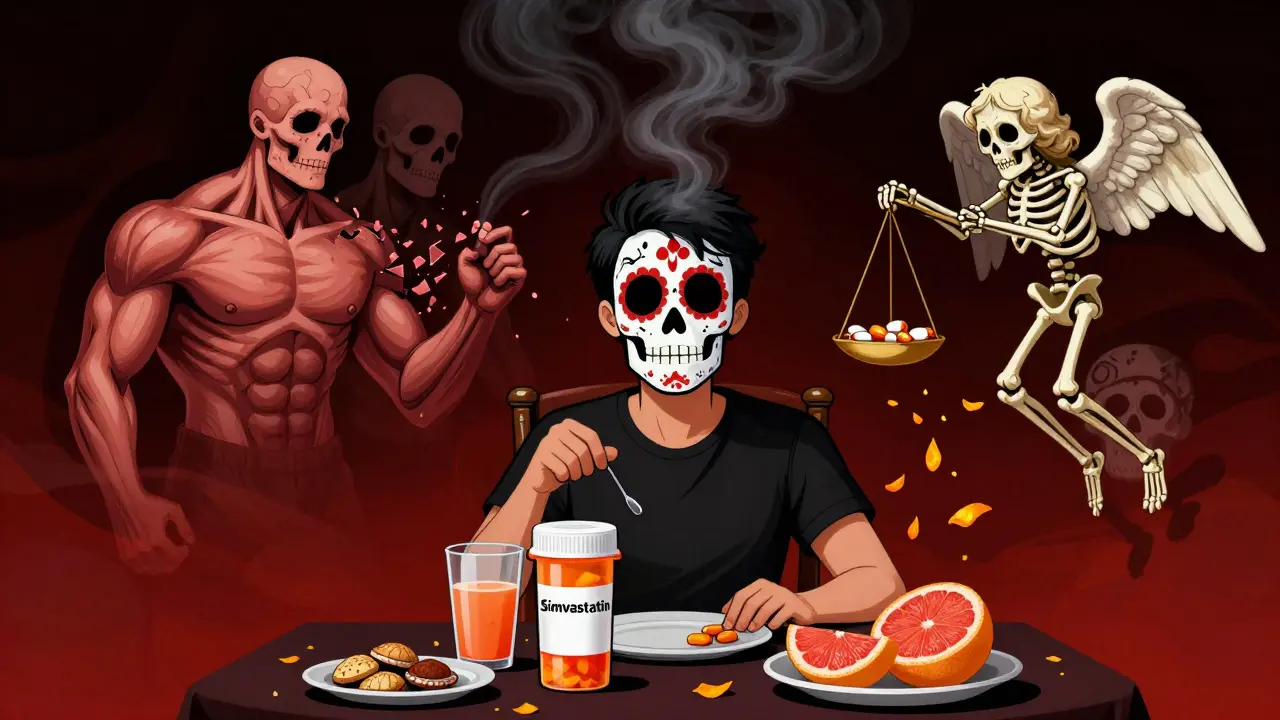
Most people who take statins experience mild muscle aches. That’s common. But when grapefruit gets involved, it can push those aches into something far worse: rhabdomyolysis. This is when muscle cells break apart and spill their contents-like myoglobin-into your blood. Your kidneys try to filter it out, but they can’t handle the overload. That’s when kidney failure kicks in.
It’s rare. Less than 1 in 10,000 statin users get it. But with grapefruit, the risk jumps. A documented case from 2020 involved a 40-year-old woman who ate grapefruit every day for 10 days while taking simvastatin. She woke up one morning unable to stand. Her muscles were in agony. Her urine turned dark brown. She ended up in intensive care. Her kidneys were damaged. She needed dialysis.
You don’t need all the symptoms to be in trouble. Muscle pain, weakness, or dark urine-even if only one of these shows up-is a red flag. If you’re on a high-risk statin and notice any of this, stop the grapefruit and call your doctor. Don’t wait.
Why Timing Doesn’t Matter
You might think, “I’ll just take my statin at night and eat grapefruit in the morning.” That won’t work. The problem isn’t timing. It’s the enzyme damage. Once furanocoumarins shut down CYP3A4 in your gut, it stays shut for 72 hours. So even if you eat grapefruit on Monday, your body won’t be able to process a statin taken on Wednesday. There’s no safe window. No buffer. No workaround. The only solution is to eliminate it entirely-or switch statins.
What About Other Citrus Fruits?
Not all citrus is dangerous. Oranges? Lemons? Limes? You’re fine. They don’t contain enough furanocoumarins to cause the problem. The only other citrus you need to watch out for is Seville oranges (used in marmalade) and pomelos. These are also high in the same chemicals. If you’re on simvastatin or lovastatin, skip those too.
And here’s something most people don’t realize: grapefruit supplements, extracts, or even grapefruit-flavored medications can trigger the same reaction. It’s not just about the fruit. It’s about the chemicals.
What Should You Do?
If you take a statin and love grapefruit, here’s your action plan:
- Check your statin name. Look at your prescription bottle. Is it simvastatin, lovastatin, or atorvastatin? If yes, you need to act.
- Stop grapefruit. If you’re on simvastatin or lovastatin, remove it from your diet entirely. No exceptions.
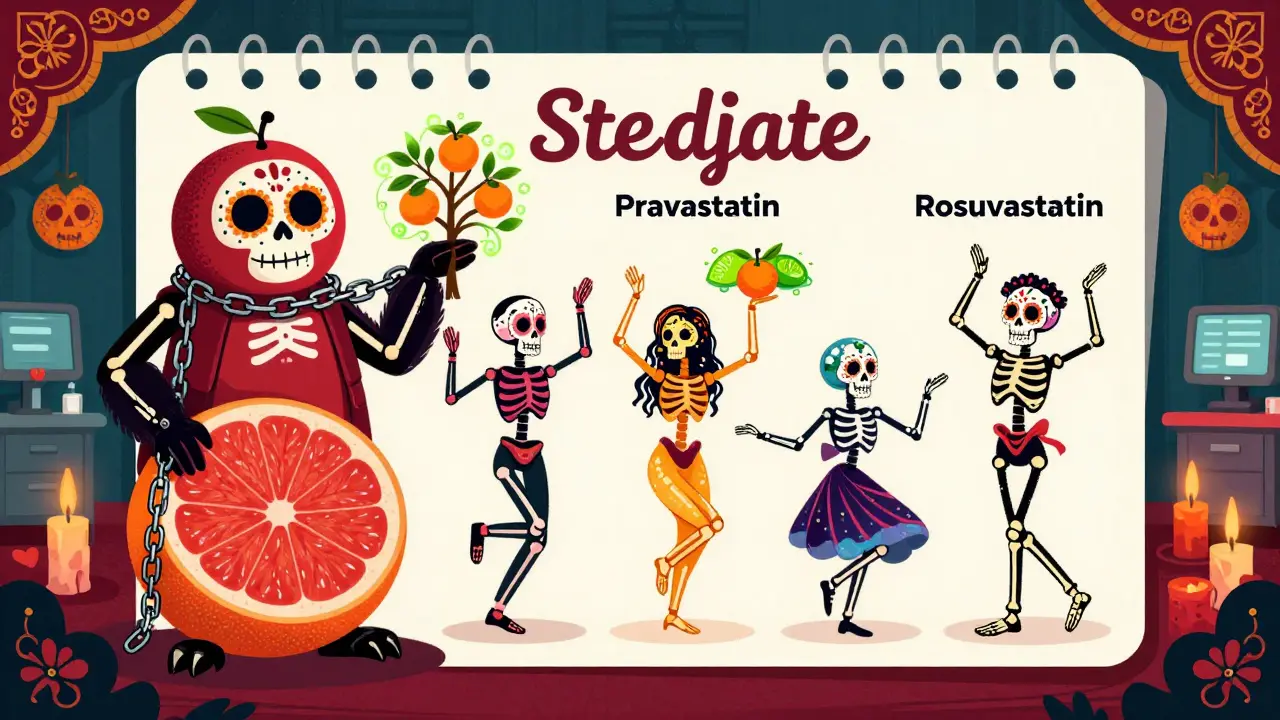
- Ask your doctor about switching. If you love grapefruit and are on a high-risk statin, ask if you can switch to pravastatin or rosuvastatin. Both are just as effective at lowering cholesterol-with zero grapefruit risk.
- Talk to your pharmacist. Pharmacists see these interactions every day. They can flag risks you didn’t know about. Don’t assume your doctor already knows.
- Don’t quit your statin. Stopping your medication because you’re scared of grapefruit is far more dangerous than the fruit itself. Heart attacks and strokes are real risks if you stop taking your statin. The goal isn’t to stop treatment-it’s to make it safer.
The Bigger Picture
Thirty-nine million Americans take statins. About 1 in 8 of them regularly eat grapefruit. And yet, a 2021 survey found that less than half of doctors ask patients about grapefruit use when prescribing statins. That’s a gap in care. You can’t rely on your doctor to catch it. You have to be your own advocate.
There’s hope on the horizon. Scientists at the University of Florida are breeding new grapefruit varieties that are low in furanocoumarins. In five to ten years, you might be able to enjoy grapefruit without worry. But until then, the risk is real.
The bottom line? If you’re on simvastatin or lovastatin, grapefruit isn’t just a bad combo-it’s a health hazard. If you’re on atorvastatin, be cautious. If you’re on pravastatin or rosuvastatin, you’re safe. Know your drug. Know your fruit. And don’t let a healthy habit turn into a silent threat.