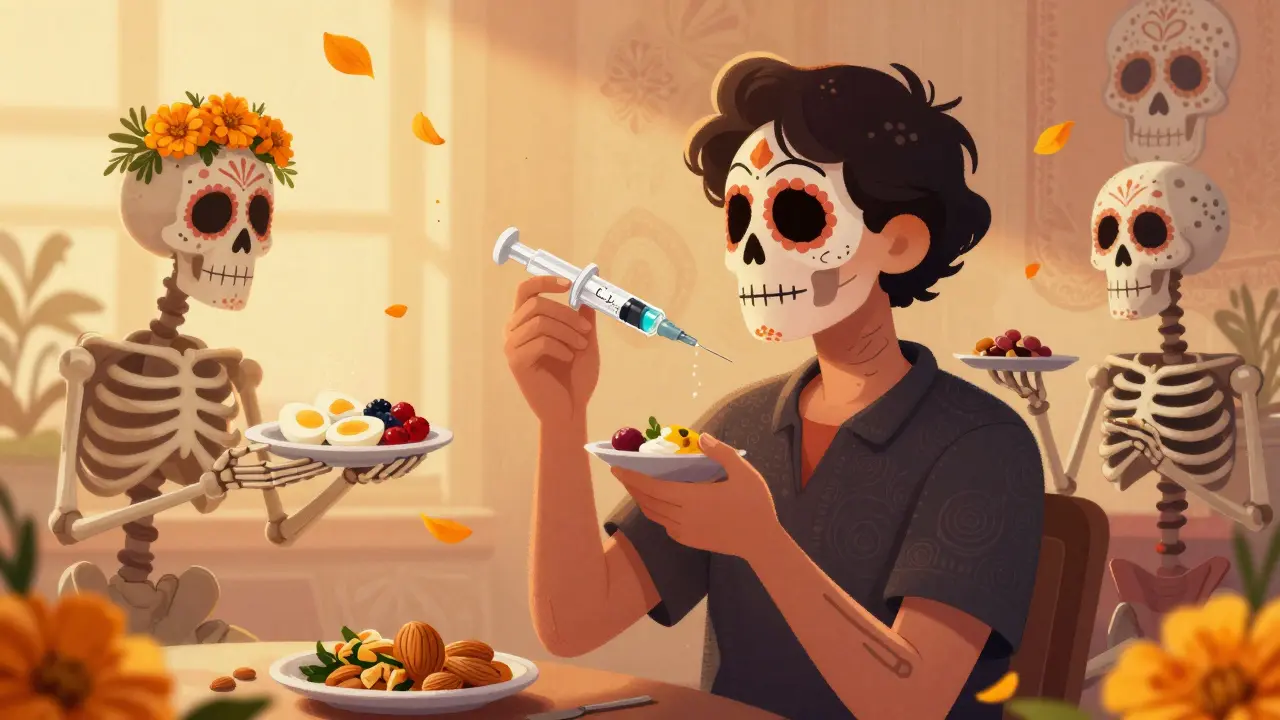
More than 10 million Americans are now using GLP-1 receptor agonists like Ozempic, Wegovy, and Trulicity for diabetes or weight loss. But for nearly half of them, the journey starts with nausea, vomiting, or bloating - and many quit before they ever feel the benefits. The truth? These side effects aren’t a sign you’re doing something wrong. They’re a normal part of how the drug works. And with the right meal plan and dosing strategy, most people can get through them without stopping treatment.
Why GLP-1 Drugs Cause GI Problems
GLP-1 medications slow down how fast your stomach empties. That’s why you feel full longer and eat less - it’s also why food sits in your stomach longer, causing nausea, bloating, and sometimes vomiting. These drugs also send signals to your brain’s vomiting center, which can trigger queasiness even when your stomach isn’t full. It’s not a bug - it’s the feature working as designed. But that doesn’t mean you have to suffer.
Studies show 40% to 70% of users experience GI side effects in the first few weeks. Nausea hits hardest around week 4, then drops sharply by week 8. Vomiting affects 5% to 20%, diarrhea 10% to 25%, and constipation 5% to 15%. The worst symptoms usually fade within 2 to 3 months. But if you don’t manage them early, you might quit before they get better.
Dose Titration: Slow Down to Speed Up
Most people make one big mistake: they rush the dose escalation. The label says you can increase your dose every 4 weeks. But that’s the fastest you can go - not the best way to stay on track.
Real-world data from the Cleveland Clinic and Mayo Clinic shows that patients who delay dose increases until nausea has been gone for 7 full days cut their discontinuation risk by more than half. If you’re vomiting more than twice a week, hold the dose for 7 to 10 days. If nausea lingers for 2 weeks, stay at the same dose for 4 weeks before trying again.
Here’s what works:
- Don’t move to the next dose until your nausea is completely gone for 7 straight days.
- If you vomit twice in a week, go back to the previous dose and stay there for 2 to 4 weeks.
- For once-weekly drugs like Ozempic or Wegovy, consider giving yourself 20 to 24 weeks to reach the full dose - not the standard 16 weeks.
- Take your injection first thing in the morning. Studies show this reduces nausea by 25% to 30% compared to evening dosing.
Some manufacturers now offer support programs to help. Novo Nordisk’s Wegovy includes free dietitian visits. Eli Lilly’s Mounjaro offers biweekly nurse check-ins. These aren’t just perks - they’re tools that help people stick with the treatment.
Meal Planning: Eat Like You’re on a Diet (Because You Are)
Your meal plan isn’t optional. It’s your best defense. Most people who quit GLP-1 therapy do so because they kept eating normal portions - 600+ calories per meal - while their stomach was still adjusting. That’s like trying to run a marathon with a sprained ankle.
Successful users follow three simple rules:
- Keep meals between 300 and 400 calories.
- Get 25 to 30 grams of protein in every meal.
- Avoid more than 20 grams of simple carbs at once - no sugary snacks, juice, or white bread.
Here’s what a day looks like for someone tolerating GLP-1 well:
- 7:00 AM: Take medication with water only.
- 8:00 AM: Breakfast - 2 boiled eggs, 1/2 cup Greek yogurt, 1/4 cup berries (30g protein, 15g carbs, 10g fat).
- 11:30 AM: Snack - 1 oz almonds, 1 string cheese (10g protein, 6g carbs, 12g fat).
- 1:30 PM: Lunch - 3 oz grilled chicken, 1 cup spinach, 1/2 cup roasted broccoli, 1 tsp olive oil (30g protein, 18g carbs, 14g fat).
- 4:30 PM: Snack - 1/2 cup cottage cheese, 1/4 cup cucumber slices (14g protein, 6g carbs, 5g fat).
- 7:00 PM: Dinner - 4 oz baked cod, 1/2 cup mashed cauliflower, 1 tsp butter (30g protein, 12g carbs, 12g fat).
Notice what’s missing? No large portions. No fried food. No sugary drinks. No carbonation. No eating within 2 hours of bedtime.
Fluids and Timing Matter More Than You Think
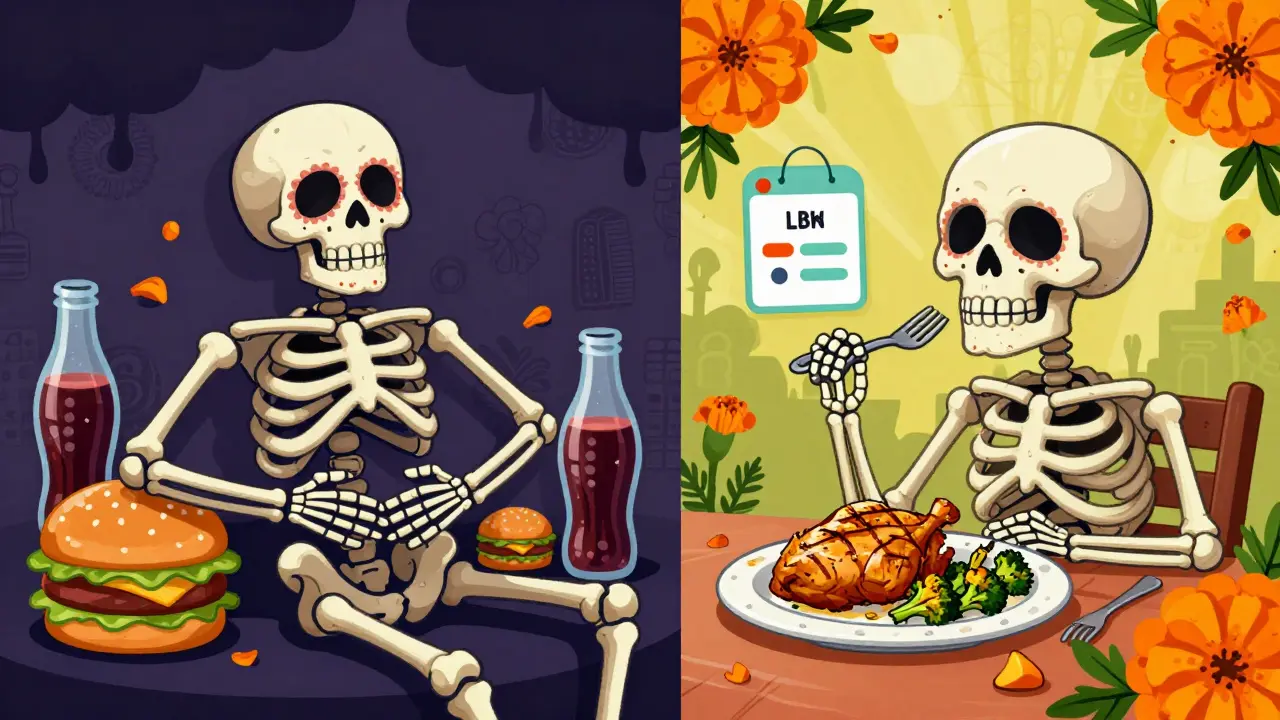
Drinking too much with meals is one of the biggest mistakes. Liquids fill your stomach fast, and when your stomach is already slowed down by the drug, it can’t handle the volume. The Endocrine Society recommends no more than 120 to 180 ml (4 to 6 oz) of fluid with meals - and absolutely no soda, sparkling water, or alcohol during titration.
Wait 30 to 60 minutes after your injection before eating your first meal. This gives your body time to adjust. And don’t snack between meals unless you’re truly hungry - eating too often keeps your stomach busy and worsens bloating.
If nausea hits hard, try the BRAT diet for 2 to 3 days: bananas, rice, applesauce, toast. Then slowly add lean protein and cooked vegetables. Don’t jump back to burgers and pizza. Your stomach is still learning.
What to Do When Symptoms Don’t Go Away
Most GI side effects fade. But if they don’t - and you’re following all the rules - there are still options.
- If you’ve been on the same dose for 4 weeks and nausea is still moderate, hold for another 2 weeks. Then try a tiny increase - maybe 10% instead of the full step.
- Some patients find switching from semaglutide to liraglutide helps. Liraglutide has slightly less diarrhea and more predictable nausea patterns.
- Consider taking ginger capsules (250 mg) 30 minutes before meals. A 2023 study in Diabetes, Obesity and Metabolism showed a 30% reduction in nausea with daily ginger use.
- For constipation, increase soluble fiber (oats, chia seeds, psyllium) and drink 2 liters of water daily - but not with meals.
Remember: serious GI events like gastroparesis or bowel obstruction are rare - less than 1% of users. But if you have severe abdominal pain, vomiting that won’t stop, or can’t keep fluids down, see your doctor immediately.
Why This Works: The Science Behind the Strategy
A 2023 study in Diabetes Care followed 1,200 patients on GLP-1 therapy. Those who followed structured meal plans and symptom-guided titration had 42% fewer severe GI episodes. Their dropout rate was 35% lower than those who didn’t adjust their habits.
Patients who stuck with the plan for 6 months were 3 times more likely to reach their full dose. And those who did? They lost 15% to 20% of their body weight - and kept it off.
The FDA and American Diabetes Association now recommend a “GLP-1 GI Tolerance Score” - a simple 0 to 10 scale patients can track daily. If your score is above 4, don’t increase your dose. If it’s below 2 for a week, you’re ready to move up.
Big medical centers like Mayo Clinic now hand out “GLP-1 Starter Kits” with meal templates, symptom logs, and fluid guidelines. Their ER visits for dehydration dropped 32% in the first year.
What Not to Do
- Don’t skip meals to avoid nausea. That makes your blood sugar unstable and your stomach more sensitive.
- Don’t take anti-nausea meds like Zofran without talking to your doctor. They can interfere with how GLP-1 drugs work.
- Don’t try to “power through” vomiting. It’s a red flag, not a badge of honor.
- Don’t compare your progress to someone else’s. Your body responds differently. Your pace is yours alone.
Long-Term Success Is About Patience, Not Perfection
GLP-1 drugs aren’t magic pills. They’re tools - and like any tool, they work best when you learn how to use them. The goal isn’t to feel great right away. The goal is to stick with it long enough for your body to adapt.
Most people who make it past 3 months find their nausea fades to occasional, mild discomfort. Their appetite changes. They eat less without feeling deprived. They start losing weight - and keeping it off.
That’s the real win. Not the first week. Not the first dose. It’s the 6-month mark - when you realize you didn’t need to quit. You just needed to slow down, eat smaller meals, and listen to your body.
How long does nausea last on GLP-1 medications?
Nausea usually peaks around week 4 and improves significantly by week 8. For most people, it drops to mild or occasional by week 12. By 6 months, fewer than 5% report ongoing nausea. But this depends on how slowly you titrate - rushing the dose can extend symptoms.
Can I drink alcohol while on GLP-1 drugs?
It’s best to avoid alcohol during the first 3 months of treatment. Alcohol irritates the stomach and can worsen nausea, vomiting, and dehydration. Once you’re stable, moderate drinking (1 drink per day for women, 2 for men) may be okay - but never on an empty stomach and never with carbonated mixers.
Should I take anti-nausea medication like Zofran?
Only under your doctor’s guidance. While Zofran can help with nausea, it doesn’t fix the root cause - delayed gastric emptying. Overuse can mask warning signs and interfere with the drug’s weight-loss effects. Try dietary changes and slower titration first.
Why do I get constipation instead of diarrhea?
GLP-1 drugs slow digestion everywhere - not just the stomach. Slower movement through the intestines can lead to constipation, especially if you’re not drinking enough water or eating enough fiber. Focus on soluble fiber (oats, chia, flax) and 2 liters of water daily - spread out between meals.
Is it safe to stay on a lower dose long-term?
Yes. Many people stay on half or two-thirds of the full dose and still get great results - better blood sugar control, steady weight loss, and fewer side effects. The goal isn’t to hit the maximum dose. The goal is to find the dose that works for you without making you sick.
What if I miss a dose?
If you miss a weekly dose, take it as soon as you remember - as long as it’s within 5 days. If it’s been more than 5 days, skip the missed dose and resume your regular schedule. Don’t double up. If you miss doses often, talk to your doctor about switching to a daily option like liraglutide.
Can I eat carbs on GLP-1 drugs?
Yes - but not too much at once. Limit simple carbs (sugar, white bread, pasta) to under 20g per meal. Choose complex carbs like oats, quinoa, sweet potatoes, and legumes. Pair them with protein and healthy fat to slow digestion and avoid blood sugar spikes.
Do I need to see a dietitian?
Not required, but highly recommended. A registered dietitian can create a personalized meal plan that fits your preferences and medical needs. Many insurance plans cover this if you’re on GLP-1 therapy for diabetes or obesity. Programs like Wegovy’s free dietitian access make it easier than ever.
Next Steps: Your 7-Day Action Plan
- Download a symptom tracker (free templates are available from the American Diabetes Association).
- Plan your meals ahead - stick to 300-400 calories, 25-30g protein, under 20g simple carbs per meal.
- Drink no more than 6 oz of water with meals - sip slowly.
- Take your injection at the same time every day, preferably in the morning.
- Wait 60 minutes before eating after your injection.
- If nausea hits, hold your next dose increase for 7 full days of no symptoms.
- Call your doctor if you vomit more than twice in a week or can’t keep fluids down.
GLP-1 therapy isn’t about pushing through pain. It’s about working with your body - not against it. Slow down. Eat smart. Listen. The results will follow.