What’s the real difference between bipolar depression and unipolar depression?
It sounds simple: you feel down, so you have depression. But that’s not the whole story. Bipolar depression and unipolar depression look almost identical on the surface-low energy, sadness, trouble sleeping, loss of interest in things you used to enjoy. Yet treating them the same way can make things worse. In fact, giving someone with bipolar disorder the wrong medication can trigger mania, rapid cycling, or even hospitalization. The difference isn’t just academic-it’s life-changing.
Unipolar depression, also called Major Depressive Disorder (MDD), means you only experience depressive episodes. No highs. No energy surges. No impulsivity. Just the weight of depression, sometimes for months at a time. Bipolar depression, on the other hand, is part of a larger condition: bipolar disorder. People with this condition swing between deep lows and periods of abnormally elevated mood-either full-blown mania or milder hypomania. The depression feels the same, but the underlying biology and treatment path are completely different.
How doctors tell them apart (and why it’s so hard)
Diagnosing bipolar depression isn’t just about asking, “Have you ever felt overly energetic?” Most people don’t recognize hypomania as a problem. They think, “I was just productive,” or “I didn’t need sleep-I was on fire.” But hypomania isn’t just feeling good. It’s acting recklessly: spending money you don’t have, starting wild projects, talking nonstop, taking dangerous risks. And many people don’t report it unless directly asked.
Doctors use tools like the Mood Disorders Questionnaire (MDQ) and the Hypomania Checklist-32 (HCL-32) to spot hidden signs. The MDQ asks about 13 symptoms-like racing thoughts, increased self-esteem, or reduced need for sleep-and if someone answers yes to seven or more, and says it caused problems in their life, it raises a red flag. But even these tools miss cases. A 2018 study found that nearly 37% of bipolar patients were initially misdiagnosed with unipolar depression.
Some clues are more subtle. People with bipolar depression often wake up way too early-like 3 or 4 a.m.-and can’t go back to sleep. Their mood is worst in the morning and improves as the day goes on. They may feel physically heavy, like their limbs are made of lead. Psychotic symptoms-like believing they’re being watched or hearing voices during depressive episodes-are more common in bipolar depression than in unipolar. And if someone has a family history of bipolar disorder, their risk jumps from 1-2% in the general population to 5-10%.
Why antidepressants can be dangerous for bipolar depression
This is where things get critical. For unipolar depression, antidepressants like sertraline or escitalopram are the first-line treatment. About 60-65% of people respond well within 8 to 12 weeks. But for bipolar depression, antidepressants alone are risky.
Studies show that 76% of people with bipolar disorder who take antidepressants without a mood stabilizer experience mood destabilization-meaning they might swing into mania, cycle faster between moods, or even develop chronic rapid cycling (four or more episodes in a year). One Reddit user shared: “I was on Prozac for seven years. I went from two episodes a year to twelve. My psychiatrist finally noticed my hypomania. By then, my brain was rewired.”
The STEP-BD trial, one of the largest studies on this topic, found that adding an antidepressant to a mood stabilizer didn’t improve outcomes for bipolar depression-but it did increase the risk of switching into mania. That’s why experts now say: never start an antidepressant alone in someone with suspected or confirmed bipolar disorder.
What actually works for bipolar depression
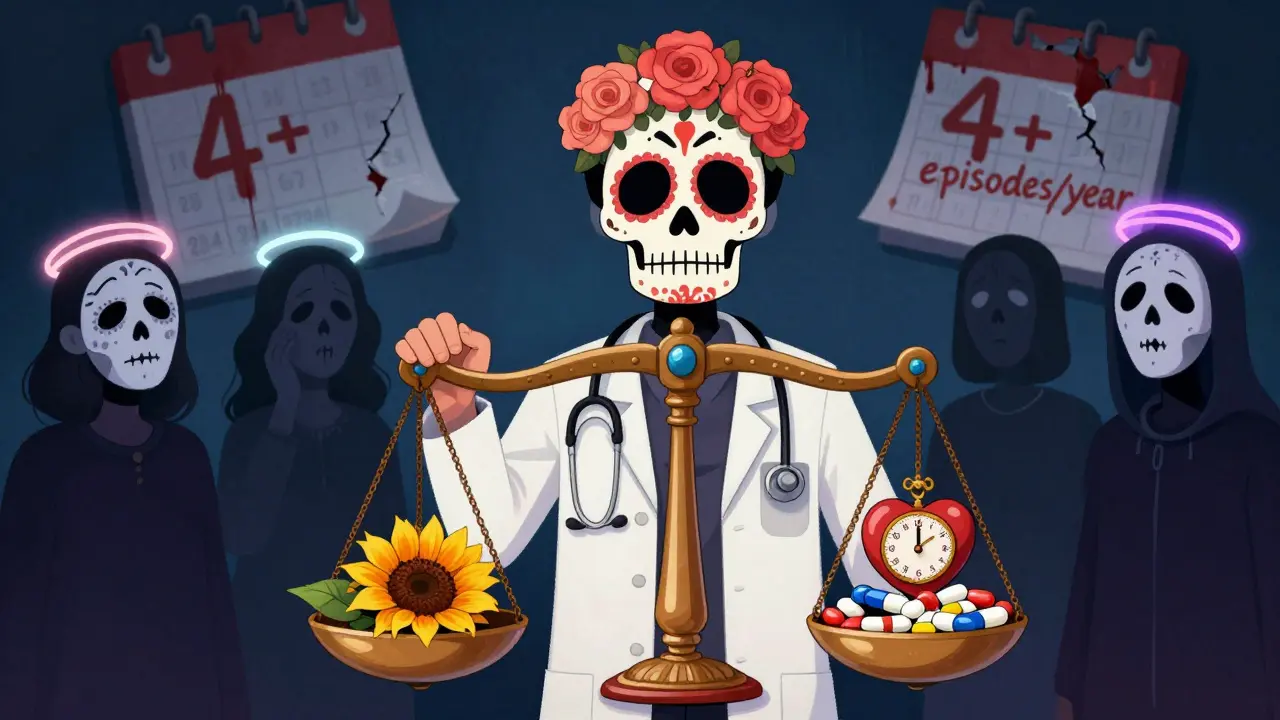
The right treatment for bipolar depression starts with stabilizing the mood first. That means using medications that prevent both highs and lows, not just lifting the low.
Lithium has been the gold standard for decades. It reduces the risk of suicide and prevents future episodes. A 2010 meta-analysis showed a 48% response rate in bipolar depression compared to just 28% for placebo. Quetiapine (Seroquel) is another top choice-with a 58% response rate in clinical trials. Lurasidone (Latuda) is newer but effective too, especially for people who struggle with weight gain or sedation.
These aren’t just “antidepressants with extra benefits.” They work differently. Lithium affects how brain cells communicate under stress. Quetiapine balances dopamine and serotonin in ways that calm overactive circuits linked to mania. They don’t just lift mood-they prevent the whole system from tipping.
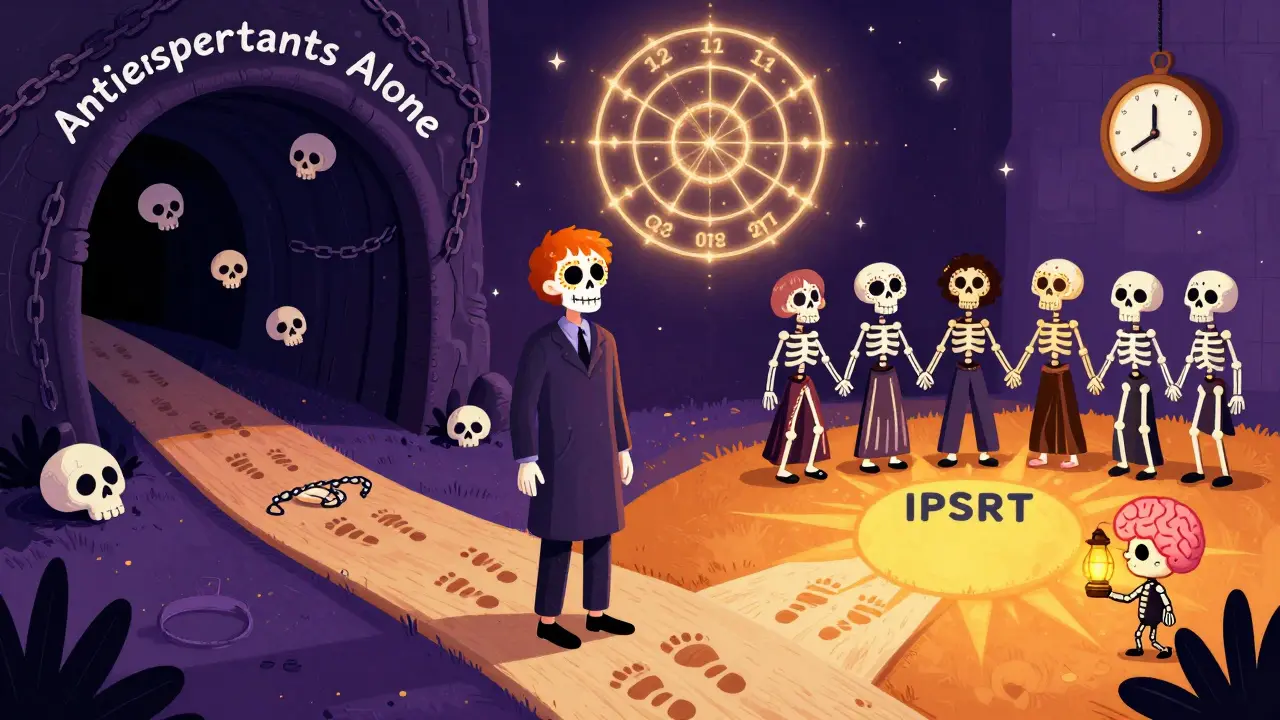
Psychotherapy also plays a different role. For unipolar depression, Cognitive Behavioral Therapy (CBT) helps challenge negative thoughts. For bipolar disorder, Interpersonal and Social Rhythm Therapy (IPSRT) focuses on structure: waking up and going to bed at the same time every day, eating meals regularly, avoiding schedule chaos. Why? Because disrupted routines are one of the biggest triggers for mood episodes. Studies show IPSRT leads to 68% remission after 12 months, compared to 42% with standard care.
What about unipolar depression treatment?
When depression is truly unipolar, the path is clearer. SSRIs like sertraline, fluoxetine, or escitalopram are first-line. SNRIs like venlafaxine or duloxetine are used if SSRIs don’t work. The American College of Physicians says the number needed to treat (NNT) for remission is about 7-meaning for every seven people treated, one will achieve full recovery who wouldn’t have otherwise.
For people who don’t respond to two or more antidepressants, options include switching to a different class, adding psychotherapy, or using newer treatments like esketamine nasal spray (Spravato). It’s approved for treatment-resistant unipolar depression and can lift mood within hours-not weeks. But it’s not for everyone. It requires monitoring in a clinic due to risks of dissociation and increased blood pressure.
Unlike bipolar disorder, unipolar depression doesn’t always require lifelong medication. If someone has one episode and stays well for six to twelve months after stopping treatment, many doctors will consider tapering off. Relapse risk is around 37% if you stop, but 73% if you keep taking meds long-term-so decisions are personalized.
What happens when the diagnosis is wrong?
Misdiagnosis isn’t just a mistake-it’s a cascade of harm. A 2017 study found that people with bipolar disorder who were misdiagnosed as unipolar spent an average of 8.2 years on the wrong treatment. During that time, 63% had at least one hospitalization because antidepressants triggered mania. One person described it as “being stuck in a storm with no lifeboat.”
The National Comorbidity Survey found that 40% of people later diagnosed with bipolar disorder were first told they had unipolar depression. And 90% of them were given antidepressants alone. That’s not just ineffective-it’s harmful.
The economic cost is real too. Misdiagnosed bipolar patients spend $13,247 more per year on healthcare due to emergency visits, hospital stays, and extra medications. That’s not just a personal burden-it’s a system-wide problem.
What’s changing in the field?
Science is moving beyond the old binary of “bipolar vs. unipolar.” Researchers now see depression as a spectrum. A 2019 study in Nature Genetics found a strong genetic link between bipolar disorder and major depression-so much so that they share 72% of the same genetic markers. That’s why some experts argue that recurrent unipolar depression might be an early form of bipolar illness.
But for now, the diagnostic line still matters. The DSM-5-TR (2022) added a “with mixed features” specifier for depression, acknowledging that people can have symptoms of both depression and mania at the same time. That’s a step toward nuance. But treatment still depends on knowing whether mania has ever occurred.
Emerging tools like brain imaging and gene expression tests are showing promise. A 2023 Lancet Psychiatry study identified a 12-gene pattern that distinguishes bipolar from unipolar depression with 83% accuracy. And apps that track sleep, speech patterns, and typing speed are being tested to detect subtle mood shifts before they become full episodes.
What should you do if you’re unsure?
If you’ve been diagnosed with unipolar depression but:
- Antidepressants didn’t help-or made things worse
- You’ve had periods of high energy, impulsivity, or reduced need for sleep
- You have a family member with bipolar disorder
- You’ve had rapid mood swings or cycling (more than four episodes a year)
Then ask for a second opinion. Don’t assume your doctor missed it. Ask specifically: “Could this be bipolar depression?” Request screening with the MDQ or HCL-32. Bring a family member who can help recall past behaviors.
It’s okay to be scared. But getting the right diagnosis isn’t about labeling-it’s about getting the right treatment. The right medication can mean the difference between surviving and thriving.
Can you have bipolar depression without ever having a manic episode?
No. By definition, bipolar depression only occurs in people who have had at least one manic or hypomanic episode. If someone has only ever experienced depressive episodes, they’re diagnosed with unipolar depression (Major Depressive Disorder). However, some people don’t recognize hypomania as abnormal-they think they were just “in a good zone.” That’s why doctors ask detailed questions about energy levels, sleep needs, spending habits, and risky behavior during past periods of elevated mood.
Do antidepressants always cause mania in bipolar people?
Not always, but the risk is high enough that experts strongly advise against using them alone. Studies show that 76% of bipolar patients on antidepressants without a mood stabilizer experience mood destabilization-meaning they may switch into mania, cycle faster, or become more unstable. That’s why treatment guidelines say: if you have bipolar disorder, start with a mood stabilizer or atypical antipsychotic first. Antidepressants, if used at all, should only be added after mood is stable and under close supervision.
Is bipolar depression worse than unipolar depression?
It’s not about which is “worse”-it’s about which is more complex. Bipolar depression often comes with more severe symptoms like psychosis, early morning awakening, and intense fatigue. But unipolar depression can be just as debilitating. The bigger issue is that bipolar depression is harder to treat correctly. Misdiagnosis leads to longer illness, more hospitalizations, and higher suicide risk. So while the depression itself may feel similar, the consequences of getting treatment wrong are far greater in bipolar disorder.
How long does it take to get the right diagnosis?
On average, it takes 8 to 10 years for someone with bipolar disorder to get the correct diagnosis. Many are misdiagnosed with unipolar depression, anxiety, or even personality disorders. The delay happens because manic or hypomanic episodes are often brief, infrequent, or not reported. People don’t see them as problems. Doctors don’t always ask the right questions. That’s why it’s crucial to track your mood patterns over time and bring a trusted friend or family member to appointments who can help fill in the gaps.
Can lifestyle changes help with bipolar depression?
Yes-but not as a replacement for medication. Regular sleep, consistent meal times, avoiding alcohol and drugs, and minimizing stress are critical for stabilizing mood. Interpersonal and Social Rhythm Therapy (IPSRT) is specifically designed around this. People who stick to daily routines have fewer episodes. Exercise helps too, especially aerobic activity, which can reduce depressive symptoms. But if you have bipolar disorder, lifestyle changes alone won’t prevent mania or deep depression. Medication and therapy are still the foundation.