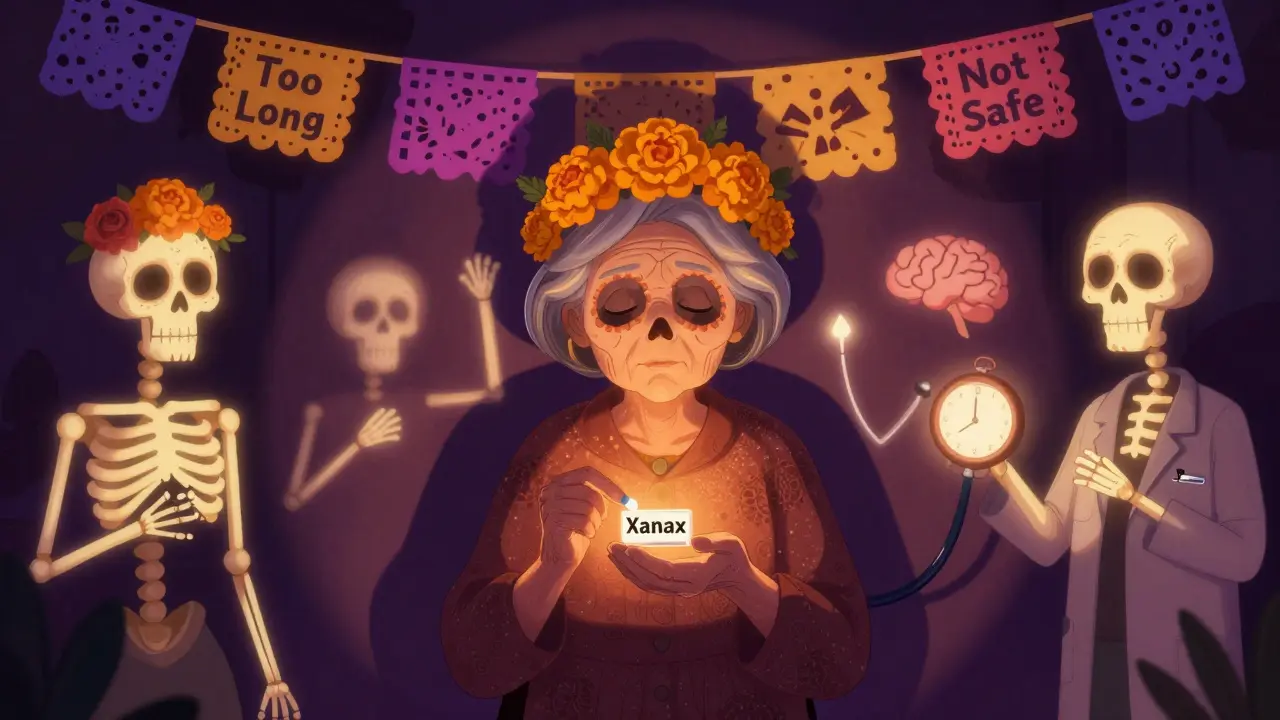
For millions of older adults, a small white pill labeled lorazepam or alprazolam has been the go-to solution for anxiety or trouble sleeping. But here’s the hard truth: benzodiazepines are one of the most dangerous medication classes for seniors - and many doctors and patients still don’t realize how risky they are.
Why Benzodiazepines Are Riskier for Seniors
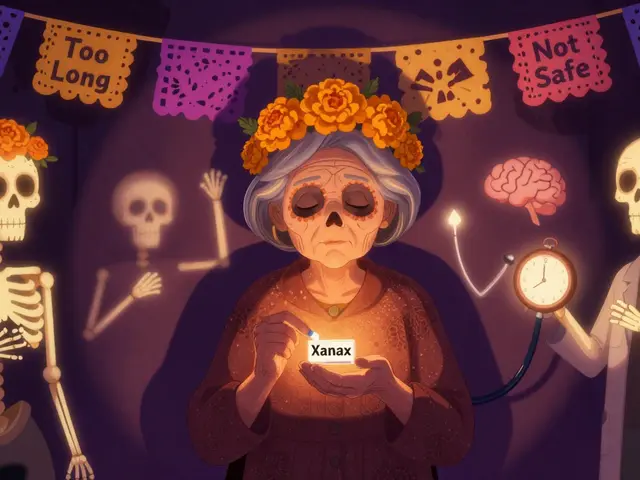
Benzodiazepines like Valium, Xanax, and Ativan work by boosting GABA, a calming chemical in the brain. They work fast - too fast, for older bodies. As we age, our liver and kidneys don’t process drugs the same way. Long-acting benzodiazepines, such as diazepam, can stay in the system for days, building up slowly. This leads to drowsiness, slower reaction times, and poor balance - all of which increase the chance of a fall. Falls aren’t just inconvenient. One in three seniors over 65 falls each year, and benzodiazepines raise that risk by at least 50%. A hip fracture after a fall can mean permanent disability, nursing home admission, or even death. Studies show seniors on these drugs are just as impaired as someone driving with a blood alcohol level of 0.05% to 0.079% - legally drunk in many places. The cognitive risks are even more alarming. Long-term use is linked to memory loss, confusion, and brain fog that doesn’t go away even after stopping the drug. A major 2023 study found that seniors who took benzodiazepines for more than six months had an 84% higher chance of developing Alzheimer’s disease. The longer the use and the higher the dose, the worse the risk. This isn’t a small concern - it’s a silent epidemic.What the Experts Say
The American Geriatrics Society has listed benzodiazepines as potentially inappropriate for older adults since 2012, and their 2024 update made it even clearer: all benzodiazepines, no matter the brand or half-life, carry serious risks. The FDA added new warnings to labels in April 2024, requiring manufacturers to state the dementia risk explicitly. Dr. Sharon Inouye from Harvard calls benzodiazepines “among the most dangerous medications for older adults.” Dr. Michael Steinman at UCSF says even short-term use is risky - and many prescribers underestimate that. The Substance Abuse and Mental Health Services Administration (SAMHSA) echoed this in its 2025 letter to clinicians, urging doctors to avoid prescribing these drugs unless absolutely necessary. And yet, in 2023, nearly 9 million benzodiazepine prescriptions were filled for Medicare beneficiaries. About 3.2 million seniors are still on them long-term. Why? Many patients believe their doctor wouldn’t prescribe something unsafe. Others fear anxiety or insomnia will return if they stop. But the truth is, the medication itself is often making the problem worse over time.The Real Cost: Patient Stories
On patient forums, the reviews tell a clear story. Among 1,247 reviews analyzed in early 2024, benzodiazepines averaged a 5.2 out of 10 for use in seniors - far below the 7.8 average for alternatives. People who had good experiences said it helped during a panic attack. But those who had bad experiences used words like “constant fog,” “I can’t remember my grandkids’ names,” and “I fell three times in six months.” One Reddit user, NurseJen87, wrote in March 2024: “Nine out of ten elderly patients I see think their Xanax is completely safe because their doctor prescribed it.” That’s the problem - trust in the system blinds people to the danger. Worse, most seniors don’t even know the full risks. A 2015 study found only 32% knew benzodiazepines could hurt memory, 41% knew they increased fall risk, and just 23% were aware they could cause muscle weakness. Meanwhile, 78% of long-term users said they found it hard to quit - even when they knew the risks.
Safer Alternatives for Anxiety and Insomnia
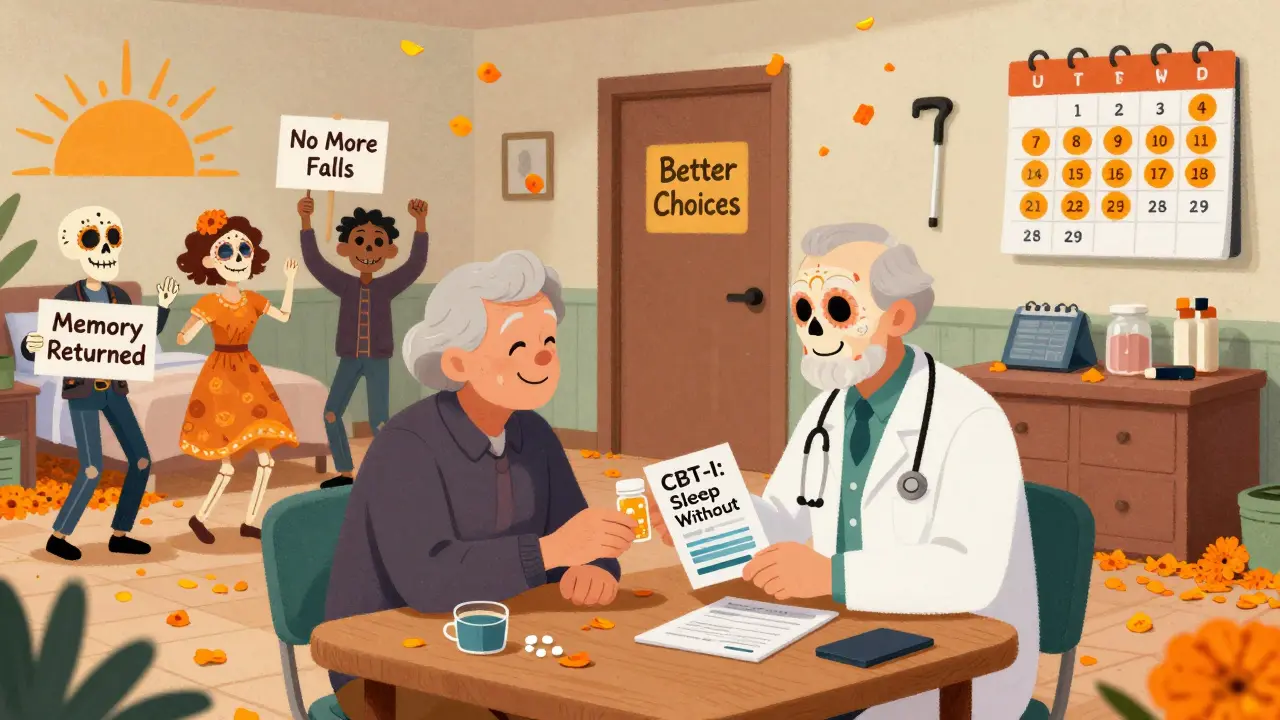
There are better, safer options - and they work better over time. For insomnia, cognitive behavioral therapy for insomnia (CBT-I) is the gold standard. It doesn’t involve pills. It teaches you how to fix sleep habits, manage racing thoughts, and improve sleep efficiency. Studies show 70-80% of older adults see major improvements - and those gains last years, not weeks. Medicare has covered CBT-I since 2022, but only 12% of eligible seniors have used it, mostly because providers don’t refer them. For anxiety, SSRIs like sertraline or escitalopram and SNRIs like venlafaxine are first-line treatments. They take 4-6 weeks to work, which feels slow compared to a benzodiazepine’s instant calm. But they don’t cause brain fog, falls, or addiction. They also treat depression, which often goes hand-in-hand with anxiety in older adults. Another option is ramelteon, a melatonin receptor agonist. It helps with falling asleep and has almost no risk of dependence or cognitive side effects. It’s not as strong for staying asleep, but it’s far safer than anything in the benzodiazepine class. Avoid diphenhydramine (Benadryl) and other antihistamines. They’re often sold as “sleep aids” and are cheap and easy to get. But they block acetylcholine - a brain chemical critical for memory. Long-term use is linked to higher dementia risk, just like benzodiazepines.How to Stop Safely: The Tapering Guide
If you or a loved one has been on a benzodiazepine for months or years, quitting cold turkey is dangerous. Withdrawal can cause seizures, extreme anxiety, hallucinations, or rebound insomnia worse than before. The American Society of Addiction Medicine recommends a slow taper: reduce the dose by 5-10% every 1-2 weeks. For some seniors, especially those on high doses or multiple medications, this can take 6 to 12 months. The key is patience and support. The most successful tapers combine gradual dose reduction with CBT. One study found 65% of seniors successfully stopped benzodiazepines when they got CBT support - compared to only 35% who tried tapering alone. Talk to your doctor about:- Why you’re on the medication and if it’s still needed
- The real risks of continuing vs. stopping
- What alternatives might work for your specific symptoms
- How to manage withdrawal symptoms if they come
What’s Changing in 2025 and Beyond
The tide is turning. CMS launched the “Beers Criteria Action Plan” in January 2025 to cut inappropriate benzodiazepine prescribing by 50% by 2027. Pharmacies now flag risky prescriptions for Medicare Part D users. Insurance companies are starting to require prior authorization for long-term benzodiazepine use. The NIH is funding the BRIGHT trial - a five-year study testing telehealth tools to help seniors safely stop these drugs. Results won’t come until 2029, but early pilot data looks promising. The American Geriatrics Society has made benzodiazepine deprescribing one of its top five goals for 2025-2027. They’re creating patient decision aids and training programs for doctors to help them have these tough conversations.What You Can Do Right Now
If you’re a senior on benzodiazepines:- Don’t stop suddenly. Talk to your doctor first.
- Ask if your prescription still makes sense - especially if you’ve been on it longer than 3 months.
- Request a referral to CBT-I or a geriatric psychiatrist.
- Write down your symptoms: Is your sleep better? Are you falling less? Do you feel clearer-headed?
- Ask the doctor: “Is this medication on the Beers Criteria list?”
- Track falls, confusion, or memory lapses - even small ones.
- Bring up alternatives. Say: “We’re worried about long-term risks. Are there safer options?”
Are benzodiazepines ever safe for seniors?
Benzodiazepines may be appropriate for very short-term use - like a few days - during acute panic attacks, severe alcohol withdrawal, or before a medical procedure. But for chronic anxiety or insomnia, they are not considered safe. The American Geriatrics Society and FDA now recommend avoiding them for ongoing use in older adults due to high risks of falls, cognitive decline, and dementia.
Can seniors stop benzodiazepines safely?
Yes, but only with a slow, doctor-supervised taper. Stopping suddenly can cause seizures, extreme anxiety, or psychosis. A gradual reduction - usually 5-10% every 1-2 weeks - combined with cognitive behavioral therapy (CBT) gives the best chance of success. Most seniors who taper properly report improved alertness, balance, and memory within weeks.
What’s the best non-drug treatment for insomnia in seniors?
Cognitive behavioral therapy for insomnia (CBT-I) is the most effective non-drug treatment. It helps retrain the brain and body to sleep naturally by fixing sleep habits, reducing nighttime worry, and improving sleep environment. Studies show 70-80% of older adults improve significantly, and the benefits last years - unlike sleeping pills, which lose effectiveness after a few weeks.
Why are antihistamines like Benadryl bad for seniors?
Antihistamines like diphenhydramine block acetylcholine, a brain chemical vital for memory and thinking. Long-term use is strongly linked to higher dementia risk - similar to benzodiazepines. They also cause drowsiness, dry mouth, constipation, and urinary retention. Despite being sold as “sleep aids,” they’re not safe for regular use in older adults.
Does Medicare cover safer alternatives to benzodiazepines?
Yes. Since 2022, Medicare covers cognitive behavioral therapy for insomnia (CBT-I) under its Behavioral Health Integration benefit. Coverage for SSRIs and SNRIs is also standard under Part D. However, many seniors don’t know about these options, and provider access remains limited. Ask your doctor for a referral or contact your local Area Agency on Aging for help finding services.