How much have you spent on OTC pain relievers, allergy pills, or stomach meds this year? If you’re still reaching for the name-brand box because you think it works better, you’re not alone-but you’re also probably wasting money. The truth is simple: store brand OTC medications are not cheaper because they’re weaker. They’re cheaper because they don’t pay for flashy ads, celebrity endorsements, or fancy packaging. The active ingredient? Exactly the same.
Same Active Ingredient, Different Price Tag
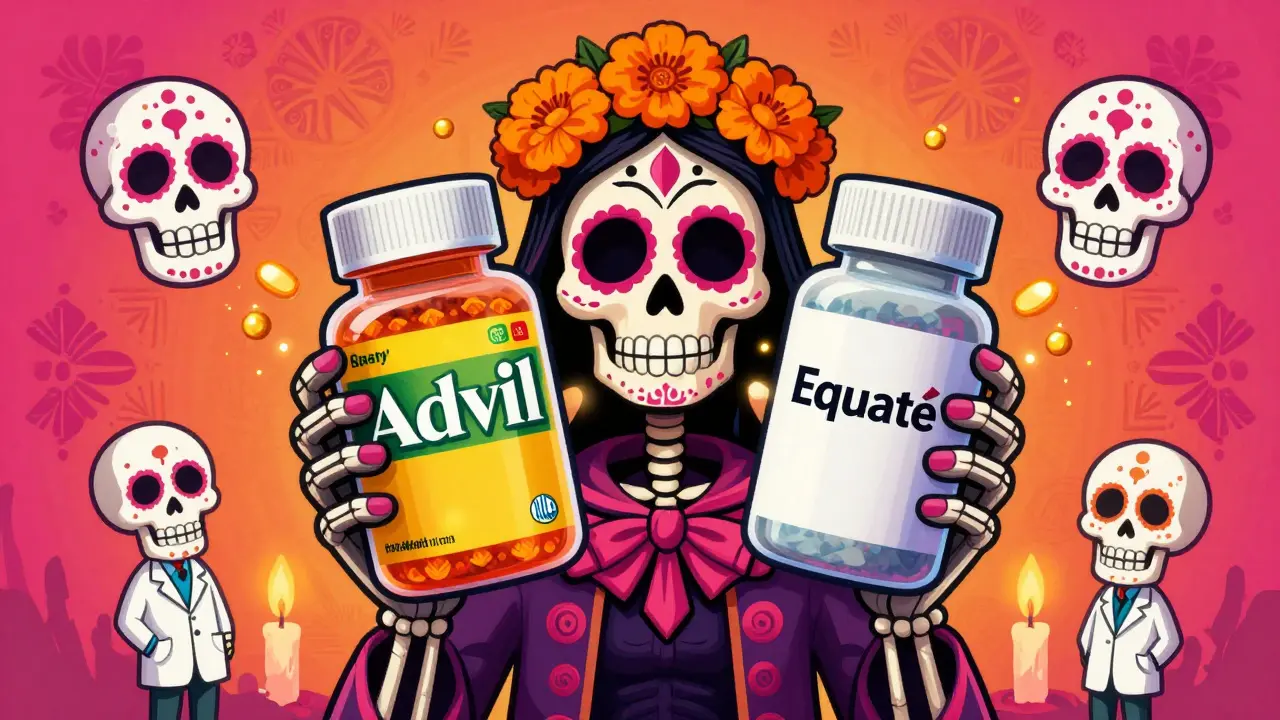
Look at any bottle of ibuprofen. Whether it’s Advil, Motrin, or the plain white box labeled "Generic Ibuprofen" from Walmart, CVS, or Target, the active ingredient is ibuprofen. Same molecule. Same chemical structure. Same way it reduces inflammation and blocks pain signals in your body. The FDA requires store brands to prove they deliver the same amount of medicine into your bloodstream at the same speed as the brand-name version. That’s called bioequivalence. And it’s not a suggestion-it’s a legal requirement.The difference? Inactive ingredients. Things like dyes, flavors, fillers, and coatings. These don’t affect how well the medicine works. But they can affect how it looks, tastes, or even if you have a rare reaction. For example, someone allergic to red dye #40 might react to a branded capsule but not to a store brand that uses a different color. That’s why you need to read the Drug Facts label-not the brand name.
How Much Money Are You Really Saving?
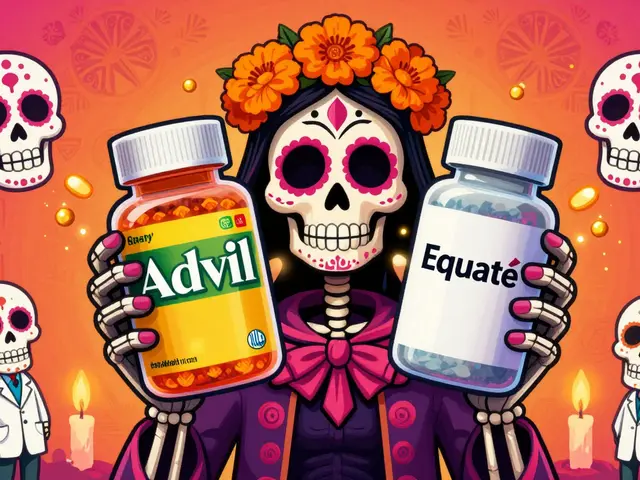
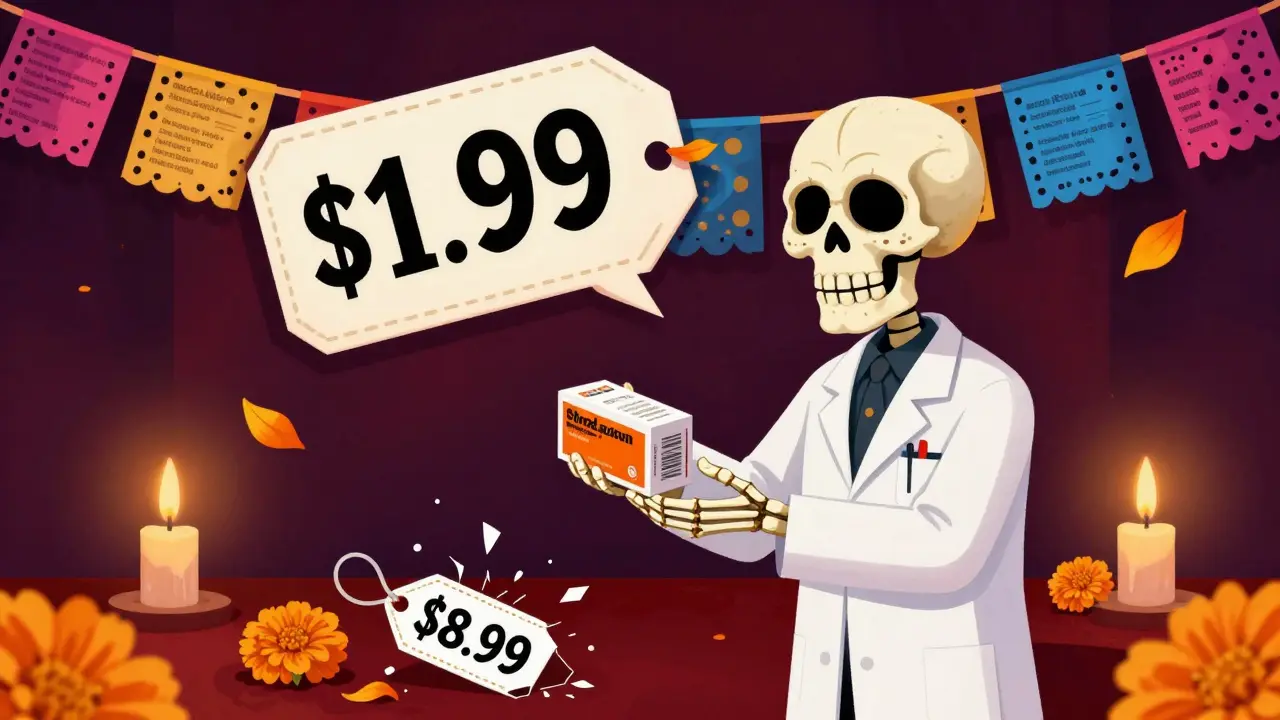
Let’s get specific. A 100-count bottle of Tylenol (acetaminophen 500mg) might cost $8.99. The CVS Health brand? Around $1.99. That’s an 80% savings. Same for ibuprofen: Advil costs $7.49, while Equate (Walmart) is $1.49. Claritin? $25. Generic loratadine? $4.50. These aren’t sales or coupons. These are regular prices, every day.According to IQVIA’s 2023 OTC Market Report, store brands make up 67% of all OTC units sold in the U.S. That’s two out of every three pills bought. But because name brands charge more, they still take 58% of the total revenue. You’re not just saving a few bucks-you’re saving hundreds a year if you use OTC meds regularly.
What Do Doctors and Pharmacists Use?
Here’s something most people don’t know: 89% of pharmacists and 82% of physicians use store brand OTC medications for themselves and their families. That’s not a small sample. That’s thousands of trained professionals who know exactly what’s in these pills. They’re not taking risks. They’re making smart choices.Why? Because they’ve seen the data. The FDA says generic and brand-name drugs are equally effective. A 2021 study from the National Center for Biotechnology Information found only a 3.5% difference in how fast the body absorbs generic vs. brand-name drugs. That’s within the FDA’s acceptable range of 80-125%. In real life? Most people feel zero difference.
Real People, Real Results
On Reddit’s r/pharmacy forum, a thread asking "Store brand vs name brand OTC: real difference?" got 247 comments. Eighty-nine percent said they couldn’t tell any difference between generic and brand-name pain relievers or allergy meds. One user wrote: "I’ve used CVS ibuprofen for five years. Couldn’t tell it from Advil. Saved $150 a year. No headaches. No side effects. Just savings."Amazon reviews tell the same story. Top-selling store brand OTC products average 4.3 stars. Name brands? 4.4. The same percentage of people gave both 1-star reviews-mostly because the medicine didn’t work for them, not because it was generic. That’s not a flaw in the store brand. That’s a flaw in expectation.
One exception? Liquid medications. Some people notice a difference in taste. Kids might refuse a generic cough syrup because it tastes bitter. That’s not because the medicine is less effective-it’s because the flavoring is different. If taste matters, try a different store brand. CVS, Target, and Walmart all have multiple versions. You can find one that’s sweeter or less medicinal-tasting.
How to Pick the Right Store Brand
It’s easier than you think. Here’s how to do it in three steps:- Check the Drug Facts label. Look at the first line: "Active Ingredient." That’s what matters. Make sure it matches the name brand exactly-same name, same strength, same amount.
- Compare the dosage. If the name brand is 200mg per tablet, the store brand should be too. No exceptions.
- Check for extra warnings. Some store brands list "contains soy" or "no artificial colors." If you’re sensitive to something, this helps you avoid it.
Don’t be fooled by "extra strength" or "fast acting" claims on the front of the box. Those are marketing. The active ingredient is still the same. A 200mg ibuprofen tablet from Walmart is just as fast as one from Advil. The body doesn’t care what the label says-it cares about the chemistry inside.
When You Might Need the Name Brand
There are rare cases where switching doesn’t work. About 0.7% of people report side effects or no relief with store brands, according to FDA adverse event data. Usually, it’s because of an inactive ingredient they’re sensitive to-like a dye, gluten, or a specific preservative. If you switch to a generic and feel worse, go back to the brand. But don’t assume it’s because the generic is weaker. Try another store brand first. Maybe the CVS version uses different fillers than Target’s.Also, don’t mix and match. If you’re taking multiple OTC meds, check every single one for acetaminophen. A surprising 23% of people accidentally take too much because they don’t realize their cold medicine and painkiller both contain it. That’s dangerous. Store brands make this easier because they list ingredients clearly. Use that to your advantage.
Why Do Name Brands Still Exist?
They’re not better. They’re just louder. Name brands spend billions on advertising. You see Tylenol on TV during the Super Bowl. You don’t see Equate. But Equate is made in the same FDA-inspected factories. In fact, many name brands are made by the same companies that make store brands. The only difference? The label.Big pharma doesn’t want you to know this. Their profit margins on OTC meds are huge. A pill that costs 10 cents to make sells for $1. Store brands cut out the middleman. Retailers make less profit per pill, but sell way more of them. That’s why Walmart, CVS, and Target are investing over $1 billion a year to improve their store brand formulas. The gap in quality? It’s closing fast.
What’s Changing in 2026?
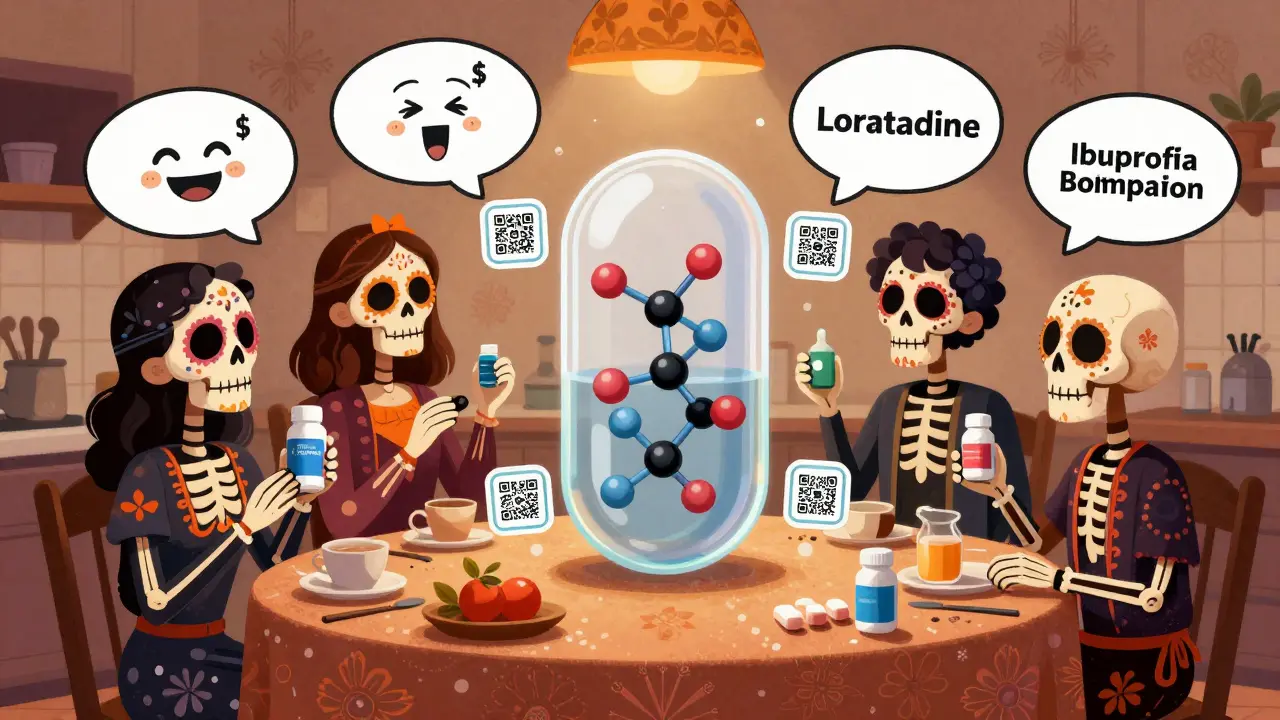
Retailers are making it easier than ever. CVS now puts QR codes on store brand packaging that link to full ingredient lists and manufacturing info. Walgreens offers free pharmacist consultations just for store brand questions. And the FDA is speeding up approvals for complex generics, which means even more options will hit shelves soon.By 2028, experts predict store brands will make up 72% of all OTC sales by volume. That’s not a trend. That’s a shift. People are catching on. And the more they learn, the less they pay.
Final Thought: You’re Not Losing Out. You’re Winning.
Choosing a store brand doesn’t mean you’re settling. It means you’re informed. You’re not paying for a logo. You’re not paying for a commercial. You’re paying for medicine that works exactly the same way, at a fraction of the cost.Next time you reach for a bottle of pain reliever, pause. Look at the label. Check the active ingredient. Compare the price. You might be surprised how easy it is to save $100-or $300-this year without sacrificing a single bit of effectiveness.