
When you’re giving a child liquid medicine or managing a chronic condition with oral suspensions, milliliter dosing, the precise measurement of liquid medications in milliliters (mL). It’s not just a number on a cup—it’s the difference between healing and harm. Many people assume that a teaspoon or a capful is close enough, but a standard teaspoon holds about 5 mL, and many medications require doses like 2.5 mL or 7.5 mL. Getting it wrong—even by half a milliliter—can be dangerous, especially for kids, the elderly, or those on narrow therapeutic index drugs like warfarin or phenytoin.
Liquid medications, drugs formulated as suspensions, syrups, or solutions for easier swallowing or precise dosing. They’re common for children, seniors, and people with swallowing issues. But they come with hidden risks. Generic versions might look identical, but inactive ingredients, non-active components like flavorings, preservatives, or thickeners in medications. can change the thickness or how the liquid pours, making it harder to measure accurately. That’s why using the right tool matters more than you think. A kitchen spoon? Too inconsistent. A dosing cup? Better, but still prone to misreading. The gold standard is a syringe dosing, using a calibrated oral syringe to measure and deliver exact liquid medication volumes. —it’s precise, easy to read, and lets you deliver every drop without spillage.
Why does this keep coming up in medical advice? Because errors happen every day. Studies show that over 40% of dosing mistakes in households involve liquid medications, often because people use the wrong tool or misread the label. If you’re on a drug like SGLT2 inhibitors for diabetes, or taking antipsychotics like amisulpride, even small changes in how much you get can affect your blood sugar, heart rhythm, or mental stability. And if you’re switching generics—like from one version of phenytoin to another—you need to know the concentration hasn’t changed. That’s why pharmacists now push for syringes over cups, and why lot number tracking and authorized generics matter: they help ensure consistency across batches.
There’s no magic trick here. Just three simple rules: always use the tool that came with the medicine, never guess, and double-check the units. If the label says 10 mL, don’t assume it’s two teaspoons. If the syringe has markings for 0.1 mL, trust them. And if you’re ever unsure—ask your pharmacist. Most offer free consultations, and they’ve seen the mistakes before. You don’t need to be a scientist to get this right. You just need to be careful. Below, you’ll find real stories, expert tips, and medical evidence on how to handle liquid meds safely—from insulin pumps to pediatric suspensions. No fluff. Just what works.

Using household spoons to dose children's medicine is dangerous and inaccurate. Learn why oral syringes and milliliter measurements are the only safe choice for kids' liquid medications.

A side‑by‑side comparison of Nasonex with top nasal sprays, covering efficacy, onset, cost, and best‑use scenarios to help you choose the right allergy spray.

Trimethoprim, found in Bactrim and Septra, can cause dangerous spikes in potassium levels, especially in older adults and those on blood pressure meds. Learn who’s at risk, how fast it happens, and what to ask your doctor.
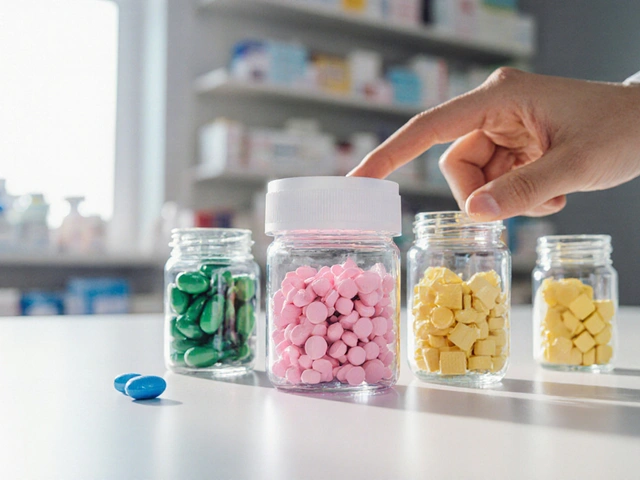
A detailed side‑by‑side look at Periactin (Cyproheptadine) versus other antihistamines, covering uses, dosing, side effects, and how to pick the best option for you.

Many gastrointestinal medications fail to work because of how the gut absorbs (or blocks) drugs. Learn why food, disease, and formulation affect effectiveness-and what you can do about it.

Grapefruit can dangerously raise statin levels in your blood, increasing the risk of muscle damage. Learn which statins are risky, how much grapefruit is safe, and what to do if you love citrus but need to lower cholesterol.