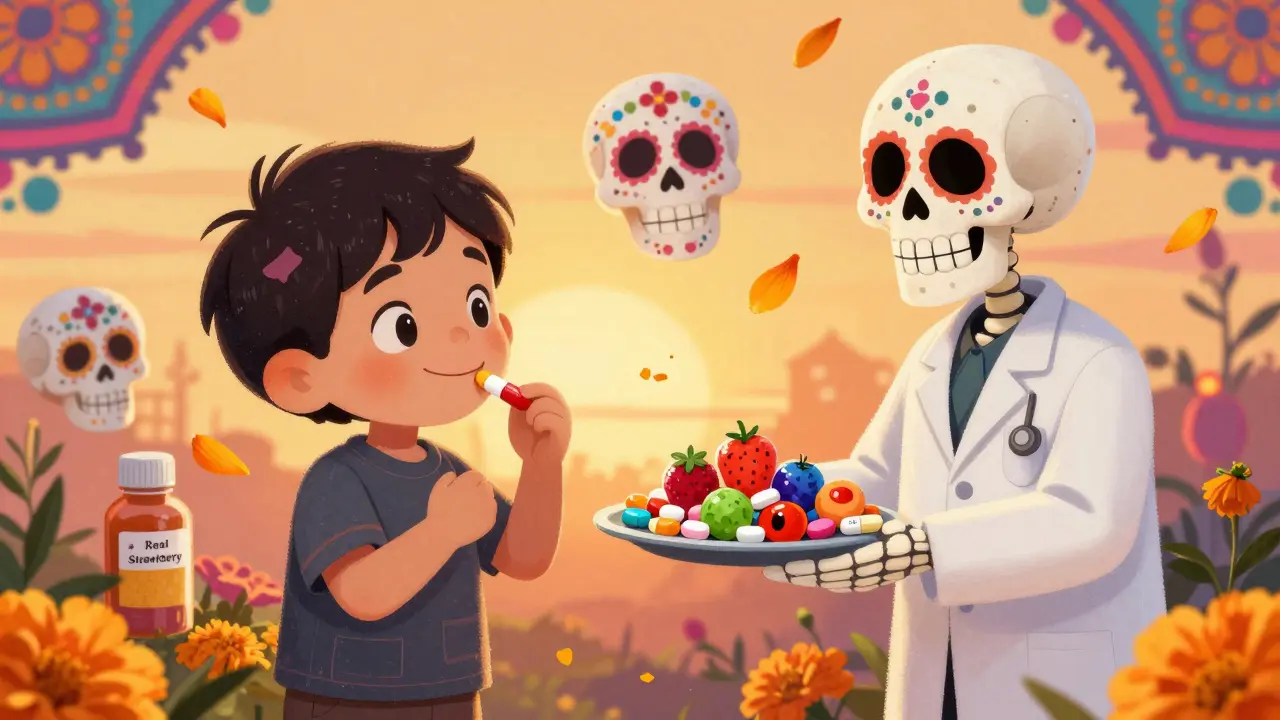
When your child is sick, the last thing you want is a battle over medicine. You’ve got the prescription in hand, but now you’re staring at two options: a sweet-tasting liquid or a tiny pill. Which one is really better? The answer isn’t as simple as "liquids for babies, pills for big kids." It’s about safety, accuracy, cost, and even your child’s actual willingness to take it.
Why Liquids Have Been the Default - and Why That’s Changing
For decades, pediatricians automatically reached for liquid antibiotics, fever reducers, and allergy meds. The logic was simple: kids can’t swallow pills. But that thinking is outdated. Today, even toddlers as young as 6 months are swallowing mini-tablets with no trouble - if they’re the right size and taste good. The European Medicines Agency started pushing this shift back in 2013, saying kids should be trained to swallow pills from age 3. And it’s not just about convenience. A 2014 study found that nearly two-thirds of liquid prescriptions for kids could’ve been replaced with solid forms - saving hospitals thousands per year. In the UK, switching just 10,000 pediatric prescriptions from liquid to tablet form saves around £7,800. That’s real money in a system stretched thin. Meanwhile, parents are speaking up. On parenting forums, hundreds of families say they’d rather give a small pill than fight over a spoonful of syrup that tastes like artificial strawberry chemicals. One mom on Reddit wrote, "My 4-year-old would rather swallow a mini-tablet than take the 'strawberry' antibiotic that tasted like chemicals."The Real Problem with Liquid Medications
Liquids aren’t all bad - they’re essential for newborns and infants under 6 months. But for older kids? They come with hidden risks. First, measurement errors. The FDA reports that 12-18% of parents mismeasure liquid doses. Using kitchen spoons, eyeballing the syringe, or not shaking the bottle properly can lead to underdosing - or worse, overdosing. A 2021 American Academy of Pediatrics study found that 15-20% of parents make mistakes when giving liquid meds. That’s 1 in 5 families. Second, taste aversion. A 2007 study showed 68% of children refuse liquid meds because they taste bad. And here’s the kicker: "strawberry-flavored" doesn’t mean it tastes like real strawberries. Most are chemically sweetened to mimic a flavor most kids have never actually tasted. That’s why kids gag, spit, or cry. A 2023 report from BC Children’s Hospital found that when liquids actually tasted like real fruit - not lab-made syrup - refusal rates dropped by half. Third, stability and storage. Many liquid antibiotics must be refrigerated and used within 14 days. If you forget to chill it, or if the power goes out, the medicine can degrade. Tablets? They last 2-3 years at room temperature. No fridge needed. No waste. No guesswork.Why Tablets Are Safer Than You Think
The biggest fear parents have about pills? Choking. But the data says otherwise. Between 2010 and 2020, the FDA recorded fewer than 0.002% of choking incidents linked to properly sized pediatric tablets. That’s less than 1 in 50,000 doses. In comparison, choking on a spoonful of liquid that goes down the wrong pipe happens far more often - and isn’t tracked the same way. Modern pediatric tablets aren’t like adult pills. They’re tiny - as small as 2mm across. Some are designed to dissolve in your mouth in 30 seconds without water. Others are coated to hide bitter tastes. Mini-tablets can be swallowed whole, crushed (if safe), or even sprinkled on applesauce. They’re engineered for kids, not just scaled-down adult pills. A 2012 study tracked 60 children aged 6 months to 6 years. Half got liquid meds. Half got mini-tablets. The results? Kids under 1 year old were more likely to accept the tablets than the liquid. Why? Because the liquid was messy, sticky, and tasted off. The tablets were quick, clean, and didn’t leave a bad aftertaste.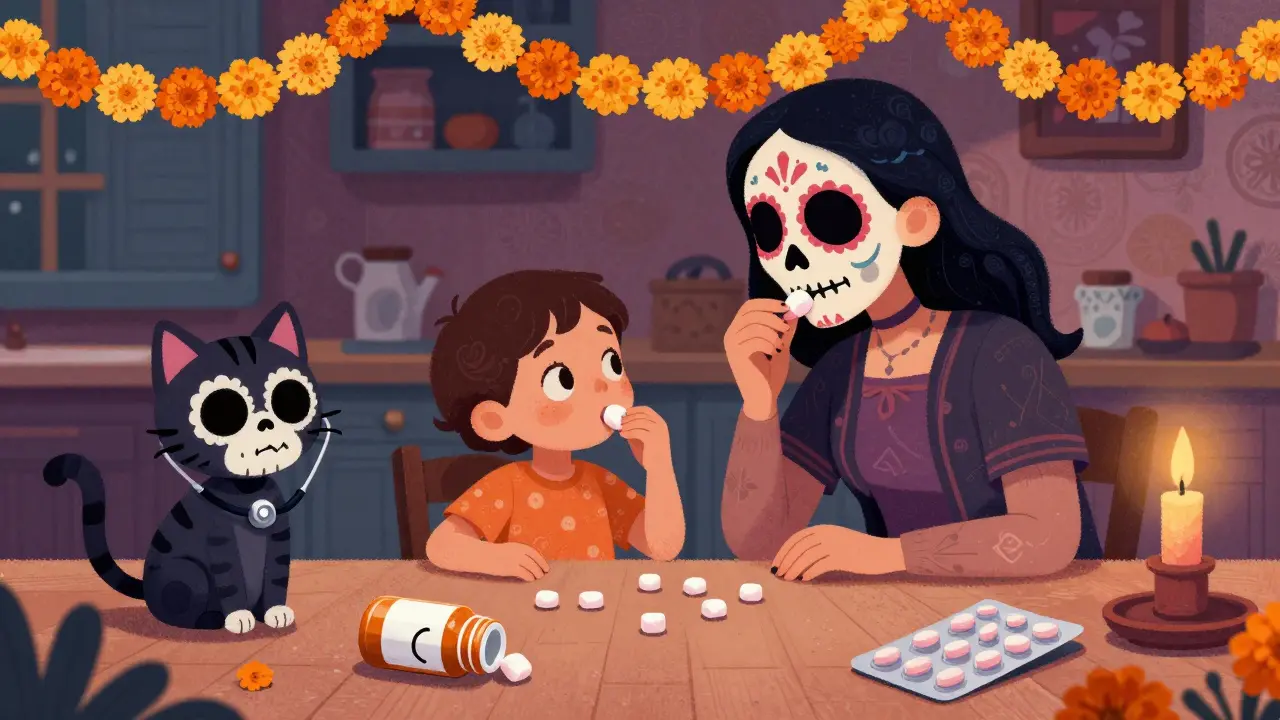
When Liquids Are Still the Best Choice
Don’t throw out the liquid just yet. There are times when it’s the only safe option.- Babies under 6 months: Their swallowing reflex isn’t fully developed. Liquids are safer and easier to control.
- Medications that need precise dosing: Drugs like levothyroxine (for thyroid) or warfarin (a blood thinner) require exact milligram doses. Liquid allows adjustments down to 0.1mL - something tablets can’t do without cutting or crushing.
- Children with swallowing disorders: Kids with cerebral palsy, autism, or neurological conditions may not be able to swallow solids safely. Liquids are necessary here.
How to Teach Your Child to Swallow Pills
You don’t need to wait until your child is 8. With the right approach, even a 3-year-old can learn. Start with practice. Use mini-marshmallows, small bread balls, or even sugar-free sprinkles. Make it a game. "Can you swallow this little cloud?" Gradually move to actual mini-tablets under supervision. The "pop-bottle method" works wonders. Have your child take a sip of water from a plastic bottle, then place the tablet on their tongue. As they swallow the water, the suction helps the pill go down. No choking. No gagging. Just smooth. A 2023 study at BC Children’s Hospital found that when parents were shown this technique, 90% of kids aged 3-6 could swallow tablets on the first try. Without coaching? Only 25% could.Cost, Convenience, and Waste
Think about the cost. A 10-day course of liquid amoxicillin might cost $25. The same dose in mini-tablets? $8. And you’re not throwing away half the bottle because your kid finished the course early. Liquids often expire after 14 days - even if your child only needed 5 days of treatment. That’s wasted medicine, wasted money, and unnecessary environmental waste. Tablets come in blister packs. One pill per day. No measuring. No spills. No refrigeration. No expiration worries. They’re easier to pack for school, travel, or daycare. And here’s the kicker: kids take them more consistently. A 2022 meta-analysis in JAMA Pediatrics found that children on tablet medications had 22% higher adherence rates than those on liquids - especially for chronic conditions like asthma or ADHD.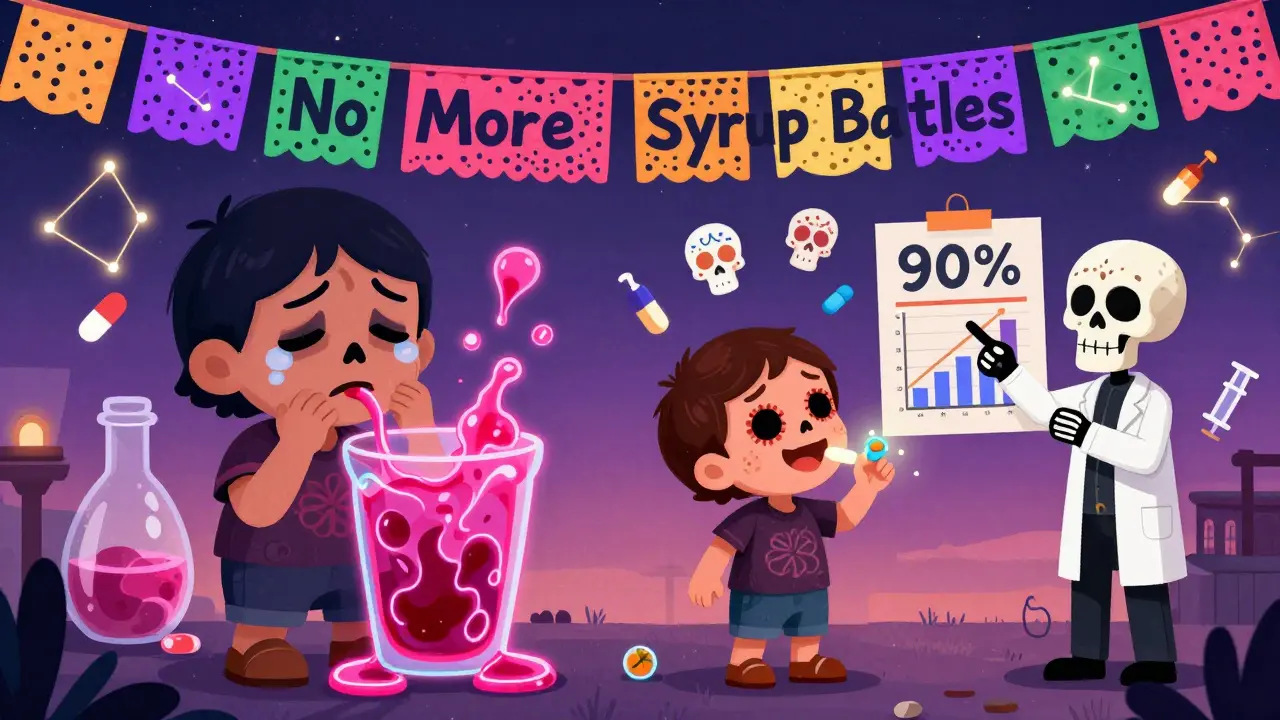
What Doctors Are Still Missing
Despite all the evidence, many pediatricians still default to liquids. A 2021 survey of 500 U.S. pediatricians found that 62% automatically prescribe liquids for kids under 8. Why? Parental preference. Fear of complaints. Lack of training. Only 18% of pediatricians feel confident teaching parents how to help kids swallow pills. That’s a gap. It’s not that they don’t know - it’s that they haven’t been trained to talk about it. If your doctor hands you a liquid without asking if your child can swallow pills, ask: "Is there a tablet form available?" Or better yet: "Can we try a mini-tablet?" Most pharmacies carry them now. If they don’t, ask them to order it. Your child’s health is worth the extra step.What to Do Next
Here’s your simple action plan:- Check the prescription. Is it for a drug that needs exact dosing? If yes, stick with liquid.
- For antibiotics, pain relievers, or allergy meds? Ask your pharmacist: "Is there a mini-tablet version?"
- If yes, request it. Many are now available as generics.
- Practice swallowing with small, soft foods. Start now, even if your child is 2 or 3.
- Teach the "pop-bottle" method. It’s easier than you think.
- Don’t let taste be the deciding factor. Ask for a flavor that actually tastes like real fruit - not "artificial strawberry."
Final Thought: It’s Not About Age - It’s About Readiness
Your child isn’t too young to swallow a pill. They’re just waiting for you to show them how. The science is clear. The tools exist. The cost savings are real. And your child? They’d rather take a quick tablet than sit through another syrup battle. It’s time to stop assuming liquids are the only option. Start asking for better choices. Your child will thank you - quietly, without spitting or crying.Can a 2-year-old swallow a pill?
Yes - but only if the pill is designed for children. Mini-tablets as small as 2mm can be safely swallowed by toddlers as young as 2 with proper training. Studies show that with practice using soft foods like mini-marshmallows and techniques like the "pop-bottle method," over 90% of 3-year-olds can swallow tablets successfully. Never force a child; start slow and make it playful.
Are liquid medications less accurate than tablets?
Yes, in practice. While liquid doses can be measured precisely in theory, real-world use leads to errors. The FDA reports 12-18% of parents mismeasure liquid doses, often due to using kitchen spoons or misreading syringes. Tablets come in fixed doses, eliminating measurement mistakes. For medications with wide therapeutic windows (like most antibiotics), tablets are just as effective - and far more reliable.
Why do some liquid medicines taste so bad?
Many liquid medications use artificial flavorings that don’t match real fruit tastes. A "strawberry-flavored" syrup might taste like chemical candy, not actual strawberries. This triggers taste aversion in kids. Newer formulations are starting to use natural flavor extracts that actually taste like the fruit they claim to mimic - and parents report much better compliance with these versions.
Can I crush a tablet and mix it with food?
Only if your doctor or pharmacist says it’s safe. Some tablets are designed to release medicine slowly (extended-release), and crushing them can cause dangerous spikes in drug levels. Others lose stability or become bitter when crushed. Always check before crushing - even if it seems easier. There are now orodispersible tablets that dissolve on the tongue without water, making crushing unnecessary.
Do tablets have the same effectiveness as liquids?
For most common medications - like amoxicillin, ibuprofen, or cetirizine - yes. Tablets and liquids deliver the same active ingredient. The absorption rate might be slightly slower with tablets, but the overall effectiveness is identical. For drugs requiring exact titration (like thyroid meds), liquids are still preferred. But for the vast majority of pediatric prescriptions, tablets work just as well - with fewer side effects from poor taste and better adherence.
Is it cheaper to use tablets instead of liquids?
Yes, significantly. A 2021 UK NHS analysis found that replacing liquid prescriptions with solid forms saves about £7,842 per 10,000 pediatric prescriptions. Tablets have longer shelf lives, less waste, no refrigeration needs, and lower manufacturing costs. In the U.S., the same switch can cut costs by 25-40% per dose. Over time, these savings add up - for families and healthcare systems alike.