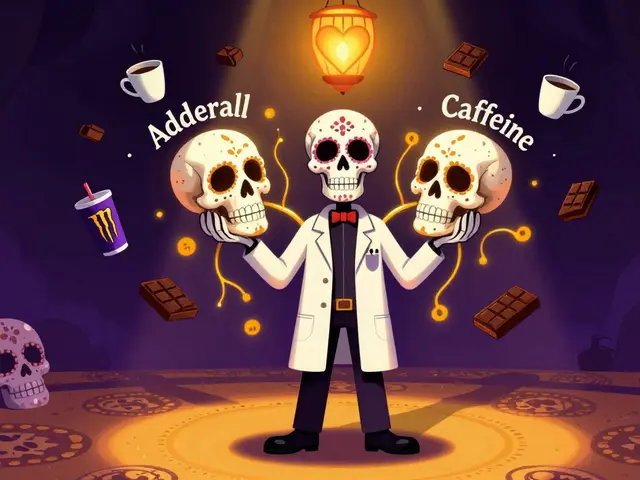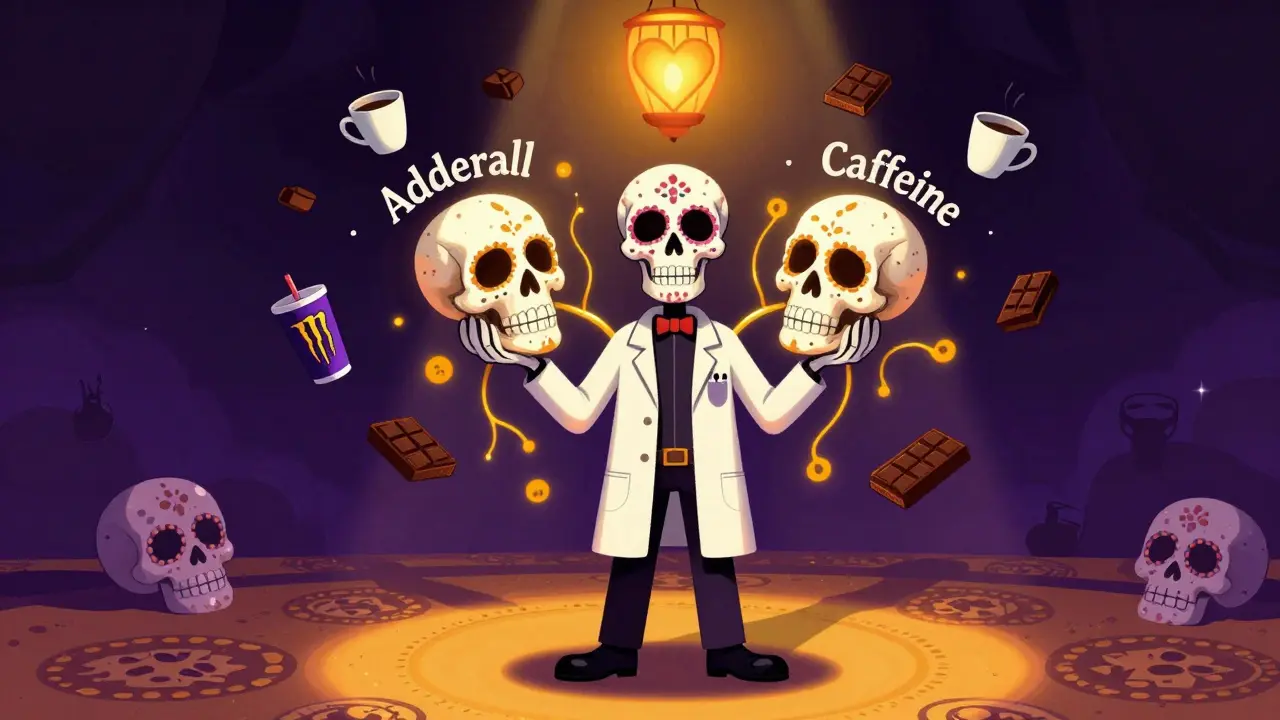
Many people with ADHD reach for a cup of coffee when their medication starts to wear off. It feels natural-both caffeine and ADHD meds are stimulants, so why not stack them? But mixing caffeine with medications like Adderall isn’t just a harmless habit. It’s a pharmacological tightrope. One wrong step, and what feels like improved focus can turn into a racing heart, jittery anxiety, or a crash so bad it knocks you out for hours.
Why Caffeine and ADHD Meds Feel Like a Match
Caffeine and amphetamine-based ADHD medications like Adderall both work by boosting dopamine in the brain. That’s the chemical tied to attention, motivation, and reward. People with ADHD often have lower dopamine levels, which is why stimulant meds help. Caffeine does something similar, though less powerfully. It blocks adenosine receptors, which makes you feel alert, and it also nudges dopamine up a bit. So when you take caffeine with Adderall, it’s like turning up two volume knobs instead of one. For some, that means sharper focus, longer concentration, and fewer mental foggy spells. But here’s the catch: Adderall is a precision tool. It’s dosed in milligrams based on body weight, metabolism, and symptom severity. Caffeine? It’s a wild card. A cup of coffee can range from 60 to 200 mg of caffeine depending on the beans, brew method, and size. A grande Starbucks coffee? That’s 330 mg. Energy drinks? Some hit 300 mg in one can. And that’s before you even count tea, chocolate, or headache pills that sneak in caffeine.The Real Danger: Your Heart Can’t Keep Up
The biggest risk isn’t just feeling wired. It’s what’s happening inside your body. Both caffeine and Adderall raise heart rate and blood pressure. When you combine them, those effects don’t just add up-they multiply. A 2022 study from Johns Hopkins found that people using both substances together had a 37% higher chance of developing tachycardia (heart rate over 100 bpm) and a 29% higher risk of high blood pressure compared to those taking ADHD meds alone. This isn’t theoretical. Emergency room visits tied to stimulant and caffeine combinations jumped from 12,400 in 2019 to 15,750 in 2023, according to FDA data. Most of those cases involved adults who thought they were just “helping their focus.” One patient from Calgary described it this way: “I took my 20mg Adderall and a Monster energy drink. Within 45 minutes, my chest felt like it was going to burst. I thought I was having a heart attack.” The American Heart Association warns that people with existing heart conditions-something 23% of adults with ADHD have-should avoid mixing these substances entirely. Even if you’ve never had heart issues, your risk increases with age, stress, or lack of sleep.What the Research Says About Focus
It’s not all bad news. Some studies show that caffeine, when paired with the amino acid L-theanine (found in green tea), can actually improve attention without the jitteriness. A 2020 study with five boys diagnosed with ADHD found that a mix of 160 mg caffeine and 200 mg L-theanine improved task performance and reduced mind-wandering better than caffeine alone. L-theanine seems to calm the nervous system while caffeine sharpens it-a kind of yin and yang effect. But here’s the problem: L-theanine isn’t in your coffee. It’s in green tea or supplements. Most people aren’t taking it. They’re just drinking coffee or soda. And caffeine by itself? A 2016 meta-analysis showed it’s only about 30-40% as effective as prescription stimulants for core ADHD symptoms. So if you’re relying on coffee to boost your Adderall, you’re getting a fraction of the benefit-and risking the full side effects.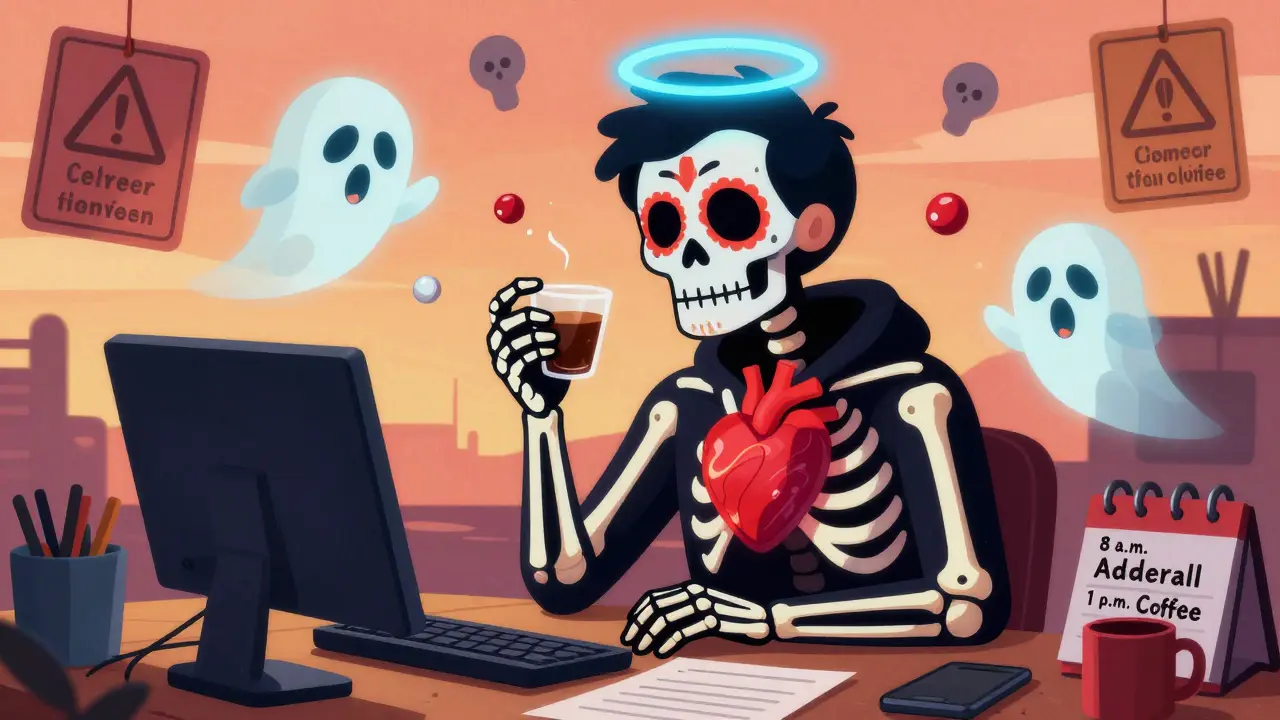
How to Tell If You’re Overdoing It
You don’t need a doctor to spot the warning signs. If you’re taking caffeine with ADHD meds, watch for these red flags:- Heart palpitations or a fluttering feeling in your chest
- Uncontrollable shaking or trembling hands
- Extreme anxiety that doesn’t go away after an hour
- Insomnia even after taking your med at 8 a.m.
- Crashing hard after 3-4 hours-feeling drained, irritable, or nauseous
What Experts Recommend
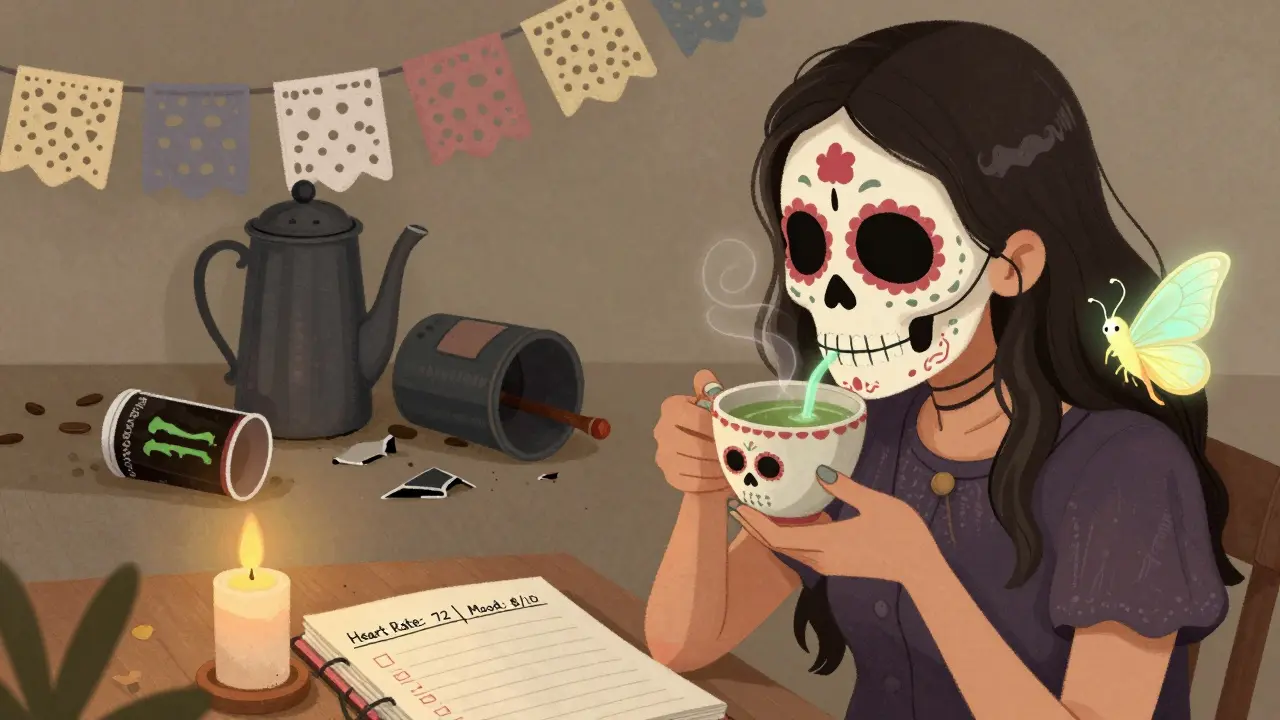
Board-certified psychiatrist Dr. Ned Hallowell suggests starting with no more than 100 mg of caffeine-about one small coffee-if you’re on stimulants. That’s half the amount in a typical Starbucks tall. And never drink it on an empty stomach. Food slows caffeine absorption, which helps avoid spikes. Granite Mountain Behavioral Health’s 2023 guidelines recommend waiting 4-5 hours between caffeine and your ADHD medication. Why? Because caffeine’s half-life is about 5 hours. That means if you have coffee at 7 a.m., half of it is still in your system at noon. If you take Adderall at 8 a.m., you’re doubling up during peak overlap. Also, track everything. Use a simple notebook or phone app to log:- Time and amount of caffeine (include chocolate, tea, energy drinks)
- Time and dose of ADHD medication
- Heart rate (use a fitness tracker if you have one)
- Mood and focus levels (scale 1-10)
The Hidden Sources of Caffeine
Most people know coffee and energy drinks are loaded with caffeine. But what about:- Dark chocolate (1 oz = 20-30 mg)
- Green tea (25-45 mg per cup)
- Excedrin or other headache meds (65 mg per pill)
- Pre-workout supplements (often 200-300 mg)
- “Focus” or “energy” gummies and powders (some contain 100+ mg per serving)
Who Should Avoid This Mix Completely?
There’s no one-size-fits-all answer. But these groups should skip caffeine with ADHD meds:- Children and teens (AAP strongly advises against it)
- People with high blood pressure, heart disease, or arrhythmias
- Those who are slow caffeine metabolizers (about 40% of people-genetics determine this)
- Anyone who’s ever had panic attacks or severe anxiety
- Pregnant or breastfeeding individuals
The Bottom Line
Caffeine isn’t evil. And Adderall isn’t dangerous when used correctly. But together, they’re a loaded gun. You might get better focus. You might also get a heart attack. The safest approach? Use your ADHD medication as prescribed. If you want more energy, try movement, sleep, or hydration-not more stimulants. If you’re going to have coffee, keep it under 100 mg, take it at least 4 hours after your med, and never on an empty stomach. And if you’re feeling anxious, racing, or crashing after your coffee and meds? That’s not normal. It’s your body telling you to slow down. Listen to it.Can I drink coffee while taking Adderall?
Yes, but with caution. Drinking a small cup of coffee (under 100 mg caffeine) 4-5 hours after taking Adderall is generally safer than having them together. Combining them increases the risk of anxiety, rapid heartbeat, and high blood pressure. Many people experience a crash later in the day. Track your symptoms and consider switching to decaf or green tea if side effects appear.
Does caffeine make ADHD meds stronger?
Caffeine can make the stimulant effects feel stronger, but it doesn’t improve the core ADHD symptom control that prescription meds provide. Adderall is 3-5 times more effective than caffeine for focus and impulse control. The feeling of increased alertness is often just amplified side effects-not better treatment. Relying on caffeine to boost your med can lead to tolerance, crashes, and dependency.
What are the signs I’m consuming too much caffeine with my ADHD medication?
Watch for heart palpitations, shaking hands, chest tightness, severe anxiety, insomnia, nausea, or a sudden crash after 3-4 hours. If you’re using caffeine to counteract Adderall side effects like fatigue, you’re likely overdoing it. These aren’t normal adjustments-they’re warning signs your nervous system is overloaded.
Is green tea a safer option than coffee with ADHD meds?
Green tea is often better because it contains L-theanine, which can smooth out caffeine’s jittery edge. A cup of green tea has about 25-45 mg caffeine-much lower than coffee-and L-theanine helps reduce stress responses in the brain. Still, even green tea should be consumed at least 4 hours after your ADHD medication to avoid overlap. Avoid matcha or energy teas, which can pack 100+ mg caffeine per serving.
Should I stop caffeine completely if I have ADHD?
Not necessarily. Many people with ADHD safely use small amounts of caffeine. But if you’re taking stimulant medication, you need to be intentional. Start low-under 100 mg per day-and monitor your body. If you notice increased anxiety, trouble sleeping, or heart issues, cut back or eliminate it. For children, teens, or those with heart conditions, avoiding caffeine entirely is the safest choice.
What’s the best time to take caffeine if I’m on Adderall?
Take your ADHD medication first, then wait at least 4-5 hours before consuming caffeine. That gives your body time to process half the caffeine from your morning coffee before adding more stimulant load. Avoid caffeine after 2 p.m. if you have trouble sleeping. Also, always take it with food to slow absorption and reduce stomach upset.
Can I replace my ADHD medication with caffeine?
No. Caffeine is not a substitute for prescribed ADHD medication. It’s far less effective at managing core symptoms like inattention, impulsivity, and executive dysfunction. While it might give you a temporary boost, it doesn’t provide the consistent, controlled support that stimulants like Adderall, Vyvanse, or Ritalin do. Relying on caffeine alone can lead to worsening symptoms and increased stress over time.