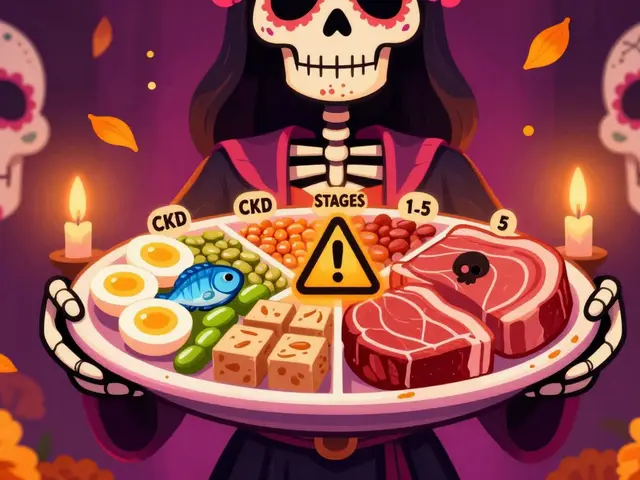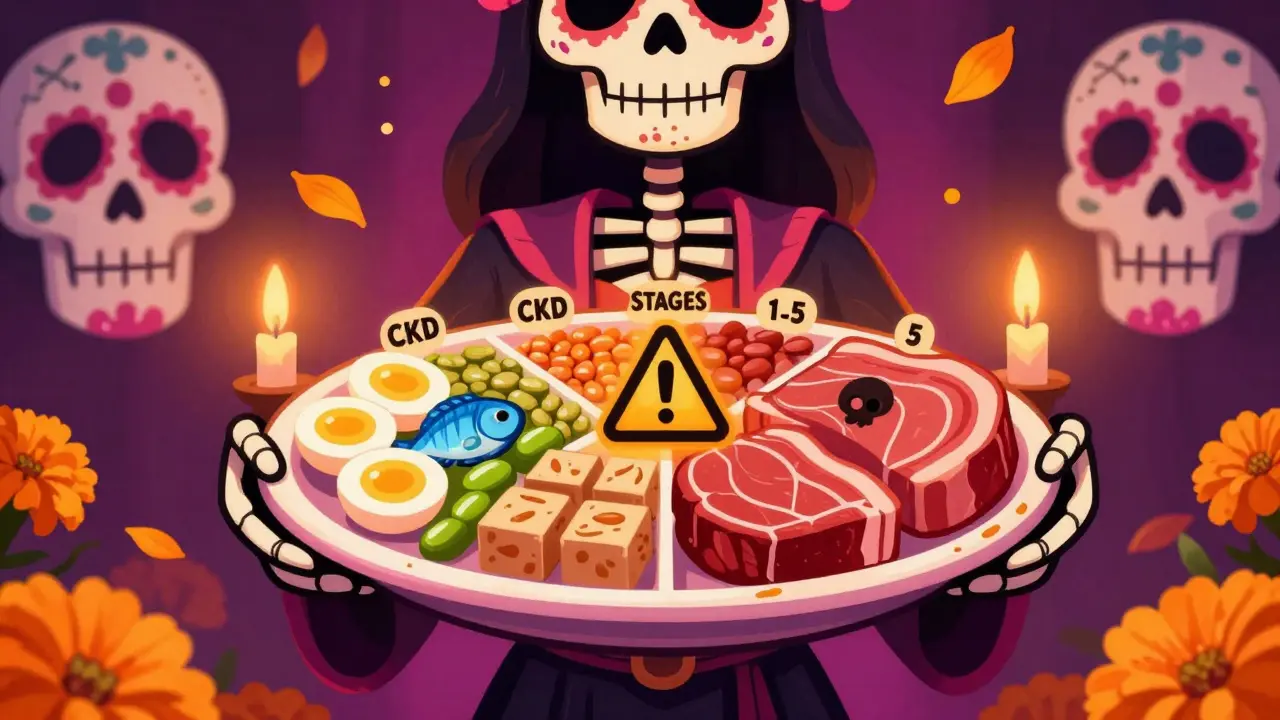
When you’re living with chronic kidney disease (CKD), food isn’t just fuel-it’s medicine. And one of the most misunderstood parts of that medicine? Protein. Too much can overload your kidneys. Too little can leave you weak, hungry, and at risk for muscle loss. The truth? There’s no one-size-fits-all number. Your protein target depends on which stage of CKD you’re in, your age, your weight, and whether you have diabetes or other health issues.
What Protein Does (and Doesn’t Do) in Kidney Disease
Your kidneys filter waste from your blood. When you eat protein, your body breaks it down into nitrogen waste-urea and creatinine. Healthy kidneys handle this easily. But when they’re damaged, these wastes build up. That’s why reducing protein intake has been used since the 1920s to ease the burden on failing kidneys.
But here’s the catch: protein isn’t just about waste. It’s also about survival. Muscle loss, fatigue, and poor healing are common in later stages of CKD. In fact, 30-50% of people with stage 3-5 CKD develop protein-energy wasting, a dangerous condition where the body starts breaking down muscle just to stay alive. So the goal isn’t to slash protein at all costs. It’s to find the sweet spot-enough to keep you strong, but not so much that you speed up kidney damage.
Protein Targets by CKD Stage
Protein needs change as kidney function drops. Here’s what the latest guidelines say, broken down by stage:
- Stage 1-2 (GFR ≥60): Aim for 0.8 grams of protein per kilogram of ideal body weight per day. For a 150-pound person, that’s about 54 grams. Some newer research suggests even higher intake (up to 1.3 g/kg) may be safe-and even protective-in older adults with mild CKD, especially if they’re active or losing weight.
- Stage 3a-3b (GFR 45-59): Start moving toward 0.6-0.8 g/kg. This is where many people begin seeing real benefits from protein adjustment. The goal is to slow decline without triggering malnutrition.
- Stage 4 (GFR 15-29): Stick to 0.55-0.60 g/kg. That’s around 40-54 grams daily for a 150-pound person. Half of your protein should come from high-quality sources: eggs, fish, chicken, lean beef, or soy. These provide all the essential amino acids your body needs to maintain muscle.
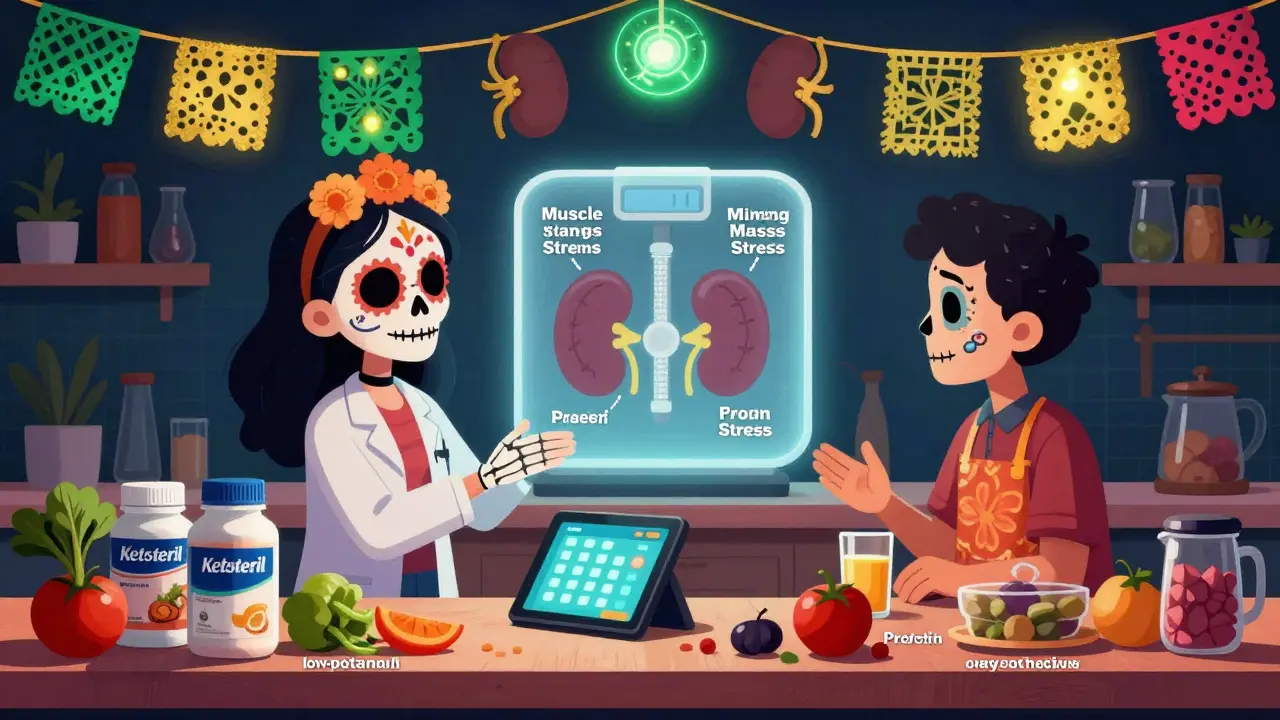
- Stage 5 (GFR <15, not on dialysis): Protein targets stay in the 0.55-0.60 g/kg range, but many patients are prescribed keto acid analogues (like Ketosteril) to help meet amino acid needs without adding nitrogen waste.
Diabetic CKD patients need special attention. The American Diabetes Association recommends 0.8-0.9 g/kg to balance kidney protection with blood sugar control. Going too low can make insulin resistance worse.
Plant vs. Animal Protein: Which Is Better?
Not all protein is created equal when it comes to kidney health. Animal proteins-like red meat, poultry, and dairy-produce more urea and phosphate per gram. They also generate more advanced glycation end products (AGEs), which fuel inflammation and oxidative stress in damaged kidneys.
Plant proteins-beans, lentils, tofu, nuts, and whole grains-create 20-30% less waste. A 2021 meta-analysis found that replacing just 30% of animal protein with plant protein lowered the risk of CKD progression by 14% and cut death risk by 11%. That’s huge.
But here’s the trade-off: plant proteins are often low in essential amino acids like lysine and methionine. If you go all-plant, you need to combine foods carefully-like rice and beans-to get a complete profile. And for stage 4-5 patients, many plant foods are high in potassium. A baked potato or a cup of lentils can spike potassium levels dangerously. So while plant-based diets are kidney-friendly in theory, they require expert planning.
Real People, Real Struggles
Following a low-protein diet isn’t easy. In a 2024 survey of over 1,200 CKD patients, 74% said they felt constantly hungry. 62% reported muscle weakness. 58% said they avoided social meals because they couldn’t eat what everyone else was having.
One Reddit user, u/KidneyWarrior2023, wrote: “Cutting my protein from 100g to 45g daily made me feel constantly weak and made social dining with family nearly impossible.”
But here’s the good news: patients who work with a renal dietitian have 82% better adherence and report higher quality of life. That’s not a coincidence. A dietitian doesn’t just give you a number. They help you build meals that work-like scrambled eggs with spinach instead of bacon, or a tofu stir-fry with low-potassium veggies.
How to Actually Do This
Knowing your target is one thing. Hitting it every day is another. Here’s how real people make it work:
- Use a protein calculator. The National Kidney Foundation’s app (downloaded nearly 50,000 times since 2023) lets you input your weight and stage and tells you exactly how many grams you can have.
- Track your meals. Apps like MyFitnessPal can be customized with renal-friendly databases. Most people struggle to track protein in mixed dishes-like chili or pasta sauce-but with the right settings, it’s doable.
- Meal prep. The Kidney Kitchen website gets over 1.2 million visits a month. Their recipes are designed for CKD stages, with exact protein counts and low potassium/phosphorus swaps.
- Ask about keto acid analogues. If you’re in stage 4 or 5, your nephrologist might prescribe Ketosteril or similar supplements. These give your body the amino acids it needs without the nitrogen waste. They’re used in 15% of stage 4-5 patients in Europe and are gaining traction in the U.S.
Learning this takes time. Most people need 3-6 months to get comfortable. Initial appointments with a dietitian last 60-90 minutes. Follow-ups every 4-6 weeks help adjust for weight changes, lab results, or new symptoms.
What’s Changing in 2025
The field is moving beyond “how much” to “which kind” and “for whom.” The American Society of Nephrology just launched personalized protein algorithms using machine learning. These tools analyze your age, genetics, urea levels, and eating habits to predict your ideal target-far more accurate than a simple weight-based formula.
NIH’s PRECISE-CKD trial is testing whether tailoring protein to your body’s actual urea production (measured with a simple breath test) works better than standard guidelines. Early results look promising.
And researchers are developing new plant-based protein powders with potassium stripped out. Imagine a soy protein shake designed for stage 4 CKD patients-high in amino acids, low in potassium, low in phosphorus. That’s not science fiction anymore.
Final Thoughts
Protein isn’t the enemy. Poorly managed protein is. The goal isn’t starvation. It’s smart, sustainable eating that protects your kidneys without stealing your life. For many, this means eating less meat, more plants, and working closely with a dietitian who understands the balance between survival and quality.
And if you’re wondering whether you should cut protein? Talk to your care team. Your numbers, your body, your goals-those matter more than any guideline on a page.
How much protein should I eat if I have stage 3 CKD?
For stage 3 CKD (GFR 45-59 mL/min), aim for 0.6 to 0.8 grams of protein per kilogram of your ideal body weight daily. For a 150-pound person, that’s about 40-54 grams. If you’re older, active, or losing weight, your provider might allow the higher end of that range. Always check with your renal dietitian-your needs may vary based on muscle mass, diabetes, or other conditions.
Can I eat beans and lentils with CKD?
Yes-but with caution. Beans and lentils are great plant-based proteins that produce less waste than meat. But they’re also high in potassium and phosphorus. If you’re in stage 4 or 5, you may need to limit portions or soak them overnight to reduce minerals. A renal dietitian can help you include them safely by balancing them with low-potassium foods and monitoring your blood levels.
Will eating less protein make me lose muscle?
It can-if you don’t get enough high-quality protein or enough calories overall. Protein-energy wasting is a real risk in later CKD stages. To prevent muscle loss, make sure half your protein comes from high-biological-value sources like eggs, fish, or soy. Also, don’t skimp on calories. If you’re not eating enough carbs and fats, your body will break down muscle for energy. Work with a dietitian to create a balanced plan.
Do I need protein supplements?
Most people don’t need regular protein powders-they’re often too high in phosphorus and potassium. But if you’re in stage 4 or 5 and struggling to meet protein needs, your doctor might prescribe keto acid analogues (like Ketosteril). These provide essential amino acids without the nitrogen waste. They’re not available over the counter and require a prescription. Regular whey or plant protein powders are usually not safe without dietitian approval.
Can I still eat out with CKD?
Yes, but you need a strategy. Ask for grilled chicken or fish instead of fried. Skip sauces and gravies-they’re loaded with hidden protein and sodium. Choose steamed veggies over beans or potatoes. Use the NKF protein calculator to estimate portions before you go. Many restaurants now list nutritional info online. Planning ahead makes dining out possible without breaking your diet.
If you’re feeling overwhelmed, you’re not alone. But with the right tools and support, you can eat well, feel stronger, and protect your kidneys-for longer.