Imagine trying to hear your child whisper goodnight, but the words just fade away. Or sitting across the table from your partner and realizing you’ve been nodding along without hearing a single word. For many people with otosclerosis, this isn’t imagination-it’s daily reality. Otosclerosis is a quiet, slow-moving condition that steals hearing one frequency at a time, often without warning. It’s not sudden, it’s not loud, and it’s not rare. In fact, about 1 in 200 adults in the UK and 3 million Americans have it. The problem? Most people don’t even know what it is until they’re already struggling to hear low voices, music, or their own reflection in a conversation.
What Exactly Is Otosclerosis?
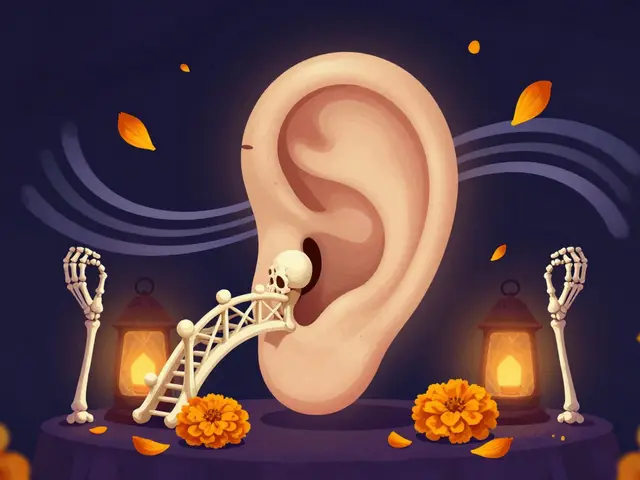
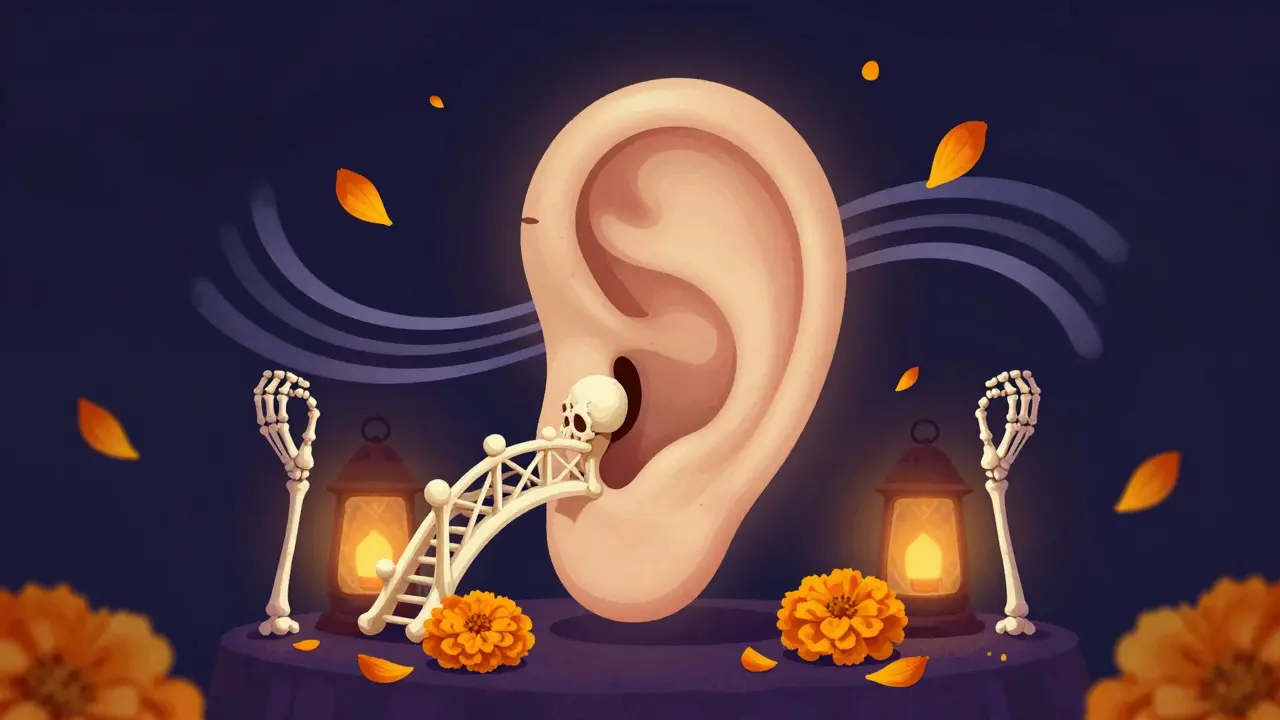
Otosclerosis isn’t a tumor. It’s not an infection. It’s not caused by loud music or aging. It’s an abnormal bone growth inside the middle ear-specifically around the stapes, the smallest bone in the human body, measuring just 3.2mm long. This bone is supposed to vibrate freely, passing sound from the eardrum to the inner ear. But in otosclerosis, the bone starts to harden and fuse to the surrounding tissue, especially at the oval window where it connects to the cochlea. Think of it like rust locking a hinge shut. Once it’s stuck, sound can’t move properly. That’s called conductive hearing loss.
Unlike age-related hearing loss, which hits high pitches first (think birds chirping or children’s voices), otosclerosis targets low frequencies. You might not notice you’re missing the bass in music-but you’ll definitely notice when your husband’s voice sounds muffled, or when you can’t hear someone speaking softly behind you. A 2022 study from the American Academy of Otolaryngology found that 78% of people with otosclerosis described trouble hearing low-pitched voices as their biggest frustration.
Who Gets Otosclerosis-and Why?
This condition doesn’t pick on everyone equally. Women are 2 to 3 times more likely to develop it than men. Most people are diagnosed between ages 30 and 50. And if your mom or dad had it? Your risk jumps significantly. Research from the Journal of Medical Genetics in 2021 identified 15 genetic loci linked to otosclerosis, with the RELN gene on chromosome 7q22 being the strongest. About 60% of people with otosclerosis have a family history of it.
Ethnicity matters too. The highest rates are in people of European descent, especially those with Northern or Western European ancestry. Rates are lower in Asian populations and lowest in African populations. This isn’t just coincidence-it’s biology. Scientists believe it’s tied to how bone remodels over time, and genetics play a major role in that process.
Some studies also suggest pregnancy can speed up the condition. Hormonal changes during pregnancy may trigger faster bone growth in those already genetically predisposed. That’s why many women first notice hearing loss after having a baby.
How Is It Diagnosed?
If you’re having trouble hearing low sounds and your doctor says it’s just “earwax” or “stress,” ask for an audiogram. The gold standard test is pure-tone audiometry. In otosclerosis, you’ll see a clear air-bone gap-usually between 20 and 40 decibels. That means your ears can’t conduct sound well, even though your inner ear (cochlea) is still working fine.
A normal hearing test might show you hear fine in a quiet room. But the real clue? Your speech discrimination score stays above 70%. That’s unusual in other types of hearing loss. If your brain can still understand words clearly, but you can’t hear them at all, that’s a red flag for otosclerosis.
CT scans of the temporal bone can also show the early signs: small, radiolucent (dark) spots around the stapes, usually 0.5 to 2.0mm wide. These are the areas where bone is starting to grow abnormally. But even without imaging, a skilled ENT can often suspect otosclerosis just from the hearing test pattern alone.
Still, misdiagnosis is common. A 2023 study from Tampa General Hospital found 22% of patients waited an average of 18 months before getting the right diagnosis. Many were told they had Eustachian tube dysfunction, allergies, or even anxiety. If you’ve been told that and your hearing keeps getting worse, especially in low tones, get a second opinion.
What Happens If You Don’t Treat It?
Otosclerosis doesn’t just sit still. Left alone, it slowly worsens. On average, untreated cases lose 0.5 to 1.0 dB of hearing per year. Over five years, that’s 15 to 20 dB of loss. For context, a 20 dB loss means you’re missing half the volume of normal speech. A 40 dB loss means you’re hearing only the loudest sounds.
In about 10-15% of cases, the abnormal bone growth spreads into the inner ear, causing sensorineural hearing loss. This is more serious. It’s damage to the hair cells in the cochlea, and it’s permanent. Once that happens, hearing aids won’t fix it as well-and surgery won’t help at all. That’s why early detection matters.
Tinnitus is another common companion. A 2023 survey from Better Health Channel found 80% of otosclerosis patients had ringing in their ears, and 35% said it was severe enough to disrupt sleep. It’s not the main symptom-but it’s a big part of why quality of life drops.
Can It Be Fixed?
Yes. And the good news? Treatment is highly effective.
Hearing aids are the first step for many. They amplify low-frequency sounds, which is exactly what’s needed. About 65% of diagnosed people start here. They’re non-invasive, reversible, and often covered by insurance. But they don’t stop the bone growth. They just mask the symptom.
The real game-changer is stapedectomy or stapedotomy-surgery to replace the fixed stapes with a tiny prosthetic. The most common procedure today is stapedotomy: a laser drills a small hole in the stapes, and a piston-like prosthesis is inserted to reconnect the middle ear to the inner ear.
The success rate? Around 90-95%. According to the American Academy of Otolaryngology’s 2021 guidelines, 87% of patients achieve functional hearing after surgery-meaning they can hear normal conversation without aids. One 45-year-old teacher in Tampa described it this way: “I can finally hear my students whispering in the back row.”
There’s a catch. About 1% of patients experience sudden, profound hearing loss after surgery. It’s rare, but devastating. That’s why every surgeon must discuss this risk during informed consent. Also, revision surgeries (if the first one fails) have lower success rates-only about 75%. That’s why choosing an experienced otologist matters. Mount Sinai requires surgeons to perform 50 supervised stapedotomies before they’re allowed to operate solo.
There’s also a new option. In March 2024, the FDA approved the StapesSound™ prosthesis, coated with titanium-nitride to reduce scar tissue. Early trials show a 94% success rate at 12 months-better than older models.
For those not ready for surgery, sodium fluoride pills are being studied. A 2024 trial in the Journal of Otology found that taking fluoride for two years slowed hearing loss by 37% compared to placebo. It’s not a cure, but it might delay progression. More research is coming.
What’s the Future Looking Like?
Genetics is the next frontier. Researchers are working on polygenic risk scores-basically, a DNA test that could tell you if you’re at high risk before you even lose hearing. Dr. Sarah Ketchum predicts we’ll be screening high-risk families within five years.
But there’s a growing problem: fewer surgeons are trained in stapes surgery. Since 2018, the number of procedures has dropped 15% as younger otologists focus on cochlear implants. That’s concerning. Otosclerosis is one of the most surgically correctable hearing disorders we have. If we lose the expertise, we lose the cure.
Still, the condition isn’t fading. GlobalData predicts a 2.3% annual rise in diagnoses through 2030. More people are being screened. More awareness is spreading. And with better prosthetics and earlier detection, the outlook for patients is better than ever.
What Should You Do If You Suspect Otosclerosis?
- Get a full hearing test if you’re having trouble with low voices, whispers, or music.
- Ask specifically about an air-bone gap. Don’t settle for a basic screening.
- Check your family history. If a parent or sibling had unexplained hearing loss, mention it.
- See an ENT who specializes in hearing disorders-not a general practitioner.
- Consider a hearing aid first if your loss is mild. It’s safe and reversible.
- If your hearing is dropping fast, ask about stapedotomy. Don’t wait until it’s too late.
There’s no shame in needing help. Hearing loss is isolating. But otosclerosis is one of the few hearing problems we can actually fix. With the right diagnosis and treatment, most people go back to hearing conversations, music, and the quiet moments that matter most.
Can otosclerosis cause complete deafness?
No, otosclerosis rarely leads to total deafness. It primarily causes conductive hearing loss, which means sound isn’t transmitted properly-but the inner ear usually still works. With hearing aids or surgery, 90% of patients regain functional hearing. In rare cases (10-15%), it spreads to the inner ear and causes sensorineural loss, but even then, it rarely results in total deafness.
Is otosclerosis hereditary?
Yes, genetics play a major role. About 60% of people with otosclerosis have a family member with the condition. Researchers have identified at least 15 genetic loci linked to it, with the RELN gene being the most significant. If a parent has otosclerosis, your risk is significantly higher.
Why does otosclerosis affect women more than men?
The exact reason isn’t fully understood, but hormonal changes appear to trigger or speed up bone growth in genetically predisposed individuals. Pregnancy is a known risk factor-many women notice hearing loss worsening after childbirth. Estrogen and other hormones may influence bone remodeling in the middle ear, making women more vulnerable.
How do I know if I need surgery or just a hearing aid?
If your hearing loss is mild (under 30 dB) and you’re not bothered by it, a hearing aid is a safe first step. But if your air-bone gap is over 30-40 dB, your speech clarity is still good, and you’re struggling with daily communication, surgery is usually the better long-term solution. Surgery corrects the problem at its source. Hearing aids just amplify the sound. Most people choose surgery when hearing aids aren’t enough to keep up with life.
Can otosclerosis come back after surgery?
The surgery itself is permanent-the prosthesis doesn’t degrade. But in rare cases, scar tissue can form around the implant, or new bone growth can occur nearby. This is more common in revision surgeries or if the initial procedure wasn’t done precisely. The success rate for primary stapedotomy is 90-95%; for revision, it drops to 75%. Choosing a highly experienced surgeon reduces this risk.
Are there any non-surgical treatments?
Yes. Hearing aids are the most common non-surgical option. Sodium fluoride supplements are also being studied and have shown promise in slowing progression. A 2024 clinical trial found fluoride reduced hearing loss by 37% over two years compared to placebo. It’s not a cure, but it may help delay the need for surgery. No medications currently reverse existing bone growth.
If you’ve been told your hearing loss is just “part of aging” or “stress,” don’t accept that. Otosclerosis is real, measurable, and treatable. You don’t have to keep missing out on the quiet moments that make life meaningful.